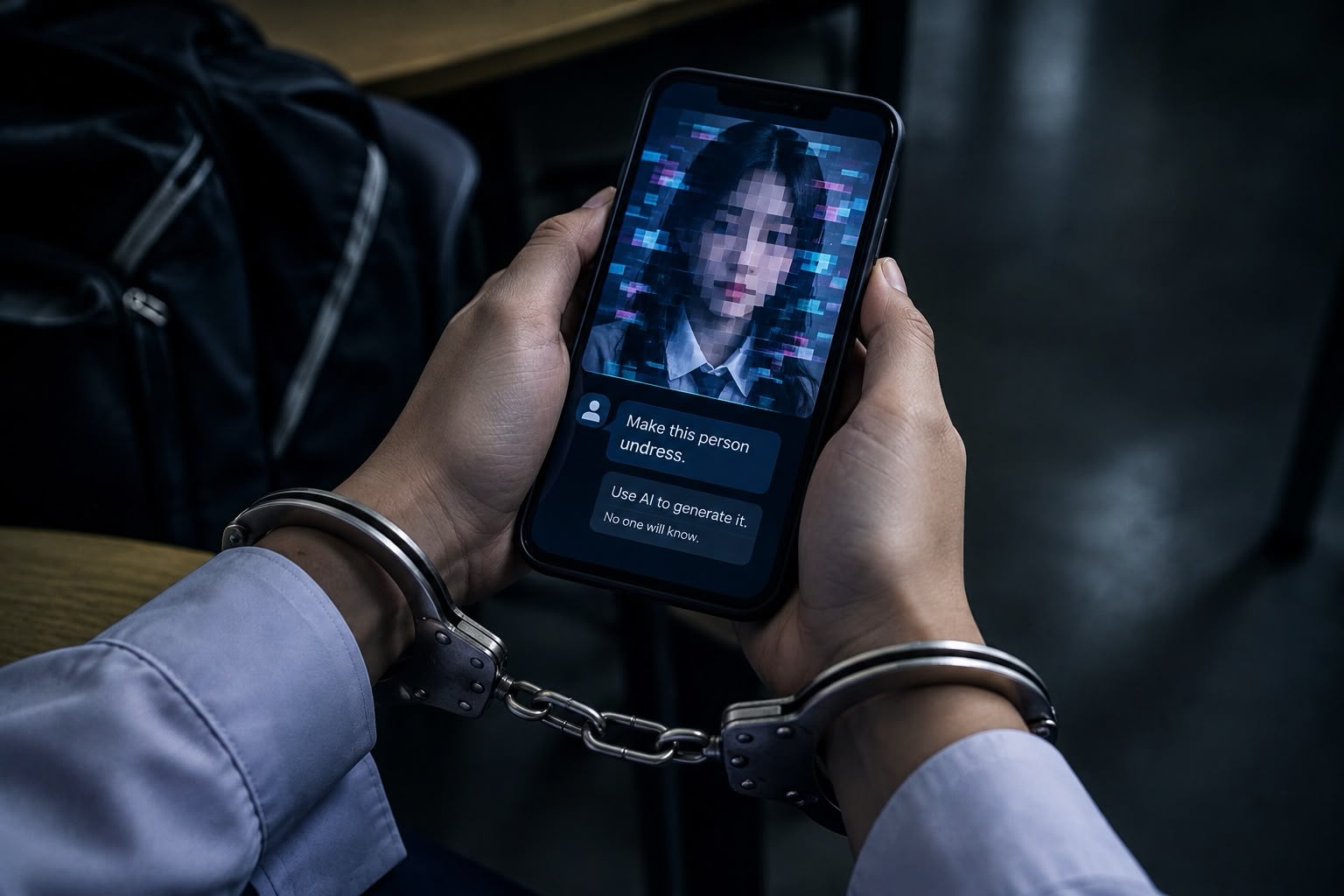
Can Brunei’s parenting, legal, enforcement and education system cope with the threat of AI sexploitation?
By Ummi Binti Taha
Bandar Seri Begawan, October 23 – The global rise of Artificial Intelligence (AI) started with humble intent where researchers behind the most popular AI platform, ChatGPT, opened its floodgates in 2022 to the world with the aim of deepening its research into AI to help humanity by releasing the shackles of their work so that their technology could learn and adapt from everyday people.
Four years on, 2.42 billion people of internet-use age have interacted with AI in some form or another and despite the best of intentions from some of the brightest minds in the world, human behaviour has, once again, proven that where opportunity is found, some form of exploitation will inevitably present itself. In October 2025, OpenSource released its annual report detailing the forms of malicious intent that were recorded on its platform with specific emphasis on cybercrime, such as phishing and scams, but it is in the United Nations and European Parliament reports that provides us with a better understanding of how AI and deepfakes are specifically hurting women and children.
The United Nations Women, an official arm for the UN dedicated to promoting gender equality and empowering women and girls worldwide published a disturbing piece on their website stating that 98 per cent of all online deepfake videos are made with non-consensual pornographic images depicting women, and the European Parliament report states that millions of users visit more than 100 ‘nudify’ sites online each month, making them the major driver of the deepfake economy.
Around the same time as a Thread post gained traction in Brunei alleging that a prominent school told their female students to “calm down” after allegations of a male student creating explicit AI of his classmates, Malaysian media also published a report of allegations that a Form 5 student in the state of Seremban created over 200 explicit deepfake images targeting “a large number” of female students in his school.
The report centres around a lawyer representing a group of parents who are urging local authorities to revisit this case calling for legal action. They claimed that investigations have become stagnant despite five filed police reports in August against the alleged perpetrator. It was reported that the boy in question was “handed down a one-week suspension” despite legal precedent in Johor earlier in April that heard a 16-year-old boy pleading guilty to charges under Section 292(a) of the Penal Code and under the Sexual Offences Against Children Act 2017.
What is unsettling about the incidences that are happening so close to home is that government agencies in Brunei have steadily issued statements cautioning members of the public against AI generated deepfakes; most of which involve financial and religion-related scams with the latest report issued on October 9 by the Royal Brunei Police Force. Though these videos are not sexual in nature it stands to reason that there are actors, whether locally or abroad, with the capacity and access to use technology that could potentially cause harm to Bruneians.
By design, creating deepfakes with AI is meant to be easy but proving who created it, who distributed it and whether a crime was committed can be much more difficult to prove. To date, there is no public information on whether any legal action has been taken against perpetrators of malicious deepfake content, and this does pose the question whether our current enforcement, legal and education infrastructures are not only sufficient but, more importantly, effective in protecting the public’s integrity and safety against these malicious online forces. The UN Office on Drugs and Crime outlines the five biggest challenges in the age of criminal AI that include identifying perpetrators, proving that an AI is image generated, obtaining evidence from overseas platforms, preserving evidence while protecting victims and establishing which laws to apply.
Countries such as the United Kingdom, the European Union, the United States and Australia have, or will be enacting, legislation related to AI generated explicit content that, though varied, carry prison sentences up to seven years in general depending on the severity of the crime as outlined in their respective legislations.
Just like many other nations around the world whose laws have yet to catch up with emerging AI threats, Brunei does not have any specific AI Acts. However, we have taken steps towards AI governance published by AITI last year entitled Guidance on Artificial Intelligence Governance and Ethics for Brunei Darussalam that provides guidance on responsible AI use, including transparency, safety and accountability. At the same time, Brunei does have the capacity to try AI-related cases under its Penal Code such as Sections 292 – 293 that may apply to obscene material, including its distribution or sale, provisions on extortion or criminal intimidation provisions under the Penal Code that may be relevant when a perpetrator threatens to publish fabricated or genuine intimate images to demand money, additional images, or compliance alongside several other pieces of legislation.
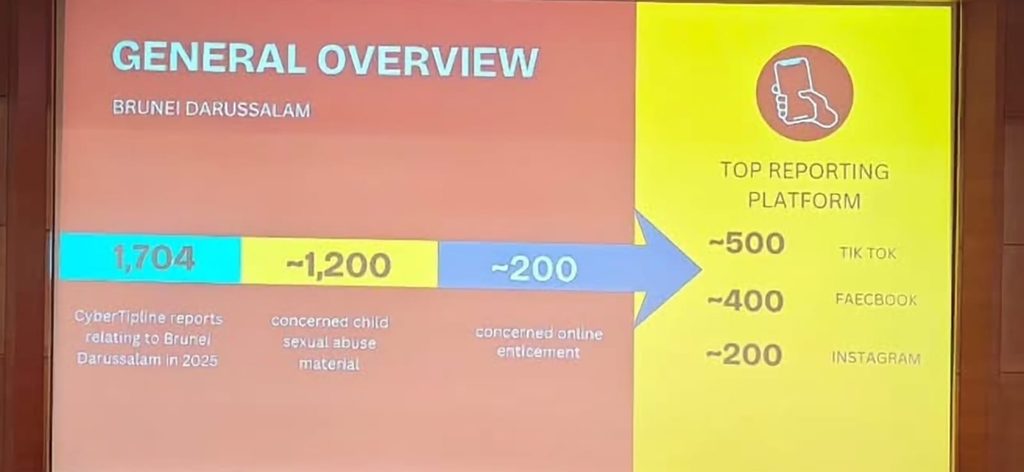
So, being a small nation of just under half a million people compared to nations with millions, why doesn’t the Sultanate have such laws in place yet? Ironically, the Attorney General and Public Prosecutor, Yang Berhormat Datin Seri Paduka Hajah Nor Hashimah binti Haji Muhammed Taib stressed, earlier this week, that tackling online sexual exploitation and abuse requires effective laws. The irony lies in the understanding that the AGC is the government body that drafts such laws. But it isn’t that straight forward.
Additionally, Minister for Law and Security at the Prime Minister’s Office, Yang Berhormat Dato Seri Setia Hj Sufian Bin Hj Sabtu, in his opening remarks for the fourth Nusantara Syariah Judicial and Legal Conference on October 7 also acknowledged that the rise of AI generated fake content, including deepfake audio, images and videos could further complicate the assessment of evidence in court. Although the minister’s focus was more on Syariah courts, the concern on the potential risk of malicious AI content and usage prompted Yang Berhormat Dato to call for a timely review of existing Syariah laws to determine whether existing procedures adequately address digital evidence and Ai generated or manipulated content.
Courtesy of agc.com.bn
Implementing laws begins with identifying the problem. In this case it would be the gaps in our current laws to address AI-related crimes. Second, who owns the problem? Multiple agencies would need to work together to identify what the law needs to look like. Then the AGC begins to draft and vet the legislation before it can be approved and implemented into law where finally a truly effective enforcement can be carried out.
Even then, enforcement becomes a beast on its own and we must ask ourselves whether our enforcement agencies will have the necessary skills, knowledge and adequate technology to tackle AI-related crimes.
But apart from placing full responsibility on our legal and enforcement systems to address this issue, where are we as a society in our understanding of AI?
Despite being one of the most digital literate economies in the world, only 19 per cent of local respondents to a research on AI use in the workplace and school said that they were aware of organisational or national guidelines on the use of AI leaving 81 per cent either completely in the dark or unsure where the lines for ethical workplace and study AI use are drawn. This local study can be read here published by Syafiq Bakar on TNBD’s platform.
So where do we stand in thoroughly educating our populace against using AI for malicious intent? This line of questioning was raised during the 22nd LegCo Session in March this year by Yang Berhormat Chong Chin Yee who asked the Ministry of Education what measures are in place to safeguard women and children given the rise in exploitative digital content.
The Ministry launched its GenAI Guidance for Education – Handbook Education in September 2025 covering digital safety, academic integrity, responsible AI use and personal data protection whilst knowledge, skills and values needed for responsible digital behaviour was already introduced in its Digital Citizenship Framework and Handbook in May 2024. At the same time, interagency monitoring and enforcement continues to monitor online content and digital-safety issues, including taking relevant legal action while Cyber Security Brunei conducts school briefings to educate students about internet safety and information security.
But as we investigate the legal capacities that have yet to be specific enough to tackle AI-related crimes, we also have to question the role parents play in protecting their children against digital threats. Since the rise of social media in Brunei, online reports estimate that over 80 per cent of Bruneian internet users are actively on social media across different platforms; most of whom are reportedly over the age of 18 with a small percentage between 13 – 17 years old with appropriate filters and restrictions in place for younger audiences. But are households doing enough? When we look at our own society, we often see families placating their young children with a tablet or phone screen but as these children mature, are the same households ready to help their children navigate the social maze that exists in life online?
Although the alleged act that took place at that prestigious school quietly dropped off society’s radar, unlike the swift action taken by the Ministry of Religious Affairs on the allegations of sexual abuse, it is indeed very timely and absolutely necessary that the recent reassuring efforts made by the Yang Berhormat Minister and Datin Attorney General to move the needle on this potential scourge would add another layer of legal protection for women and girls in Brunei Darussalam.