Category: Analysis

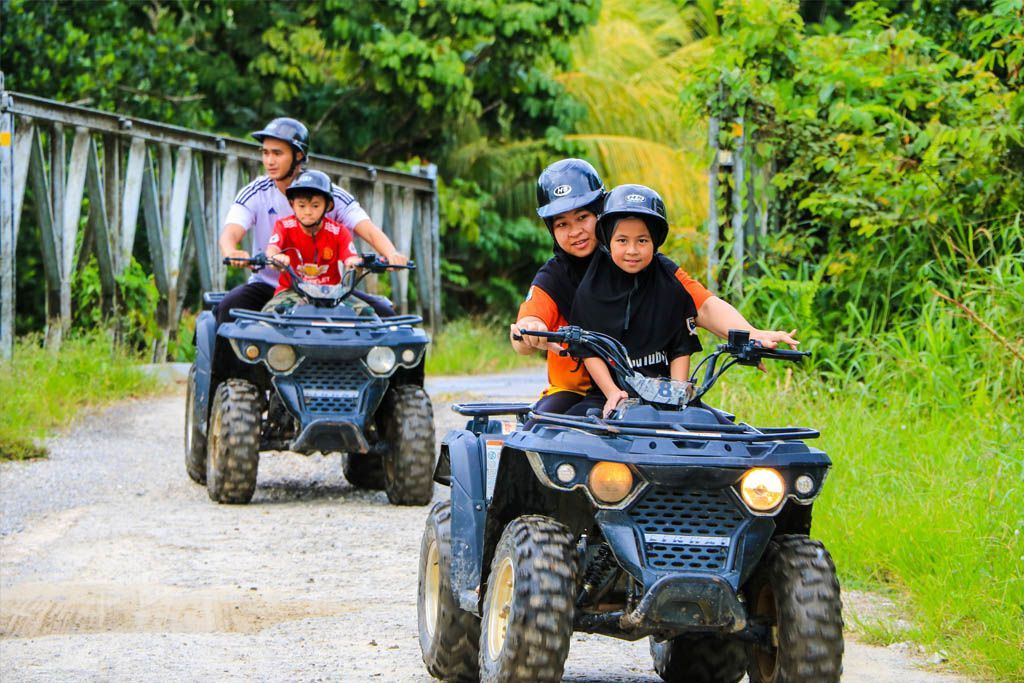
  • Brunei – Perfect place for family tourism

    Brunei – Perfect place for family tourism

    BRUNEI Darussalam, on the whole received pleasant and gentle praises by many of the international media that ranged from China to the Middle East, covering the week-long Asean Tourism Forum (ATF), but the issue of visa on arrival was also acknowledged to be a sticking point in the country’s bid to improve its inbound tourist volume.

    Motaz Othman, an area manager for the Islamic Tourism Magazine, who hails from Jordan but is based in London, pointed out “There is a big image for Brunei in the Islamic world because everybody knows that Brunei is committed to its Islamic culture”.

    Having attended many previous ATF meetings in Europe and Asia, “I consider Brunei a perfect sample of Islamic tourism for European, African, and American tourists because Brunei offers clean, responsible tourism and it is all family-related. You have it all here. Unlike other tourist destinations, even those of Muslim countries, there is no big problem with drugs, gambling, alcohol or prostitution. So you have a very good sample for the world. I believe this is a perfect situation.”

    However, despite the many positive benefits that Brunei offers as a unique tourist destination from an Islamic point of view, he narrated a story to prove his point of what he considered to be the main stumbling block to furthering Brunei’s tourism goals.

    “A friend of mine, who is a tour operator, was invited to this ATF as a hosted buyer, and as it was a prestigious destination, his wife wanted to fly out and accompany him to Brunei. But when they applied for a visa at the Brunei Embassy in Amman, she was refused a visa, with officials citing that she had to be ‘invited’. How can this be? Is it so complicated to facilitate visas for tourists?”

    He went on to say that the Middle East market is a big bonus not only for Brunei, but also for Asean tourism. “It’s perfect. We have similar food and cultures with the Asean countries.”

    Motaz used the comparison of Malaysia, explaining why it continues to be so successful in attracting millions of tourists from the Middle East.

    “It is unfair to compare Brunei to Malaysia because it is a much bigger country and it also offers many other alternatives. Here in Brunei, I believe that the authorities are looking for some class tourism and not just mass tourism. You are targeting rich people, with families, who want to enjoy a safe, peaceful destination. Malaysia attracts the eyes of Arabs and people from the Middle East because they have big promotions and huge alternatives. For instance, out of an Islamic family, the women prefer shopping, the children like to be engaged in a lot of activities and the men can go for other alternatives. Brunei has very limited alternatives for this class of people. Even your Royal Brunei Airlines only flies to Dubai and Jeddah. Yes, a lot is being done, but you are not yet a tourist destination.”

    He went on to surmise that it was “because of a prestige issue that you are targeting Europeans”. Brunei has focused itself onto the eco-tourism niche. “Many Europeans are fed up of going to bars, clubs and that kind of entertainment when they visit foreign countries, but there is a growing interest in enjoying nature nowadays. And Brunei is doing well with eco-tourism. It is not opening up the country for everyone and thus it is able to keep its country clean along with its culture and heritage.”

  • Bring back Muslim culture

    Bring back Muslim culture

    DURING the opening of the Sixth Knowledge Convention on Tuesday, His Majesty the Sultan and Yang Di-Pertuan of Brunei Darussalam consented to view the centerpiece of this year’s exhibits, namely the Exhibition Gallery set up by the Balai Kenangan of Al-Marhum Sultan Haji Omar ‘Ali Saifuddien Sa’adul Khairi Waddien.

    The Balai Kenangan, which comes under the Office of His Majesty the Sultan and Yang Di-Pertuan of Brunei Darussalam had painstakingly recreated an original concept to showcase this year that captures the symbiosis between the latest in information technology and the ancient teachings of Islam.

    “The crux of this whole concept is to bring us back the ancient time of Islam in Andalusia, Spain,” explained Hj Johari Hj Achee, Chairman of the Exhibition Gallery, “when Islam had a foothold in Spain for about four centuries.” Taking the Bulletin through the design and concept of the Exhibition Gallery, Hj Johari pointed out, “If you look at the mosques and gardens there, you will find water features to be the main elements, and we have interpreted this in the main design of the exhibition.” Indeed, the whole gallery was designed to resemble such a garden, with green carpets to resemble the fauna and a decorated carpet with the typical Muslim-Andalusian motifs for visitors to walk on, trailing a path around the exhibits. There are five water fountains that surround a waterfall, which is engraved with the ‘Iqra’ – the first verse in the al-Quran.

    As one walks into the gallery, the first thing one notices and most prominent attraction is the golden dome, which was inspired by the iconic golden dome of the Sultan Omar ‘Ali Saifuddien Mosque in the capital. “The dome is supported by six pillars, which symbolises the six foundations of Islamic faith,” said Hj Johari. Furthermore, built-in directly into the foundations of each of the six pillars are glass cabinet, each containing antique and priceless al-Qurans from His Majesty’s and Al-Marhum’s personal collection which are 65 in total, “to represent the 65th birthday anniversary of His Majesty”. Under the arch of the magnificently recreated dome of the SOAS Mosque are fine engravings and etchings of the 99 names of Allah the Almighty.

    To further illustrate the immense planning and thought that has gone into this exhibit is the fact that each of these 65 holy books have been especially opened to particular pages that highlight certain verses that depict 65 branches of knowledge “from an ocean of knowledge in the al-Quran to signify education, administration, agriculture, health, medicine, international relations, defence, trade, development, astronomy and so on”.

    Another interesting feature of the centrepiece is the ‘pabarahan’, which is an open incense burner that was also specially designed by a Bruneian and painted in gold laid with green marble where the monarch consented to officiate the gallery by dropping dark brown slivers of local and imported gaharu, or frankincense, into the ‘pabarahan’.

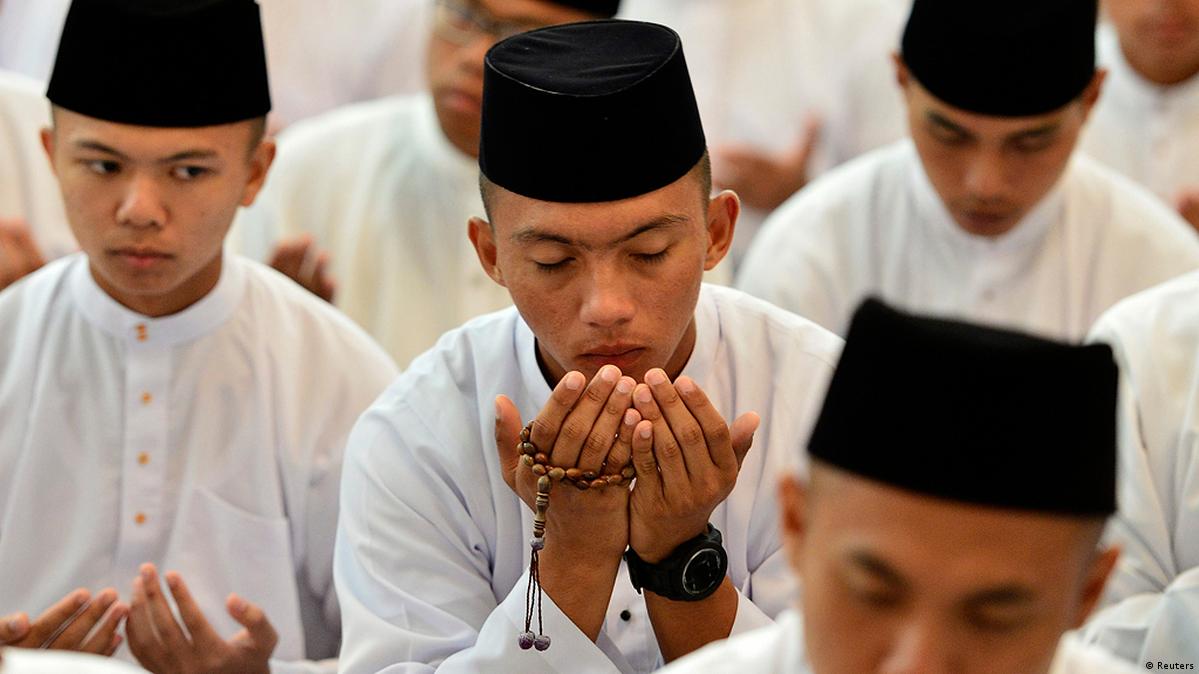
    As soon as the first wisps of vapour arose from the burner and the sweet aromas of the gaharu filled the gallery, a zikir group of 82 specially-selected people performed the ‘Al-Asmaa’ Al-Husnaa’ zikir. The chairman pointed out that the main intention of all this was to also invoke the five senses of the human body – sight, hearing, smell, touch and taste.

    “In this atmosphere and nuance of Islamic values and culture, His Majesty was surrounded by these 82 people, who ranged from a six-year-old to an 80-year-old man. But the most unique quality of them all was the fact that they were selected out of 350 people, people who are near to the al-Quran,” said Hj Johari. Fifteen comprised of national Qari and Qariah champions from 1962 until the present day; 13 local ‘Hafiz’, 20 students from the Sultan Haji Hassanal Bolkiah Tahfiz Al-Quran Institute and 20 pupils from the Al-Falaah Religious School. The ‘Al-Asmaa’ Al-Husnaa’ zikir that they recited was also specially composed and rearranged by a Bruneian from the Tahfiz Institute to present to the monarch. In addition to the many firsts presented during the opening, following the zikir recital, His Majesty consented to sprinkle ‘bunga rampai’ onto the group “which is the first time that I can remember His Majesty doing this”.

    With all five senses completely awakened during Tuesday’s opening, from the sounds of the 82 people that included the voices of women and children to the smell and taste of the burning incense to the sights of the displays and exhibits that one could touch, “it was completely mesmerising and some even had goosebumps just taking this all in”, noted Hj Johari.

    “We wanted to make a whole new concept this year and do away with what has become the usual norm these days of officiating an event by touching the plasma ball. In the olden days, burning the gaharu was tradition during major events. So we are hoping to revive this unique Brunei and Islamic culture. The sprinkling of the ‘bunga rampai’ has also these days all too often been misconceptualised because it should only be sprinkled on people, and certainly not on cars, boats or trucks,” explained Hj Johari.

    The former senior newsman also noted that this new focus was hoped to help support the efforts by the Forestry Department and the country’s economic diversification of making ‘gaharu’ wood a viable local commercial product.

    Another first during the opening was the launch of a special DVD containing the newly-arranged ‘Al-Asmaa’ Al-Husnaa’ zikir, Raatib Al-Attaas and the special prayer to protect the monarch and the country, which are handed out to visitors until the exhibition ends on July 31.

  • Achieving SDG as ASEAN community

    Achieving SDG as ASEAN community

    HIS Royal Highness Prince Mohamed Bolkiah, Minister of Foreign Affairs and Trade, yesterday commended the United Nation’s Millennium Development Goals that have brought about “new confidence in the future” and which has “taught us a lot about ourselves”.

    HRH delivered a statement during the High-Level Plenary Meeting of the UN’s 65th annual General Assembly on the MDGs at the UN Headquarters in New York in which HRH outlined the Sultanate’s progress towards achieving the goals and stressed the need for small, developing nations to achieve deeper levels of regional and international cooperation in order to reach the 2015 target date.

    “We have learned how the Millennium Development Goals can bring our people together, our governments, our business people, our professionals and our families and communities. So far, the goals have done this very successfully. We are starting to feel new confidence in the future and I think we are less frightened by its many challenges,” remarked HRH about its overall goal.

    HRH went on to point out that as a result “our government has strengthened policy and legislation. Our public and private sectors are working together in health and education and all ministries have set long-term programmes of development”.

    Adding all these to the country’s comprehensive housing programmes and its commitment to the rule of law, “we can see that work towards the goals has done a great deal to strengthen social welfare”.

    But the pursuit of the MDGs has also taught the people and government of Brunei Darussalam another important lesson, HRH said- one that “has taught us a lot about ourselves”.

    Acknowledging the fact that Brunei is a small, developing nation and that “we cannot do everything on our own”, HRH highlighted the importance of the Sultanate’s membership in the Asean regional organisation. “It has a great role to play and I think this is because it also has a development target,” which HRH noted is presenting challenges to all of its 10-members to truly become an “Asean Community”.

    In fact, the establishment of Asean’s three pillars for a single community shares the same immediate target date as the eight goals of the UN MDGs, which is 2015, HRH noted.

    “Our method is to establish what we describe as ‘connectivity’ and I am sure that nothing will give us stronger ‘connection’ than achieving the Millennium Goals together as partners,” HRH went on to emphasise, adding: “After all, the goals are at the heart of any real community and the lesson here is an inspiring one. It shows they can be both a national and regional guide.”

    But HRH also noted the difficulties in what he termed as “a lesson that we are still trying to learn” – that concerning the natural environment in general and, specifically, bio-diversity – whereby “we are finding it difficult to reach the targets”.

    Despite the fact that the Sultanate is signatory to key international agreements on the environment, “we have a very real problem”, noted HRH, which he summed up quite simply: “We don’t know enough.

    “Statistics often contradict each other. Basic facts are frequently disputed. Even when we are satisfied with the information we get, we cannot implement recommendations. We can do the planning and pass the legislation. We can even provide much of the physical infrastructure but there is very little else we can do if we don’t have enough highly skilled people,” HRH listed out to the assembled audience of world leaders and statesmen.

    “This is always going to be a big problem because of our low population and our small domestic market,” HRH added, pointing to the fact that “unless this situation changes, some of the goals will be very hard to achieve”.

    But then HRH underscored, in his opinion, the true benefit of the MDGs. Noting, “success cannot depend entirely on each individual country”, HRH called for “deep levels of cooperation, especially sharing ideas and expertise”, which HRH highlighted “as the biggest single lesson we have learned in the last 10 years” and reaffirmed that Brunei Darussalam “will do whatever we can to strengthen these efforts”.

    Adopted by world leaders in 2000 and set to be achieved by 2015, the MDGs are both global and local, which are customised by each country to suit their specific development needs. They provide a framework for the entire international community to work together towards a common end – by simply ensuring that human development reaches everyone, everywhere.

    The UN’s Development Programme believes: “If these goals are achieved, world poverty will be cut by half, tens of millions of lives will be saved, and billions more people will have the opportunity to benefit from the global economy.”

    The eight goals of the UN Millennium Development Goals are eradicating extreme poverty and hunger; achieving universal primary education; promoting gender equality and empowering women; reducing child mortality; improving maternal health; combating HIV/AIDS, malaria and other diseases; ensuring environmental sustainability and developing a global partnership for development.