Category: Opinion

  • Brunei may be small but we have a voice in APEC

    Brunei may be small but we have a voice in APEC

    “APEC is not the answer to everything,” said Dato Paduka Timothy Ong, Acting Chairman of the Brunei Economic Development Board, “but it is a rare club that includes the three biggest economies of the world, which gives prestige and value and that in itself is the beauty and the real value that comes with the membership itself.”

    Speaking to the Borneo Bulletin in an exclusive interview on the eve of the much-anticipated Asia Pacific Economic Cooperation (Apec) CEO Summit, which is witnessing the biggest attendance so far ever since its inception some 13 years ago, Dato Timothy explained the advantages that Brunei Darussalam’s membership of the 21-member organisation brings.

    “Despite being the smallest member in Apec, which is reflected because of the size of our economy, trade flows and physical size of it, but in per capita terms, we are significant, in fact close to those of Apec’s developed countries. The beauty is that in Apec, we participate as equals and we are considered as a very useful member of the grouping because we are an active and positive member.

    “This is the official recognition that our officials get, which is one of its strengths. Although we are a small country, we get a voice in a group that accounts for half of the trade in the world’s economy.”

    As one of Brunei’s prominent economist, Dato Timothy further explained, “Apec is all about conducting trade policies. It’s about learning from each other. But we cannot dictate what Apec can do. It cannot change conditions in each member country directly. What we do is we sit down, we look at the common problems, we compare notes and this produces a pressure – a certain kind of peer group pressure – to change because if you want to be the slowest to change or develop, that’s fine too. The reports that the ministers present are not secret and this exercises transparency, which can be quite powerful. This is what Apec’s approach is like.”

    The BEDB Acting Chairman however clarified: “Apec cannot legislate each economy. Each economy joins without surrendering any of its sovereignty. We join because of common challenges, such as environmental concerns, where unless we have a framework with which to talk to each other in a healthy and constructive way about our common problems, where more of our problems in this globalised world are interconnected.”

    As if to further emphasise his point, Dato Timothy used Brunei’s hosting of Apec in 2000 as a good example: “This immediately established our credentials as it showed that other countries were comfortable to come over. These major economies would not have done so if they weren’t. And that’s why Singapore treats it so big.”

    Asked what benefits that local SMEs can really attain from its membership, Dato Timothy replied: “There is a lot that we can learn from Apec. But, having said that, there is a lot that we have to do for ourselves. Apec cannot do miracles. For instance, some of the ideas that we learnt from Apec can be seen through the BEDB creating facilities at the iCentre to help ICT start-ups with overall venture capital start-ups to invest in, attracting foreign direct investments with the methanol plant to create spin-offs for local businesses, similar to those made by BLNG or Shell. Similarly, the Ministry of Industry and Primary Resources also offers schemes for SMEs where preferences are given to locals.”

    Throughout the 20 years of its growing establishment, the 21-nation organisation has also received its fair share of criticisms of being described as another “talking shop”.

    As a moderator for the second session of the Apec CEO Leaders Summit, entitled ‘Looking at the global economy: Is the crisis really over?’, Brunei’s BEBD Acting Chairman said: “I disagree that Apec is just a talking shop, but I happen to agree that we have to talk, that to solve problems we need to talk. And for 21-member economies to talk, it will take some time in order to solve our common problems. These suggestions are healthy. It shows the efforts that we care for our region and conducting things between ourselves.”

    Dato Timothy added, “Since 1989, for better or for worse, every time we meet, we grumble, we complain, but still we meet. Still the Presidents of the US and China come to town and they wouldn’t do it if it wasn’t important.”

    When asked what he expected to be discussed during the second session of the Apec CEO summit, the BEDB Acting Chairman said: “We’ll be asking what’s next. Is it a recovery? Is it just a bubble? The stock market is up, property markets have recovered, but unemployment is still high. To me this shows that something is still wrong. So we need to sit and talk. We need to make sense of it and plan for the short, medium and long-term.

    “Frankly, not one of us knows the answers. What the global financial crisis proved to us was that we know much less than what we actually thought we did. Even people like Allen Greenspan. We all have a limited knowledge as human beings.

    “But this summit will hopefully provide the views of thousands of delegates and business leaders to provide us with a better picture of what we are doing.”

    One of the highlights of the Apec meetings is the 20th anniversary celebration, and the Bulletin asked Dato Timothy what his hopes, dreams and ambitions were for the next 20 years for Apec.

    “What we set out to do in Bogor for developed countries by 2010 and developing countries by 2020 is falling behind. For me, it would have to be if we could renew our commitment towards these goals. Success in life is focusing on a few things. If you try to do too many things, you can’t. I see Apec as playing a supporting role for one vision of promoting trade liberalisation and we’re making real progress within the next 10 years. Twenty years would be too long. What we should do is accelerate our goals instead in which trade and investment can flow freely.”

    But he went on to poignantly emphasise the Pacific Rim’s other role. “In a world that is so divided on religious, cultural, economic and political grounds, Apec’s relevancy is its economic focus and sustainability where every member country is indeed separated by its religious, cultural, economic and political persuasion, so Apec is something that we need. We shall continue to keep making it better. We all have faults. But an organisation that keeps these countries together is basically very important as we can learn from our problems and share in the solutions with each other and find a common stance.”
  • Brunei explores niche specialty

    Brunei explores niche specialty

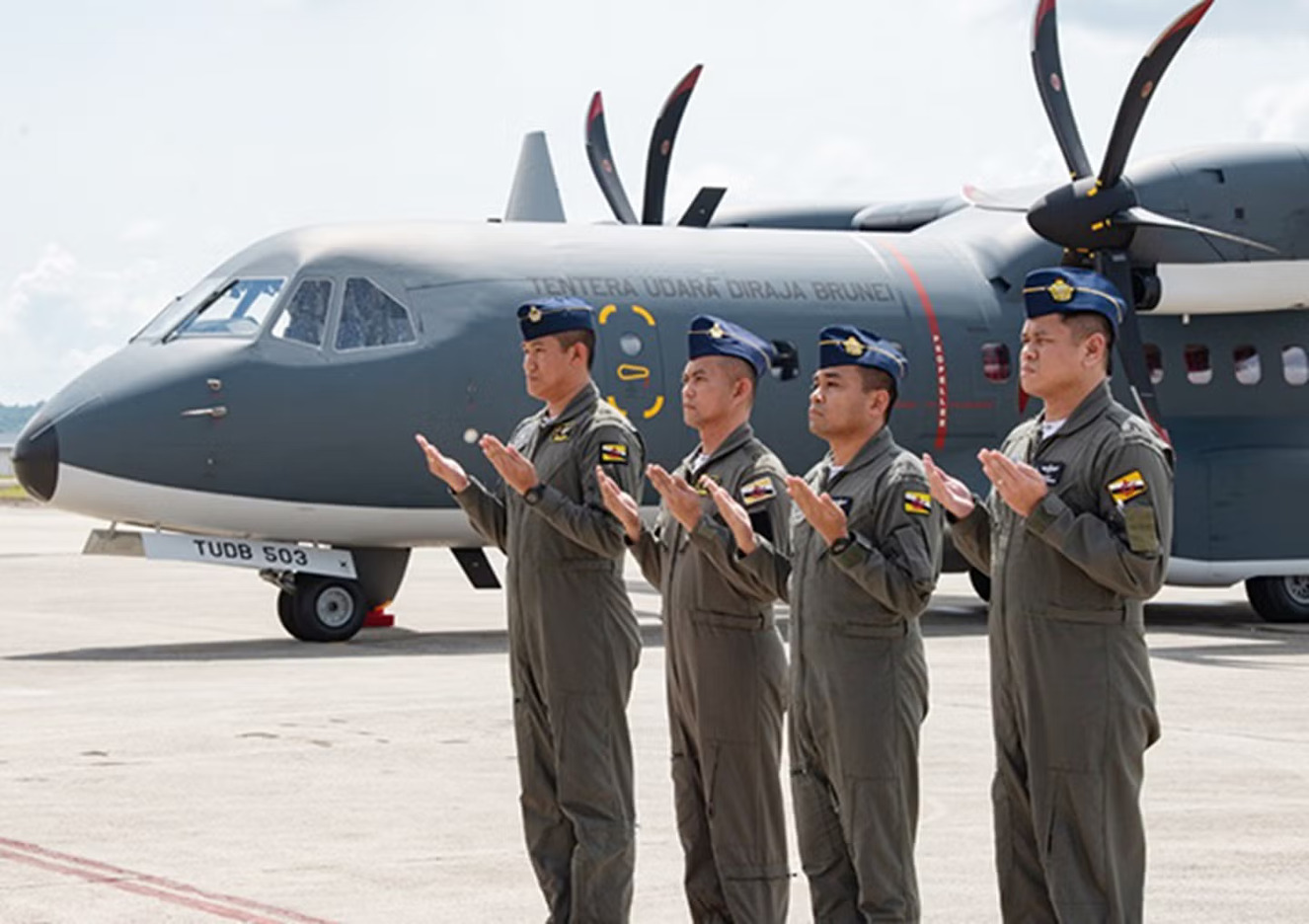
    ON THE sidelines of the Brunei Darussalam International Defence Exhibition yesterday, one of the distinguished panel of speakers commented on the uniqueness of BRIDEX, as well as the force-multiplying benefits and prestige that it draws for the Sultanate.

    Dr Warren Chin, former lecturer at the Royal Military Academy, Sandhurst and currently a lecturer at the Defence Studies Department, King’s College, London commented: “What you’ve put together by combining a defence exhibition and a defence conference is substantial and comprehensive as most countries normally just focus and specialise on one or the other.

    “By having something like this at Bridex, where you draw government officials, military officials, academics and defence industry players is something unique, which provides everyone the opportunity to gain different insights that otherwise would be very difficult to achieve elsewhere”.

    Despite the fact that this was the first time that Dr Chin had been to the Sultanate, he was enthusiastic about being invited to speak at the BRIDEX Conference. Presenting the topic of ‘Asean Defence Industries from the EU Perspectives’, during the afternoon session yesterday that was themed on the opportunities and challenges for defence technology changes, Dr Chin noted: “Undoubtedly, it is a very good flag-waving exercise for Brunei, which for a small country with a tiny population, to be able to create and pull something like this off, which you are doing very, very well and it seems to work. In terms of prestige, it is a good force-multiplier, as it also plays to your characters of being a good host.”

    Within the Asean context, which has been looking at trying to work together politically and economically, the King’s College defence lecturer noted that “geographically and politically it is difficult to arrange Asean to be good neighbours, but Brunei plays that game anyway and this gives you an added capability of building up your own network and not necessarily relying on your traditional supply networks”.

    In his presentation, Dr Chin advised against Asean following the EU model of integration but noted that the growing defence acquisition and collaboration between the Sultanate and Singapore could be viewed as a model example in the region as it allows for standardisation of equipment, “which is useful as this is the best way to develop by allowing it to grow organically and this is how more integration will happen”.

    Dr Chin compared the Brunei defence exhibition to that of Singapore, which despite the many geographic and socio-economic and political similarities, is more focused on network-centric warfare. “Singapore is focused on very high-tech and very expensive aspect of the defence industry, which understandably, for a city-state with its own set of security issues, is very dependent on technology as it is the only force-multiplier that will provide them with an advantage.”

    “But for the Sultanate’s perspective, he pointed out that it would heavily depend on what Brunei’s aspiration of capability is and “carving out a niche that suits your own needs”.

  • Brunei actively involved in regional fight against piracy

    Brunei actively involved in regional fight against piracy

    “BRUNEI Darussalam is actively involved in Southeast Asia,” confirmed a source yesterday about the regional efforts to curb unconventional petty thefts occurring in the South China Sea.

    Despite the fact that Brunei’s maritime law enforcement agency is not participating in the two-day conference this year, which is being attended by 150 participants from 24 countries, at the Langkawi International Maritime and Aerospace (LIMA) Exhibition 2009 International Maritime Conference, the Sultanate is one of 14 members of the Regional Cooperation Agreement in Combating Piracy and Armed Robbery against Ships in Asia (ReCAAP), when it joined in 2006.

    The Langkawi maritime conference is being held to find newer ways to curb this problem, which the Malaysian Defence Minister Datuk Seri Dr Ahmad Zahid Hamidi said, that if left unchecked, “would lead to high-tech piracy activities similar to the piracy in the Gulf of Aden”.

    He went on to express: “This situation causes problems to the maritime patrol and enforcement activities because the pirates know that no country could impose its law in the water.”

    Brunei’s maritime boundaries are patrolled by the Royal Brunei Navy that “works very closely” with the Royal Brunei Marine Police, said the source, “especially in the deeper waters, as the Royal Brunei Marine Police as yet do not have the capabilities for deep-water operations”.

    However, one of the joint responsibilities of the two maritime agencies is to prevent piracy but although there have been no reports or incidents of piracy or armed robbery in Brunei waters, the Royal Brunei Marine Police are still actively taking preventative measures to prepare against any unforeseen contingencies.

    “Through ReCAAP, we can learn of the experiences from other countries of dealing with piracy,” said the source, “but more importantly, we are learning to come up with our own strategies whilst closely monitoring to see that the trends of piracy patterns do not spill over into Brunei’s waters.”

    The current extent to which Brunei’s maritime patrols are focused on involve netting in illegal fishing activities from neighbouring countries, as well as “showing the flag” at the maritime borders.

    There have been several reports made by international news agencies, which have yet to be confirmed by the Ministry of Defence, of the acquisition of several new patrol boats for the Royal Brunei Navy.

    If these reports are proved correct, it would surely provide a much-needed boost in terms of Brunei’s offshore capabilities in conducting maritime surveillance patrols, especially with the well-known fact that the current naval platforms operated by the Royal Brunei Navy are now ageing and thus largely ill-equipped to handle deep-water operations.

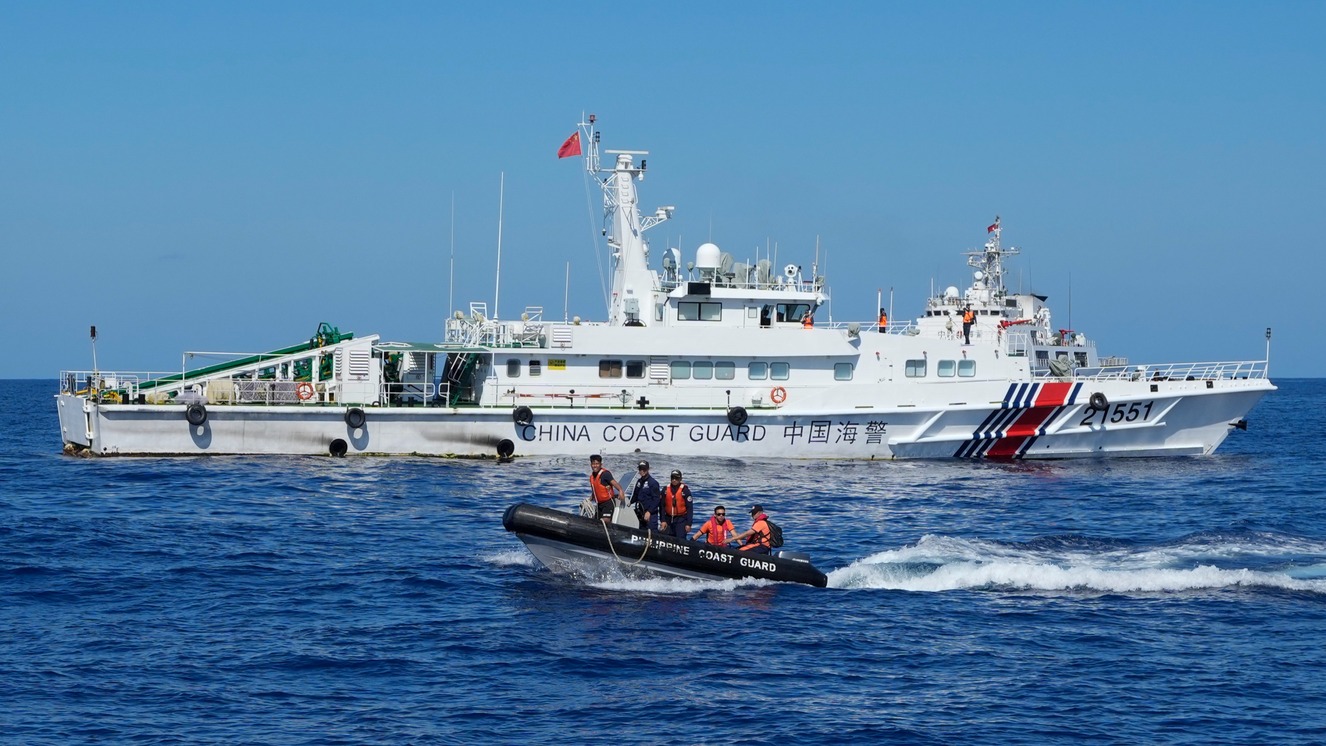
    However, despite the close coordination and information sharing between the 14 Asian signatories of ReCAAP, the Malaysian defence minister pointed out the further complexity in their goals due to the fact that the Southeast Asian maritime boundaries are also being contested by four countries – Brunei, Malaysia, Philippines and Vietnam – and China were involved in overlapping claims to the Spratly Islands.

    “The five countries should not be too focused on their claims on the Spratly’s,” urged the Malaysian defence minister, adding that the four neighbouring countries bordering the south China Sea collaborate in conducting enforcement activities in the water.

  • Believe in your own people

    Believe in your own people

    ONCE described by the Singaporean media as “the maverick who goes against the rules”, Mr Philip Yeo, Chairman of SPRING Singapore, which stands for Standards, Productivity and Innovation Board, under the Ministry of Trade and Industry, is charged with overseeing the sustainable development and competitiveness of Singaporean enterprises, as well as coordinate the nurturing of a pro-business environment with the authorities, as the city-state shifts towards an innovation-driven economy.

    Recently invited to the country as a keynote speaker for the 29th Confederation of Asean Federation of Engineers Organisation (CAEFO), Mr Yeo spoke with the Bulletin to share in his advice and views for nation-building and future developments.

    “The most important thing is to build your own capability. You must invest in your own people, you have to bring your locals onboard but also make sure that the local government is onboard,” said Mr Yeo, who amongst his distinguished list of accomplishments is perhaps best known for being credited with personally sending thousands of young Singaporeans to top universities around the world on government scholarships.

    “Planning is important and all that but ultimately it is your own people who must run it. Have confidence in them. Don’t just depend on consultants,” he explained, adding: “They have no commitment; they are not willing to serve because once they finish their work, they are not bound to stay and follow through. It’s the implementation stage of any project where it is the most important and for this, it’s where your young talent comes in and that’s most important.”

    Mr Yeo first shot to prominence when he became the Permanent Secretary for Logistics, Technology Research and Development and Defence Industries at the Ministry of Defence, where he helped turn Singapore’s struggling manufacturer of munitions military into a successful international armaments supplier.

    He then moved on to become the Chairman of Singapore’s Economic Development Board in 1986, which oversees the city-states vast local and international investments, when Singapore’s focus began to zoom in on new areas of business opportunities and he oversaw the expansion of its aerospace, electronics and semiconductor industries and biomedical sciences, to name a few that has underpinned Singapore’s economic miracle. He has also been a passionate advocate in nurturing Singaporean SMEs and successfully encouraging its local companies to make direct investments abroad. He was also responsible for expanding Singapore’s economic links with strategic partners further afield from the Middle East, Latin America and Russia.

    Mr Yeo has also held many other prestigious posts in the Singaporean hierarchy, such as the Special Adviser for Economic Development in the Prime Minister’s Office and Chairman of the Agency for Science, Technology and Research or A*STAR that oversees Singapore’s scientific research, as well as chairing various public and private company boards.

    Following his keynote speech, Mr Yeo also shared that he met with his Bruneian counterpart, Dato Paduak Hj Ali Apong, Deputy Minister at the Prime Minister’s Office and Chairman of the Brunei Economic Development Board, as well as the Minister of Energy at the Prime Minister’s Office, the Minister of Development and the Minister of Industry and Primary Resources to share in his ideas and views.

    “The legacy that we leave behind is built with the people. I told them that writing reports are easy but it is the action plans where the depth comes.” He then switched to the Singapore blueprint as a perfect example of achieving success. “In Singapore, we do a lot of things ourselves and we learn to make mistakes because in this process, we learn. We train and we invest in our people and we make a lot of sacrifices to build up this depth. You must seek out and develop a cadre of young people who are committed to doing it themselves. They must also have confidence so it is important to find good, interested people and let them grow, especially in a young country. But they must be allowed to make mistakes. That’s where you learn. That is the key.”

    Mr Yeo then elaborated this further by holding up his index finger to share in the three keys to making mistakes: “First, you have to admit your mistake. Second, apologise. Third rule, and this is the most important, don’t do it again,” he said with a knowing smile as he gestured with his three digits. “The key is to learn from it and not to repeat it again. If you don’t make allowances for making mistakes, how are you going to learn by yourself? That is why it is very important to find dedicated and committed young people but you must also delegate some authority to them. Otherwise, you will be left with doing everything yourself. That way, everyone learns.”

    Speaking about developing SMEs, Mr Yeo noted that “you must provide all kinds of incentives; you have to give them financing”. Pointing out that the last time he was in the Sultanate was in 1983; Mr Yeo reverted once again to the Singaporean example: “You need to build deliberate policies to build that depth and you have to get the government to be pro-active in order to meet the service capacity and delivery time. In fact there’s a lot of ‘hand-holding’.”

    He has since extended this hand-holding further beyond the SMEs to the generations of Singaporean scholars. He recounted that during his tenure as the chairman of A*STAR, he set up a scholarship scheme to provide government-funded scholarships for 1,000 “straight A students who could study any subject, except for Law and Economics” each year, who have since specialised in life sciences – molecular biology, biochemistry, medicine, information technology and engineering. Asked why these subjects in particular, Mr Yeo replied with a grin, “Because I never studied Law or Economics.”

    Educated as an engineer, from which he moved onto a very successful career as an administrator and pioneering strategist for Singapore’s IT and biomedical sciences, one cannot help but appreciate the patience and personal commitment that he invests in each and every single scholarship student that is chosen.

    One of his most outstanding hallmarks is his passion in developing people. Over the course of his career he has sent thousands of Singaporeans to top universities around the world on government funded scholarships, where in return after completing their tertiary or post graduate studies, these scholars make a commitment to return and serve the Singapore government for six years. Well-known for personally interviewing each scholarship candidate, Mr Yeo takes great pains to remember every personal detail about their family background and also closely monitors their academic performance. During his regular business trips abroad, he would take the time to meet up with up whichever student is studying at that particular city to find out about their welfare and studies.

    “In fact, when they get married, most of them will invite me and I try to attend most of them, if I have the time. And each one I give them ‘ang pow’. You know, a thousand students a year, that’s a lot of ‘ang pow’, you know,” he said through a peal of laughter.

    As he continued to leaf through his memories of particular students, noting that most of them chose partners within the scholarship community to marry and settle down, the theme of his prodigiously niche specialty in creating ‘self-sufficient’ or ‘integrated’ communities comes to the fore.

    His keynote speech at the 29th CAEFO was on what he calls “the Singaporean blueprint for sustainable engineering” through the development of “self-contained urbanisation”. Industry creates urbanisation, he pointed out, which is “happening everywhere and it is a fact of life”. As Brunei Darussalam is also beginning to fully embark on planning for its future land development, he presented two more successful Singaporean examples – Biopolis and Fusionopolis.

    Biopolis was the pioneering model for what would become an innovative blueprint that was emulated in other advanced countries for the designs of future cities – one that is a complete environment for “work, live and play”. Initiated in 2001 and officially launched in October 2003, the first phase of the futuristic city concept ‘Biopolis’ houses research institutes that specialises in genomics, bioinformatics, bioprocessing and bioengineering, which is part of the Singaporean government’s multibillion-dollar investment in biomedicine that is designed to nurture industries in biotechnology and pharmaceutical drugs.

    “With the technology available today, investing in the life sciences carries a big potential and even bigger opportunities as we try to improve our life sciences,” explained Mr Yeo. Now in its fourth phase, scheduled to be completed by the end of 2012, Biopolis has attracted some of the biggest names in biology to head its lavishly equipped facilities.

    In February 2003, Singapore launched another futuristic concept called Fusionopolis that served as an extension of an information technology hub, in synergy with Biopolis. Described by Nature Magazine during its official opening in October 2008 as: “Part laboratory, part resort and part architectural gem, Fusionopolis is Singapore’s newest mega-science facility … Fusionopolis is the physical science sequel to Biopolis. Housing six institutes … the buildings are meant to spur interdisciplinary research not only among its own institutes but also with Biopolis.”

    Explaining what Singaporean Prime Minister Lee Hsien Loong referred to Fusionopolis as “an entire integrated innovation ecosystem”, Mr Yeo highlighted that “for urbanisation, you must first create jobs. From there you can then create an environment for work, with these jobs, a place to live and to live to play”. In fact this ‘live, work, play’ theme is the central theme behind Mr Yeo’s vision for small clusters of self-contained “living cities”. He went on to point out: “With work, you have to ensure that it is economically vibrant. From there, people will want to settle down and live, and you have to ensure that it is environmentally friendly and provides all the amenities from transportation to all these other social amenities. Finally you must also have recreational and entertainment centres for play, which must be socially harmonious. Once you have achieved all three, only then you will get sustainable development.”

    This Singaporean blueprint has successfully been transplanted to other parts of the world. “We have been creating urbanisation for neighbouring countries,” said Mr Yeo.

    In 1991, Indonesia opened its Batamindo Industrial Park, which is home to 60,000 workers that also work there producing an export value of US$2billion. India followed suite in 1994 by opening up the International Technology Park in Bangalore in 1994 that is home to 27,000 IT personnel. Three such living cities have since been since created in Vietnam, named the Vietnam Singapore Industrial Park at Bac Ninh, Bin Duong and Hai Phong that collectively boasts just under 500 tenants and 100,000 workers that produce an export value of US$7billion. Singapore has also undertaken four similar projects in China – the Tianjin Eco City, the Wuxi Industrial Park, Suzhou Industrial Park and the Guangzhou Knowledge City.

    By understanding the mega trends of the day, which are rapid urbanisation, environmental improvement and social management, these future cities “must be sustainable, harmonious, convenient and resource efficient”, said Mr Yeo.

    “So you must take care of your young people, take care of how they serve and grow but you must also teach them to stand on their own two feet, through a lot of guidance and support by dedicated and committed mentors.” Asked where the best training ground was, he smiled and replied: “There is no school better than the real world and the real working life. My generation of Singaporeans was lucky because we had good bosses and this is also very important to have understanding and fair-minded bosses. But ultimately, my hope is that the future generations will also have bosses who support them to build and nurture the next generation.”