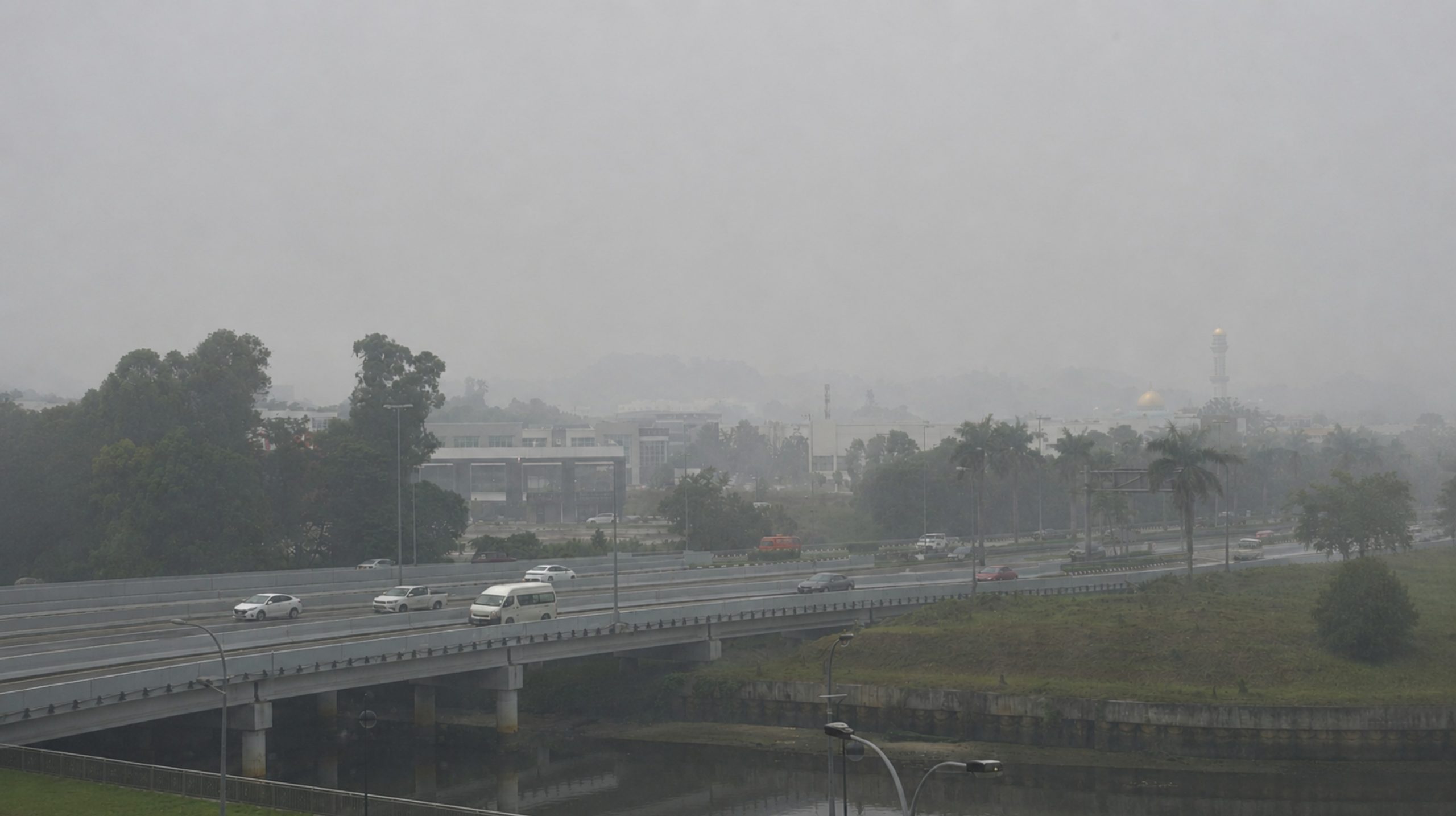
AS THE haze that has been suffocating Borneo continues to hang around, some members of the public in Brunei Darussalam have reached out to us to raise their concerns about a different kind of affliction.
Open burning, and the resulting air pollution that’s near identical to the haze, but in almost all cases a dramatic and more upfront affect to those that are in direct proximity to it.
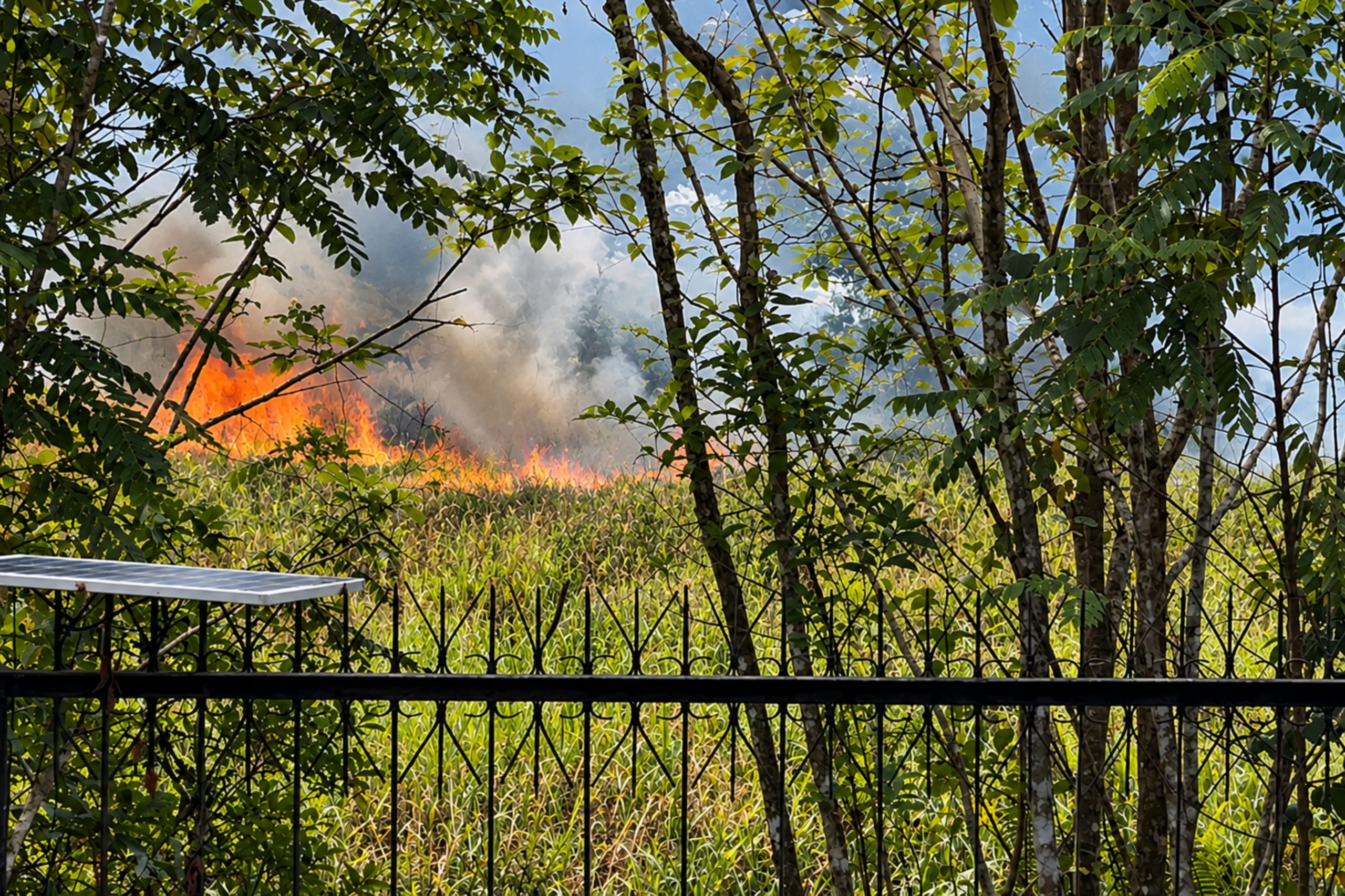
For Mrs Rose Rahman, it became all the more real because of how a wreckless and lazy effort to clear an open plot of land meant that it came within meters of the fire reaching her home. A video was shared with TNBD, and along with this article you will find the screencaps from the incident.
A close call
“My son could hear the fire crackling from the living room upstairs. He was with my husband at the time, and my two-year-old asked him, ‘Daddy apa tu?’”
“We were so startled because when we looked out our window, there was a man rushing about with a stick, trying to beat the brush and control the spread of the flames.
“He was not very successful, and we grew even more concerned when two other people joined him to try and control the fire,” she said. It seemed they were part of a crew or team of people that were asked to clear the area. Thankfully, they were able to put out the fire that they started, but such a scenario could have turned worse. (Several days later an excavator was brought in to dig up the burnt area – Ed)
Which begs the question, why would someone spend so much effort beating out a fire with some branches, so much so it took several people frantically moving across the area to clear the land when a machete or grass cutting equipment would take about the same amount of time, cause less environmental harm and significantly less danger overall.
Mrs Rose stressed that it wasn’t the first time in her neighbourhood, and her husband Ismail, said it is almost comical that its taking place during a time where the whole country is having to deal with the transboundary pollution that has been ongoing for several weeks now.
Since the haze has been affecting Brunei Darussalam, she said the open burning takes place each time there has been an easing of the haze, and once even when it was very hazy. However, even without the haze, the open burning would take place every other week in their residential area of Beribi-Jangsak on the edge of Bandar Seri Begawan.
Openly burning
Mrs Noor Ramli is a fellow TNBD reader that shared how her young family, she is also the mother of a two-year-old child, went for a Sunday drive at the end of last week, and were dismayed at seeing a large number of people open burning.
“It irks me on a normal day, but with the haze and all the health risks that come with it, seeing people just burning away really gets on my nerves.
“From Jerudong to Muara with a few detours here and there, it was just shocking how many people were doing open burning along the way,” she said.
In the Lambak Kanan National Housing Scheme area alone, it seemed there was one every few houses. “Granted, we had a good few days before that with a relatively good (air quality) index, but that shouldn’t give people to just openly burn,” said Mrs Noor.
Her opinion is that some members of the public are not taking the long term health risks of the haze seriously, even though in other countries there have been numerous reports of those getting significantly ill in the more affected regions in Southeast Asia dealing with the haze. “It isn’t just the toxicity of the air we’re breathing or the health risks that come with it, we (in Brunei) have been blessed with some rain recently, but what happens if we have an actual dry spell? Most of this island is already burning, we can’t afford to have our own country burning too, it’s an ecological disaster,” she said.
Not just organic material
Ask any Bruneian about it, and especially the older generation would have told you that it is something that would typically be done to get rid of rubbish and waste. Before, perhaps 50 years and beyond, that would have meant far more organic material. Grass clippings, twigs, branches, leaves green and dead, anything that was swept up around the gardens would be put into a quasi-compost heap, and then literally torched.
I remember riding my bicycle and seeing someone do all of that and gather the ashes and spreading them around their garden and vegetable patch, except windy days, as it would just be absolute pandemonium with dust and soot flying any which way or how.
In the years since then though plastics were also thrown into the equation, and at a time I remember PSA and advisories for people to not burn aerosol cans and batteries. I told my elder children about this some time ago, and I was met with a ‘bruuuuhhh’ and eye roll combination so savage it almost knocked me off my chair.
They (my daughters) think it was incredulous that people would be burning such things, with the toxic smoke and air to come from such fires literally poisoning all things living.
Sadly, the year is 2026 and attitudes remain unchanged.
Escalate to JASTRe
Just as concerning is that both readers, when informed by TNBD that incidences usually need to be reported, said that they have reported their respective incidences in the past, with not much to show for it.
In fact, Mrs Rose explained that in the first instance she complained to the Darussalam Hotline (123) and complained again a second time when she believed her home was in danger.
“In both instances 123 said they would escalate to JASTRe (Department of Environment, Parks and Recreation at the Ministry of Development) and were very apologetic that such a thing was happening to me and apologized for the inconvenience caused.”
And the outcome? 123 asked if there had been any further open burning after the 1st and 2nd complaints were made, as well as the day of their final conversation. Mrs Rose responded with a no but explained that she couldn’t possibly tell because she has been at work following the first two instances and when they called her to ask.
“The Darussalam Hotline staff said they would close the current ticket number, and that if there was any other open burning witnessed, to call 123 again and they would open a new ticket. I would’ve just preferred for JASTRe to reassure me that the matter had been dealt with,” she said. “Otherwise how do I know whether or not I’ve been taken seriously.”
Call 123
I think another question that is on a lot of people’s mind, or at least those who care, when they hear talk of open burning is “how come people still do this?” There have been strict bans and advisories in the past by JASTRe.
And it must be a pertinent enough of an issue well known to them, as their website lists under their FAQ (Frequently Asked Questions) section, “Who to complain (to) when I see an open burning activity?” and the answer on their website is “Please call the Darussalam Hotline 123.”
In 1998, an order was put into place for offences relating to open burning could be punishable with fines and imprisonment, in particular where “such offence causes pollution to the atmosphere or endangers human life or property the punishment is of unlimited amount and or imprisonment of up to 5 years.” To me that sounds like a convincing argument to not light up my grass clippings, compost heap or rubbish, but I guess someone forgot to tell the frantic stick carrying brush fire beaters.
Judging from the timeline, it seems like it was put in place around the time when the transboundary haze issues were first experienced in the Sultanate.
For Mrs Noor, it seems a moot point, and asks even further, why aren’t more people getting penalized for the open burning. She asks, “How many times can they do this before getting fined? Will they even get fined?”, adding that people have been reported but nothing seems to be done.
“When will there be a real shift in attitudes and behaviours?
“They can put out as many notices as they want but without any consequences, nothing will change,” she said.
(Editor’s note – The names in this story have been changed and real names withheld to protect the identities our sources from the potential backlash of angry neighbours. While we feel any unsavoury action to follow should be reported accordingly, we also realise that prevention is better than cure, and as such have taken the necessary steps to ensure their safety.)