AI has become part of everyday life so quickly that I am not sure we ever stopped to decide what we were comfortable with.
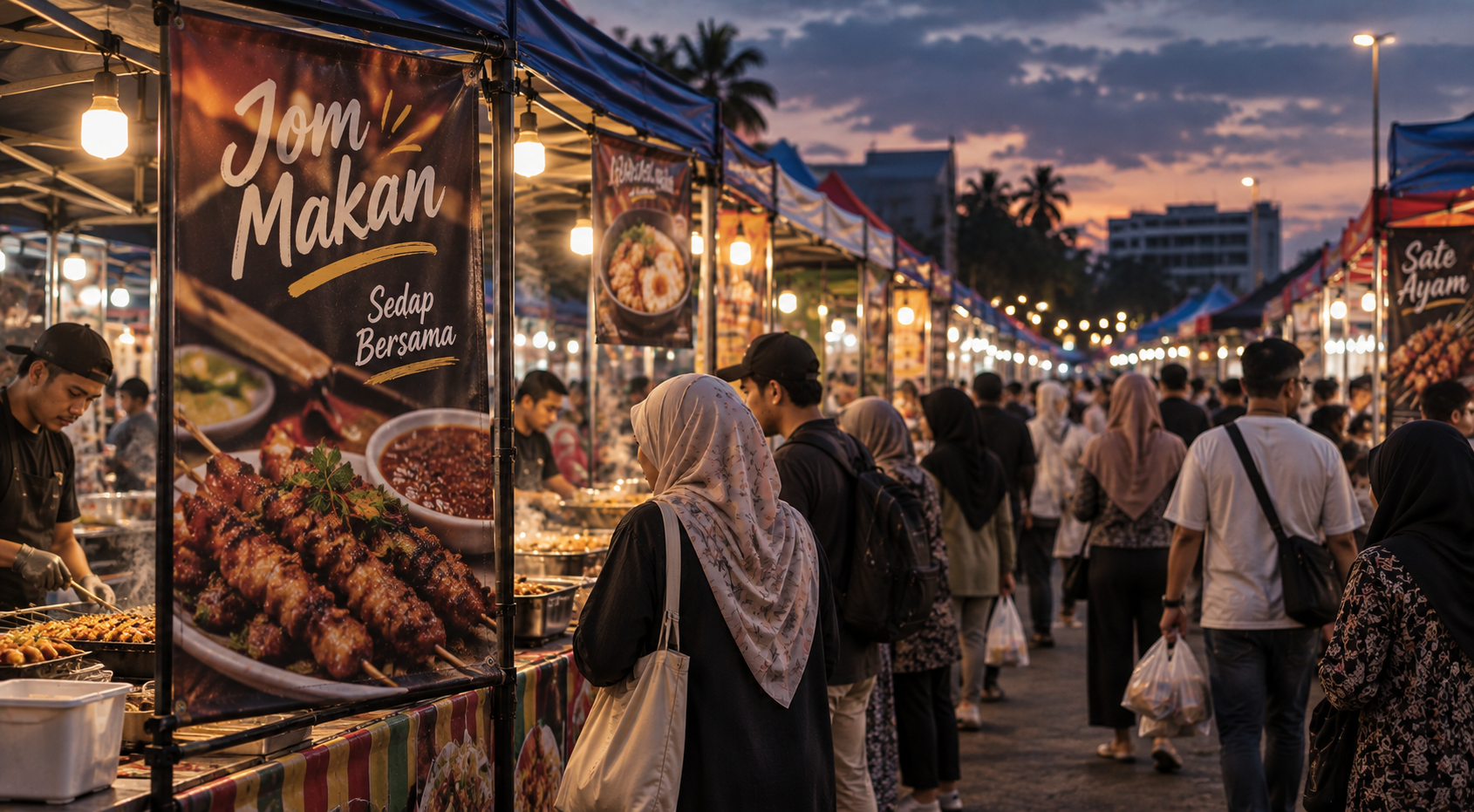
We have all seen event banners where the images are so obviously AI-generated that we can almost spot the usual signs immediately. Faces that look slightly too perfect. Hands that do not quite make sense. Backgrounds that look impressive from a distance but become strange the moment we look closer. Sometimes even the wording feels generated, polished in that very familiar way that now seems to appear everywhere.
And this is not just happening online.
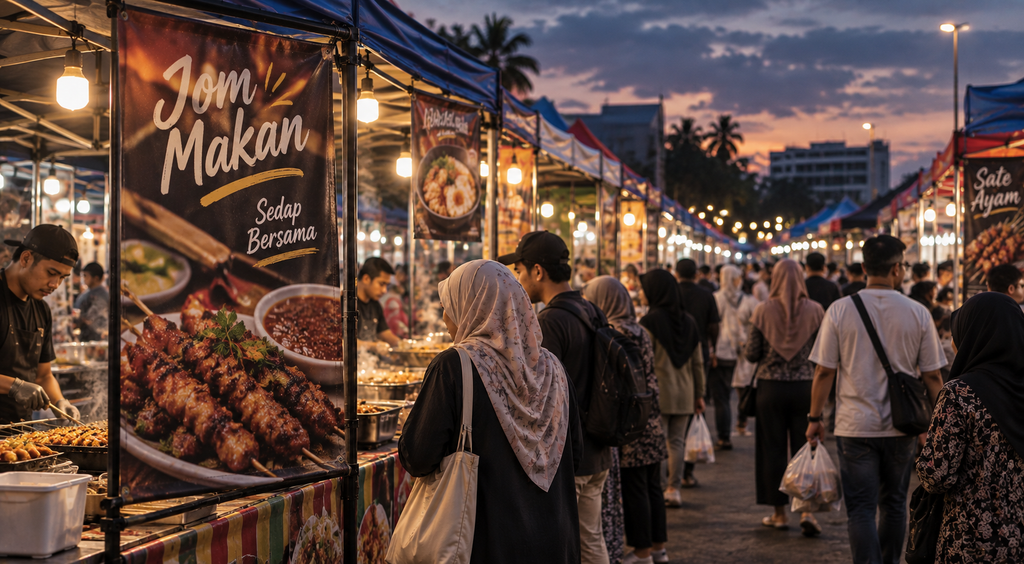
We see the same thing at food streets, pasar malam and small vendor stalls. Large printed banners, menu boards, posters and promotional materials using AI-generated images. Some are simple. Some are actually quite good. But once we start noticing them, we begin to see them everywhere.
Then we go back online and the pattern continues.
LinkedIn carousels with the same kind of structure. Instagram captions that sound oddly familiar. Long reflective posts that feel polished but somehow empty. Promotional copy, campaign messages and even words written to support a cause that sound as though they came from the same place.
Sometimes it is not just the words. The entire thing has been generated.
The image. The caption. The headline. The carousel. The video.
And it is not only small businesses or individuals doing this.
We have seen large organisations use AI-generated videos and images for advertisements, health promotions, safety messages and public awareness campaigns. We have seen presentations at major conferences filled with AI-generated visuals and AI-written text. Speeches can be drafted by AI. Talking points can be generated in seconds.
Then there is the workplace.
I am sure many of us have been in a meeting where someone asks a question and another person checks ChatGPT or Gemini.
Or an idea appears in a WhatsApp group and suddenly everyone is discussing it. Maybe the person came up with it. Maybe AI did. Sometimes we cannot really tell.
Someone wants a slogan for a programme, a message to promote a cause, a response to an issue, an explanation for a decision. AI gives them something quickly, and that answer becomes part of the conversation.
Perhaps that is why the change has been so easy to miss. None of these moments feels significant enough on its own for us to stop and question it. We see one AI-generated banner and move on. We read a caption and keep scrolling. Someone quotes ChatGPT in a meeting and the discussion continues.
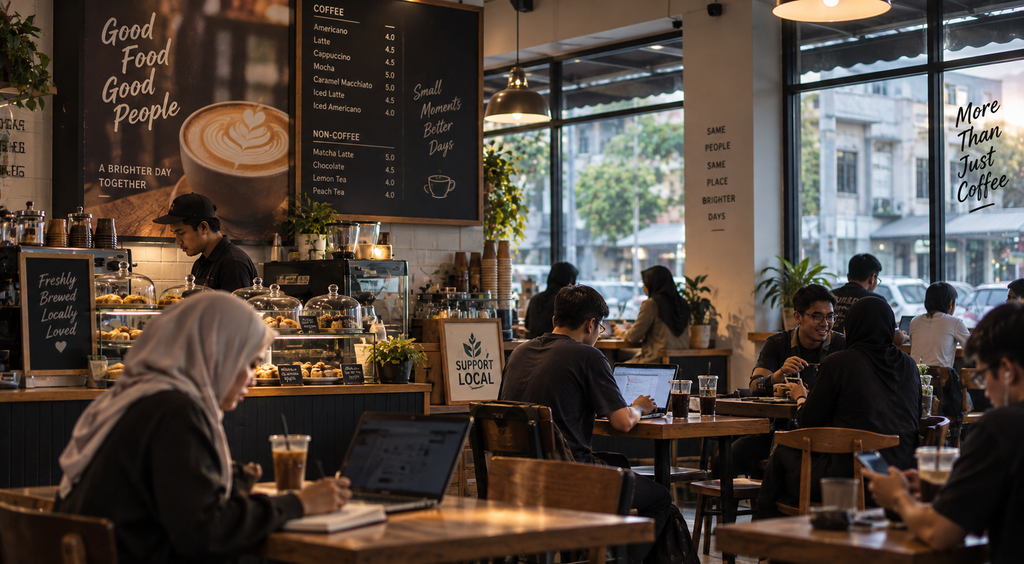
But after a while, these are no longer isolated little things happening around us. Together, they start to show just how much AI has quietly entered the way we communicate, create, work and even think through decisions.
We are no longer talking about AI as something that might become part of everyday life.
It already has.
And I am not sure we ever really stopped to ask what that means.
Where Does Assistance End?
I should probably make something clear here. I am not against using AI. I use it too, quite a lot actually. I use it to explore ideas, challenge my thinking, organise things, help me understand something unfamiliar and sometimes improve something I have written. I understand why we use it. It is useful, fast and often incredibly convenient.
But when I went back to the data from my 2025 Brunei and Generative AI survey, one finding started to interest me more than the adoption figure itself. Among the 431 respondents, 73.3 per cent said that whether Generative AI is ethical depends on how it is used.
I think that is worth stopping at for a moment.
They were not simply saying AI is good. They were not saying it is bad either. Most were saying, essentially, it depends.
Depends on what?
That becomes more interesting when we look at what those respondents considered acceptable. Among those who said ethics depended on how AI was used, 82.6 per cent were comfortable with AI assisting in writing, content creation or brainstorming. More than seven in ten accepted it for personal learning or tutoring.
But only 10.4 per cent accepted AI fully generating academic or workplace essays and reports. Only 14.9 per cent accepted decisions being made without human oversight. Replacing human jobs unfairly was accepted by just 5.4 per cent.
Don’t you think that tells us something?
The respondents did not seem particularly afraid of AI helping us. What they appeared much less comfortable with was AI replacing human judgement or responsibility.
And once I looked at the findings that way, I started thinking again about all those things we now see around us.
The AI-written LinkedIn post. The presentation that may have been almost entirely generated. The advertisement made without a designer. The speech that sounds good, but perhaps the person giving it did not actually write much of it. The idea from ChatGPT that enters a meeting and suddenly becomes everyone’s problem to discuss.
Where does assistance end and replacement begin?
Perhaps that sounds like an easy question until we try to answer it for ourselves.
If AI gives me ten ideas and I develop one of them, that feels like assistance. But what if AI develops the idea, writes the argument and gives me the examples, and I mainly edit the wording? Is that still assistance?
If AI helps a designer explore different concepts, that seems very different from a company deciding it no longer needs the designer at all. But where exactly do we draw that boundary?
And if most respondents in my survey seemed to believe that how AI is used matters, who is helping us decide what responsible use actually looks like?
So Who Decides the Boundaries?
This is where another finding becomes uncomfortable.
In the same 2025 survey, 81 per cent of respondents were either unaware of or unsure about organisational or national guidelines on the ethical use of Generative AI. Only 19 per cent said they were aware of such guidance.
Think about that for a moment.
On the one hand, people were telling us that the ethics of AI depends on how we use it. They were clearly distinguishing between AI helping people and AI taking over work, judgement or responsibility.
But at the same time, most were either unaware of or unsure about the guidance that might help them navigate those choices.
So what happens in the middle?
Do we simply work it out for ourselves?
Perhaps that is exactly what has been happening.
One person decides it is fine to generate an entire post without disclosure. Another person thinks that is dishonest. One organisation uses AI-generated images throughout a public campaign. Another refuses to do so. One manager is comfortable allowing AI to draft a recommendation. Another wants every AI-generated claim checked first.
We may all be talking about “responsible AI”, but are we actually talking about the same thing?
The workplace data raises another question. Among the 341 employed or self-employed respondents in my survey, 70.7 per cent said their workplace or university did not provide Generative AI training. At the same time, 86.3 per cent of the overall respondents said they would use Generative AI more if more training were available.
Again, this was 2025. I am not claiming those percentages describe Brunei today. Workplaces may have changed. Awareness may have improved. More guidance may now exist.
But surely the picture from that moment still deserves some reflection.
People were already using AI. Many believed responsible use depended on context. Many wanted more support. Yet structured training and awareness of guidance were limited among the respondents.
Is it any surprise, then, that the way we use AI in everyday life seems to be developing faster than our shared expectations around it?
Are We Only Teaching People How to Use AI?
And perhaps training itself needs to change too.
We are very good at showing people what AI can do. How to prompt it. How to generate an image. How to make a presentation faster. How to summarise a document. How to save time.
Those things are useful.
But should we not also be teaching people when to stop?
When should we disclose that AI did most of the work?
When does an answer need to be checked before it is repeated?
When should a person be able to explain an idea without opening ChatGPT again?
When is the faster option perhaps not the better option?
These questions become especially important when AI starts entering decisions.
My survey respondents were clearly uncomfortable with decisions being made without human oversight. Yet what does “human oversight” actually mean in practice? Does it mean a human being simply clicks approve? Does it mean someone reads the AI answer? Or does it mean someone understands the issue well enough to challenge the AI, reject it and take responsibility for whatever happens next?
There is a difference.
I keep thinking about the phrase we increasingly hear in meetings: “ChatGPT says…” There is nothing wrong with asking ChatGPT. But shouldn’t the next sentence matter more?
“I checked it.”
“I disagree with it.”
“It does not fit our context.”
“I think we should do something else.”
Or even, “I don’t know yet. I need to think about this.”
Perhaps one of the things AI is quietly changing is our patience with not knowing.
What Happens to What Is Ours?
Then there is creativity.
Only 5.4 per cent of those respondents accepted what the survey described as replacing human jobs unfairly. That sounds straightforward until we ask what “unfairly” actually means.
If a small food vendor uses AI to make a menu because they cannot afford a designer, is that unfair? Probably not.
What if a large company that can afford creative work replaces an entire campaign with generated images?
Is that different?
What if an organisation proudly talks about supporting local industries while using generated artwork instead of local artists?
Where should we draw the line?
I do not think there is one answer that works for every situation. That is precisely why I think we need the conversation. Especially in Brunei.
We are a small country. Our creative community is not enormous. Neither are our pools of writers, photographers, designers, musicians, videographers or illustrators. If “good enough and generated in five minutes” slowly becomes the default, what happens to those people? And perhaps just as importantly, what happens to what they would have created?
Would our posters look different? Would our advertisements sound different? Would our stories carry something more recognisably ours?
Would we even notice if that started disappearing?
Maybe this is why I am less interested now in another discussion telling people to “use AI responsibly”.
My own data suggests that respondents already understood something quite important: responsibility depends on what we allow AI to do and what responsibility we keep for ourselves. The bigger gap may be turning that instinct into everyday behaviour.
Maybe it means telling people when AI did most of something that others believe you created. Maybe it is checking an answer before bringing it into a decision. Maybe it is being able to defend an idea instead of saying, “ChatGPT suggested it.” Maybe it is organisations finally deciding what their own boundaries are rather than leaving every employee to guess. And sometimes maybe it is simply asking one question before opening the prompt box:
Do I actually want AI to do this for me?
I do not think we should stop using AI.
But my 2025 survey tells me something I find much more interesting now than I did when I first collected the responses. People seemed to know that there should be a line somewhere. They were comfortable with assistance, but far less comfortable when AI started replacing judgement, authorship or human responsibility.
Maybe this is the part we have missed. AI did not arrive through one big moment where we all decided we were ready for it. It came through small things: a caption, a poster, a presentation, an answer in a meeting, an idea in a WhatsApp group. Each one seemed useful enough, harmless enough, convenient enough. So life carried on.
And slowly, AI became part of how we work, create, communicate, make decisions and even express ourselves.
Have we really stopped to think about what that means for Brunei? If AI becomes part of the way we write, design, speak, decide and tell our stories, what happens to the things that make those things recognisably ours? Our judgement. Our creativity. Our language. Our culture. Our way of seeing the world.
This is no longer about AI becoming normal. It already is.
The question is: what kind of normal do we want, and what parts of ourselves as Bruneians are we not willing to hand over?
Because if we do not decide that consciously, one day we may look around and realise that “normal” was decided for us.
So when did we decide this was normal?