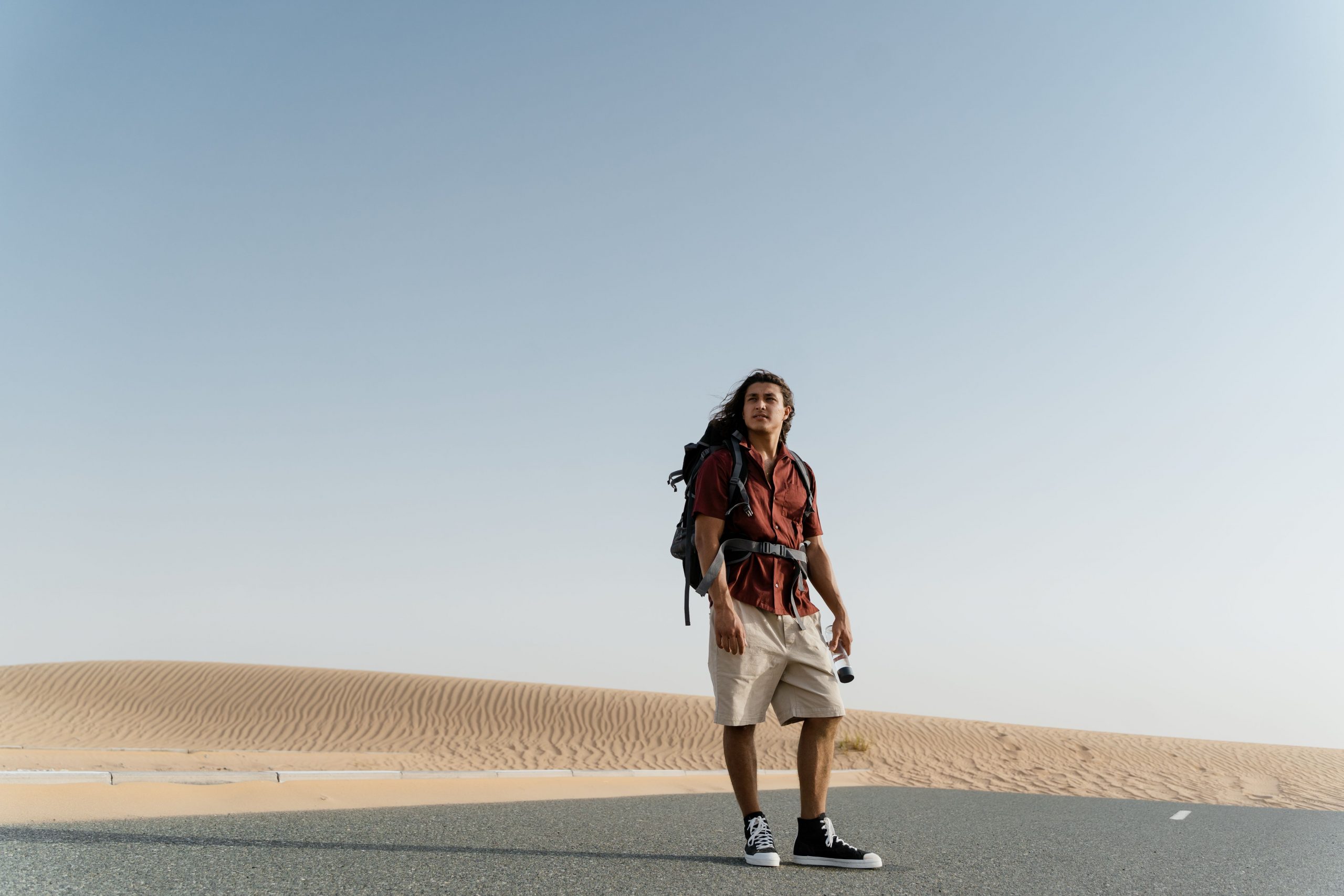
Anyone who has walked from an air-conditioned office in Bandar Seri Begawan to a car parked in the midday sun knows the feeling. Our tropical climate means warm temperatures and high humidity for much of the year, followed by sudden downpours. Dressing well here is about comfort as much as style.
Choose the right fabrics
Cotton is the classic choice: soft, breathable and easy to wash. Linen is even airier and dries quickly, though it creases easily, which many people now embrace as part of its relaxed charm. Fabrics made from bamboo-derived fibres and some modern moisture-wicking blends are also popular for their soft, cool feel.
Heavy polyester and tightly woven synthetics tend to trap heat and moisture, so save them for air-conditioned events. When shopping, hold a fabric up to the light: if you can see a little through the weave, it will probably breathe better.
Fit, colour and smart habits
Loose, flowing cuts allow air to circulate around the body. This works beautifully with modest dress too: wide-leg trousers, relaxed tunics and loose kurung are naturally suited to the climate. Tight clothing, on the other hand, holds sweat against the skin.
Lighter colours reflect more sunlight than dark ones, which is why whites, creams, soft greys and pastels feel noticeably cooler outdoors. If you love darker shades, save them for evenings or indoor settings.
For headscarves, lightweight materials such as cotton voile or breathable jersey can make a real difference on hot days. An inner cap made from a moisture-wicking fabric can also help.
Footwear matters more than people think. Breathable shoes, leather sandals or canvas sneakers are kinder to your feet than closed synthetic styles. With rain always a possibility, it is worth keeping a pair of quick-drying shoes and a compact umbrella in the car.
Finally, think about layers for the indoor chill. Many offices, malls and cinemas keep the air-conditioning cool, so a light cardigan or shawl in your bag lets you move between extremes comfortably.
Dressing for the heat does not mean sacrificing style. With the right fabrics and a few smart habits, you can stay cool from your morning kopi to your evening walk.
Your phone buzzes. A parcel is “on hold” and needs a small fee. Your bank account has been “suspended”. A stranger offers a remote job paying far more than it should. Online scams are a global problem, and people in Brunei are just as likely to receive these messages as anyone else. The good news is that most scams follow familiar patterns.
The warning signs
1. Urgency. Scammers want you to act before you think. Phrases like “within 24 hours” or “immediately” are designed to rush you.
2. Requests for codes or passwords. A one-time password (OTP) is meant only for you. Legitimate organisations will not ask you to read it back to them over the phone or by message.
3. Strange links. Look closely at web addresses. Misspellings, extra words or unfamiliar endings are red flags. When in doubt, type the official address yourself or use the organisation’s own app.
4. Payment in unusual forms. Requests for gift cards, cryptocurrency or transfers to a personal account are classic scam tactics.
5. Too good to be true. Prizes you never entered, investments with “guaranteed” high returns, and jobs that pay generously for simple “liking” tasks are almost always traps.
6. Emotional pressure. Some scams impersonate a relative in trouble or play on romance. If someone you have never met in person asks for money, stop and talk to family first.
7. Poor grammar and generic greetings. Not every scam is badly written, but “Dear Customer” and awkward phrasing should make you pause.
What to do next
If a message worries you, do not reply and do not click. Contact the organisation directly using a phone number or website you already trust. Turn on two-factor authentication for your email, banking and social media, and keep your phone’s software updated.
If you think you have been caught out, act quickly: call your bank using its official number, change your passwords, and report the incident to the police. Speed can make a real difference.
Finally, share what you know. Older relatives, younger siblings and busy colleagues are all targets. A quick chat over dinner about “that suspicious message” could save someone a great deal of stress, and money.
If you drive past a park or along a quiet road just after dawn, you are likely to see them: runners in bright shoes, some alone with earphones, others moving together in cheerful groups. Running has become one of the most popular ways to stay fit around the world, and Brunei is no exception.
Part of the appeal is simplicity. You need little more than good shoes and comfortable clothes. There is no court to book and no expensive equipment. You can run around your neighbourhood in Sengkurong, along a trail near Tasek Lama, or on a flat stretch close to the beach at Jerudong.
The rise of the run club
Globally, one of the biggest shifts in recent years has been the growth of social run clubs. Rather than serious training groups, many are relaxed gatherings where pace matters less than showing up. People run together, then linger for breakfast or a drink afterwards. For many, it has become a way to meet new people as much as a way to get fit.
That social side suits Brunei well. In a close-knit country where much of life revolves around community and shared meals, a Saturday morning run followed by nasi katok or roti with friends feels like a natural fit.
Fitness apps and smartwatches have added another layer. Tracking distance, pace and progress keeps many runners motivated, and sharing routes with friends adds a little friendly competition.
Running with the climate
Our weather does demand respect. Heat and humidity make running harder and increase the risk of dehydration and heat exhaustion. That is why so many local runners head out early in the morning or after sunset, when temperatures are gentler.
Hydrate before and after, and carry water on longer runs. Wear light, breathable clothing, and listen to your body; slowing down on a sticky day is sensible, not a failure. If you have any health conditions, it is wise to check with a doctor before starting.
Perhaps the most compelling reason to run is how it changes the way you see home. Familiar roads look different at sunrise, and there is something special about watching the sky brighten over the trees while the city wakes up. Whether you are chasing a personal best or simply a better mood, the road is waiting.
Brunei has always loved a good drink and a good chat. For generations, the local kedai kopi has been a place to catch up over teh tarik, kopi and a plate of roti or nasi katok. That tradition is alive and well. But alongside it, a newer café culture has taken root, particularly around Gadong, Kiulap and other busy parts of Bandar Seri Begawan.
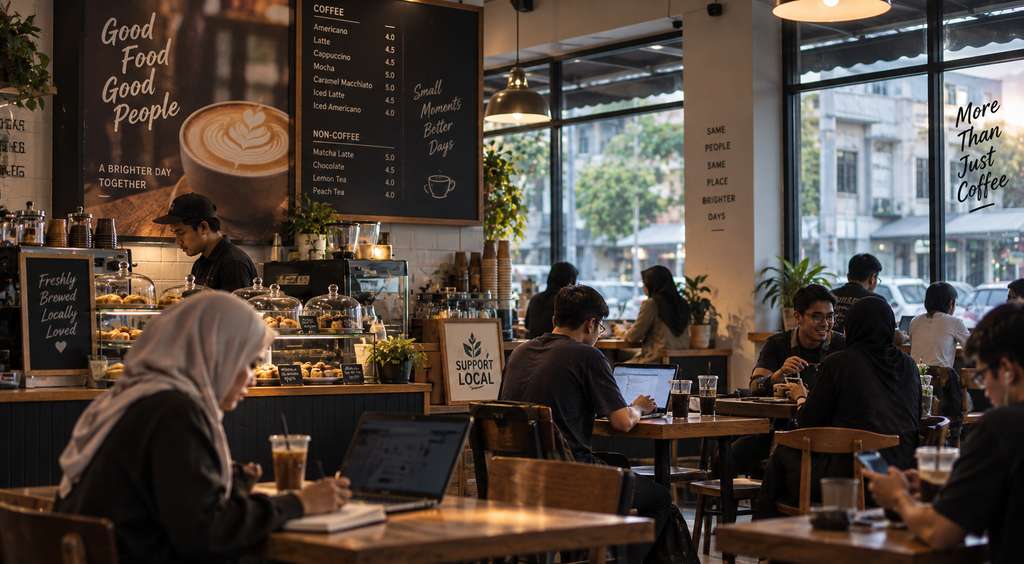
These cafés feel different. Think exposed brick or minimalist white walls, leafy plants, carefully brewed coffee and menus that range from matcha lattes to Basque burnt cheesecake. Many are small, independent businesses, often started by young Bruneians who fell in love with coffee culture while studying or travelling abroad.
More than a caffeine fix
Why the appeal? Partly, it is about having a “third place”: somewhere that is neither home nor work. In a country where nightlife revolves around food and conversation, cafés offer a relaxed setting to meet friends, hold informal meetings or simply sit with a book.
Students and remote workers have embraced them too. A reliable Wi-Fi connection, a power socket and a quiet corner can turn a café into a study hall or a temporary office. Many cafés have become known for their laptop-friendly atmosphere, while others deliberately encourage a slower, screen-free pace.
Then there is the visual side. Photogenic interiors, latte art and colourful desserts make cafés a natural fit for social media, and discovering a new spot has become a small adventure in itself.
Old and new, side by side
What makes Brunei’s café scene special is that it has not replaced the old ways. Many new cafés playfully draw on local flavours, with drinks inspired by pandan, gula apong or durian, and snacks that nod to traditional kuih. Meanwhile, the humble kedai kopi remains the go-to for an affordable breakfast before work.
If you want to explore, try a little café-hopping on a weekend morning, before the midday heat sets in. Ask the barista for a recommendation, sample something local, and linger a while. Supporting independent cafés helps keep the scene diverse and creative.
Whether you prefer a single-origin pour-over or a sweet, frothy teh tarik, there has never been a better time to pull up a chair.
Electric vehicles, or EVs, are no longer a curiosity. Across Southeast Asia, more models are arriving in showrooms, prices for some have come down, and governments in several countries are encouraging their adoption. Naturally, many Bruneian drivers are wondering whether an EV makes sense for them.
It is a more nuanced question here than in some neighbouring countries. Brunei’s petrol has long been famously affordable, so the fuel savings that attract drivers elsewhere may be less dramatic. Still, EVs offer other benefits: quiet, smooth driving, instant acceleration, and fewer moving parts to maintain.
Questions to ask before buying
Where will you charge? For most EV owners, home charging is the key to convenience. If you live in a landed house with a car porch, installing a home charger may be straightforward, though it should always be done by a qualified electrician. Apartment dwellers will need to think harder about access.
What does public charging look like? Before buying, check the current availability of public chargers along your usual routes, for example between Bandar Seri Begawan, Tutong and Kuala Belait. Charging infrastructure changes quickly, so ask dealers for up-to-date information.
How far do you actually drive? Brunei’s compact size works in favour of EVs. Many daily commutes are short, and a modern EV’s range should comfortably cover most routine trips. If you often drive into Sarawak or Sabah, plan more carefully.
Heat, rain and after-sales care
Batteries do not love extreme heat. Parking in shade or covered spaces where possible is good practice, and most modern EVs have battery cooling systems designed for warm climates. Ask the dealer how the model handles tropical conditions.
After-sales support is just as important as the car itself. Find out about warranty terms, especially for the battery, and whether local workshops have the trained technicians and parts to service the vehicle. Insurance premiums and resale value are also worth checking before you commit.
An EV will not suit every driver today, and that is fine. But for households with home charging and predictable commutes, it may be worth a test drive. The future of motoring is arriving gradually, and it pays to arrive informed.
Walk through any mall in Gadong during the lead-up to Hari Raya and you will see it: racks of baju kurung in every imaginable shade, tudong in soft chiffons and crisp cottons, and shoppers carefully matching colours for the whole family. Modest fashion is not a new idea here. It is simply how many Bruneians have always dressed.
What has changed is the rest of the world. Over the past decade, modest fashion has grown into a significant global market, with dedicated fashion weeks, international brands releasing modest collections, and a wave of designers and online creators across Southeast Asia and the Middle East building loyal followings.
Tradition with a twist
That global attention has fed back into local style. Traditional silhouettes are being reinterpreted with modern cuts: looser, flowing kurung with minimal detailing, kaftan-inspired pieces, and co-ordinated sets that work just as well at the office as at a family gathering. Muted earth tones and pastels sit alongside the bold jewel colours many families choose for Raya.
Layering has become an art form. A long tunic over wide-leg trousers, an open outer layer over a simple dress, or a structured blazer paired with a tudong in a complementary tone can look polished while keeping to modest principles. Accessories, from brooches to statement handbags, do much of the talking.
Fabric is part of the conversation too. In our heat and humidity, breathable materials matter, and many shoppers now look for lighter weaves and natural fibres that drape well without clinging.
Supporting local makers
One of the most encouraging parts of this trend is the space it creates for home-grown talent. Local tailors and small online boutiques have long been the backbone of Raya wardrobes, and social media has made it easier for them to reach customers across the country. Commissioning a tailor-made outfit, rather than buying off the rack, is still a cherished tradition for many families.
At its heart, modest fashion in Brunei is about more than clothing. It reflects values, identity and a sense of occasion. That the rest of the world is now paying attention is simply a bonus, and perhaps a reminder that elegance has never depended on showing more.
Not so long ago, “artificial intelligence” sounded like something from a science fiction film. Today, for many people in Brunei, it is as ordinary as checking the weather before driving to Gadong. AI chat assistants now sit inside phones, browsers and office software, and people are using them for tasks big and small.
A civil servant might ask one to tidy up the wording of a formal letter. A university student in Tungku might use it to explain a tricky statistics concept in simpler terms. A home cook in Tutong might ask for ideas on using leftover rendang. None of these uses are dramatic, and that is exactly the point: AI has become a background helper rather than a headline.
Where it genuinely helps
The tools shine at first drafts and brainstorming. Staring at a blank page is hard; editing a rough draft is much easier. They are also handy for summarising long documents, suggesting a structure for a presentation, or translating a quick message between Malay and English so you can check you have understood something correctly.
Small business owners have found them useful too. Writing product descriptions for an online kuih shop, drafting a polite reply to a customer, or sketching out a simple weekly social media plan can take minutes rather than an evening. That frees up time for the parts of the business that need a human touch.
Where to be careful
AI tools can sound confident while being completely wrong. They sometimes invent facts, mix up dates or misunderstand local context, which matters in a country with its own customs, laws and institutions. Anything important, whether it involves health, money, legal matters or religious guidance, deserves a check with a qualified person or an official source.
Privacy is the other big consideration. It is wise not to paste in your IC number, bank details, confidential work files or private family matters. A good rule of thumb: if you would not post it on a public noticeboard, think twice before typing it into a chatbot.
Used sensibly, these assistants are less a replacement for thinking and more a patient study partner who never tires of your questions. The trick is to stay in the driver’s seat, letting the machine help with the legwork while you make the decisions. After all, it can suggest a recipe for ambuyat, but it still cannot tell you whether the cacah is just right.
AS THE haze that has been suffocating Borneo continues to hang around, some members of the public in Brunei Darussalam have reached out to us to raise their concerns about a different kind of affliction.
Open burning, and the resulting air pollution that’s near identical to the haze, but in almost all cases a dramatic and more upfront affect to those that are in direct proximity to it.
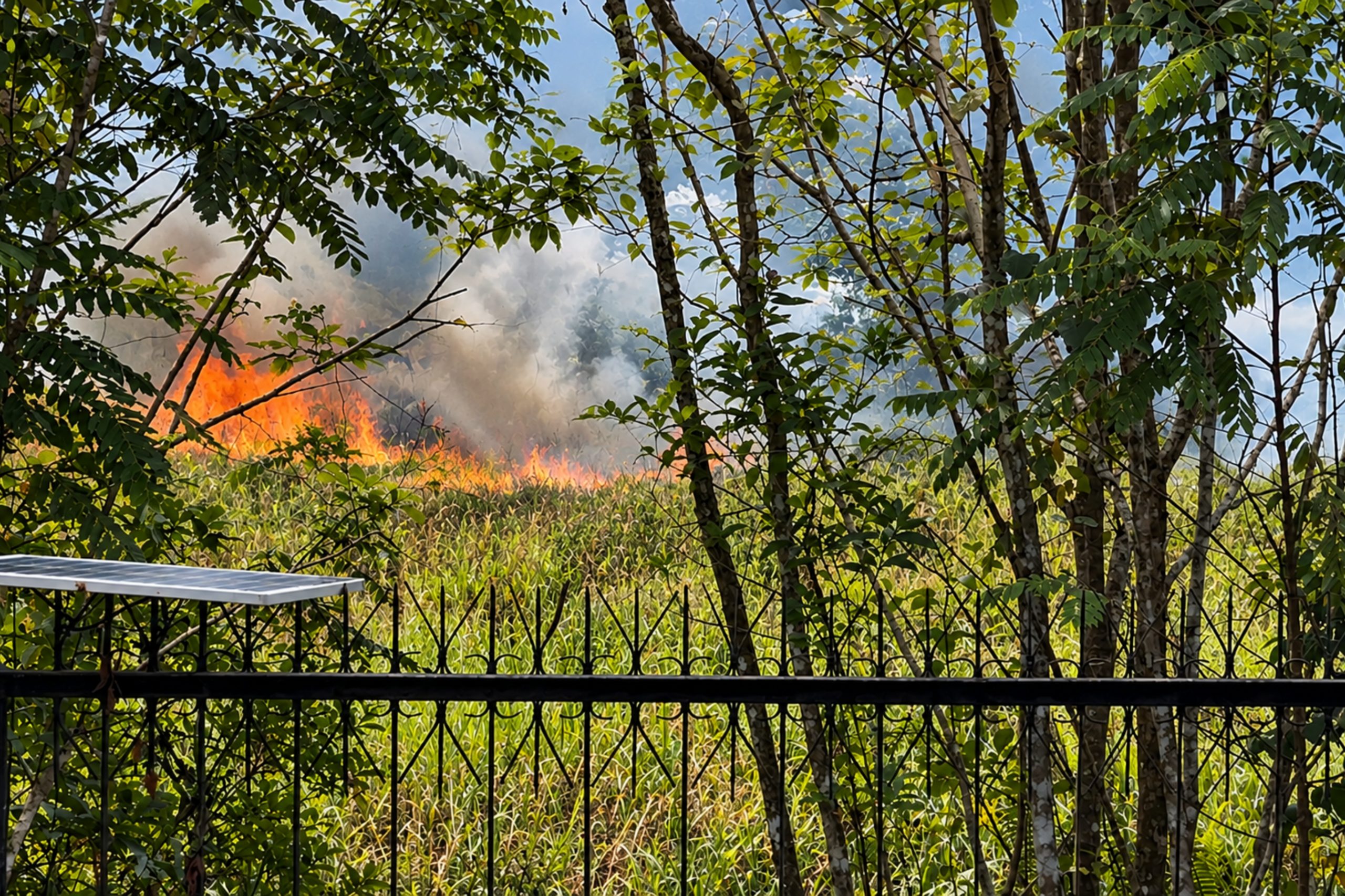
For Mrs Rose Rahman, it became all the more real because of how a wreckless and lazy effort to clear an open plot of land meant that it came within meters of the fire reaching her home. A video was shared with TNBD, and along with this article you will find the screencaps from the incident.
A close call
“My son could hear the fire crackling from the living room upstairs. He was with my husband at the time, and my two-year-old asked him, ‘Daddy apa tu?’”
“We were so startled because when we looked out our window, there was a man rushing about with a stick, trying to beat the brush and control the spread of the flames.
“He was not very successful, and we grew even more concerned when two other people joined him to try and control the fire,” she said. It seemed they were part of a crew or team of people that were asked to clear the area. Thankfully, they were able to put out the fire that they started, but such a scenario could have turned worse. (Several days later an excavator was brought in to dig up the burnt area – Ed)
Which begs the question, why would someone spend so much effort beating out a fire with some branches, so much so it took several people frantically moving across the area to clear the land when a machete or grass cutting equipment would take about the same amount of time, cause less environmental harm and significantly less danger overall.
Mrs Rose stressed that it wasn’t the first time in her neighbourhood, and her husband Ismail, said it is almost comical that its taking place during a time where the whole country is having to deal with the transboundary pollution that has been ongoing for several weeks now.
Since the haze has been affecting Brunei Darussalam, she said the open burning takes place each time there has been an easing of the haze, and once even when it was very hazy. However, even without the haze, the open burning would take place every other week in their residential area of Beribi-Jangsak on the edge of Bandar Seri Begawan.
Openly burning
Mrs Noor Ramli is a fellow TNBD reader that shared how her young family, she is also the mother of a two-year-old child, went for a Sunday drive at the end of last week, and were dismayed at seeing a large number of people open burning.
“It irks me on a normal day, but with the haze and all the health risks that come with it, seeing people just burning away really gets on my nerves.
“From Jerudong to Muara with a few detours here and there, it was just shocking how many people were doing open burning along the way,” she said.
In the Lambak Kanan National Housing Scheme area alone, it seemed there was one every few houses. “Granted, we had a good few days before that with a relatively good (air quality) index, but that shouldn’t give people to just openly burn,” said Mrs Noor.
Her opinion is that some members of the public are not taking the long term health risks of the haze seriously, even though in other countries there have been numerous reports of those getting significantly ill in the more affected regions in Southeast Asia dealing with the haze. “It isn’t just the toxicity of the air we’re breathing or the health risks that come with it, we (in Brunei) have been blessed with some rain recently, but what happens if we have an actual dry spell? Most of this island is already burning, we can’t afford to have our own country burning too, it’s an ecological disaster,” she said.
Not just organic material
Ask any Bruneian about it, and especially the older generation would have told you that it is something that would typically be done to get rid of rubbish and waste. Before, perhaps 50 years and beyond, that would have meant far more organic material. Grass clippings, twigs, branches, leaves green and dead, anything that was swept up around the gardens would be put into a quasi-compost heap, and then literally torched.
I remember riding my bicycle and seeing someone do all of that and gather the ashes and spreading them around their garden and vegetable patch, except windy days, as it would just be absolute pandemonium with dust and soot flying any which way or how.
In the years since then though plastics were also thrown into the equation, and at a time I remember PSA and advisories for people to not burn aerosol cans and batteries. I told my elder children about this some time ago, and I was met with a ‘bruuuuhhh’ and eye roll combination so savage it almost knocked me off my chair.
They (my daughters) think it was incredulous that people would be burning such things, with the toxic smoke and air to come from such fires literally poisoning all things living.
Sadly, the year is 2026 and attitudes remain unchanged.
Escalate to JASTRe
Just as concerning is that both readers, when informed by TNBD that incidences usually need to be reported, said that they have reported their respective incidences in the past, with not much to show for it.
In fact, Mrs Rose explained that in the first instance she complained to the Darussalam Hotline (123) and complained again a second time when she believed her home was in danger.
“In both instances 123 said they would escalate to JASTRe (Department of Environment, Parks and Recreation at the Ministry of Development) and were very apologetic that such a thing was happening to me and apologized for the inconvenience caused.”
And the outcome? 123 asked if there had been any further open burning after the 1st and 2nd complaints were made, as well as the day of their final conversation. Mrs Rose responded with a no but explained that she couldn’t possibly tell because she has been at work following the first two instances and when they called her to ask.
“The Darussalam Hotline staff said they would close the current ticket number, and that if there was any other open burning witnessed, to call 123 again and they would open a new ticket. I would’ve just preferred for JASTRe to reassure me that the matter had been dealt with,” she said. “Otherwise how do I know whether or not I’ve been taken seriously.”
Call 123
I think another question that is on a lot of people’s mind, or at least those who care, when they hear talk of open burning is “how come people still do this?” There have been strict bans and advisories in the past by JASTRe.
And it must be a pertinent enough of an issue well known to them, as their website lists under their FAQ (Frequently Asked Questions) section, “Who to complain (to) when I see an open burning activity?” and the answer on their website is “Please call the Darussalam Hotline 123.”
In 1998, an order was put into place for offences relating to open burning could be punishable with fines and imprisonment, in particular where “such offence causes pollution to the atmosphere or endangers human life or property the punishment is of unlimited amount and or imprisonment of up to 5 years.” To me that sounds like a convincing argument to not light up my grass clippings, compost heap or rubbish, but I guess someone forgot to tell the frantic stick carrying brush fire beaters.
Judging from the timeline, it seems like it was put in place around the time when the transboundary haze issues were first experienced in the Sultanate.
For Mrs Noor, it seems a moot point, and asks even further, why aren’t more people getting penalized for the open burning. She asks, “How many times can they do this before getting fined? Will they even get fined?”, adding that people have been reported but nothing seems to be done.
“When will there be a real shift in attitudes and behaviours?
“They can put out as many notices as they want but without any consequences, nothing will change,” she said.
(Editor’s note – The names in this story have been changed and real names withheld to protect the identities our sources from the potential backlash of angry neighbours. While we feel any unsavoury action to follow should be reported accordingly, we also realise that prevention is better than cure, and as such have taken the necessary steps to ensure their safety.)
AI has become part of everyday life so quickly that I am not sure we ever stopped to decide what we were comfortable with.
We have all seen event banners where the images are so obviously AI-generated that we can almost spot the usual signs immediately. Faces that look slightly too perfect. Hands that do not quite make sense. Backgrounds that look impressive from a distance but become strange the moment we look closer. Sometimes even the wording feels generated, polished in that very familiar way that now seems to appear everywhere.
And this is not just happening online.
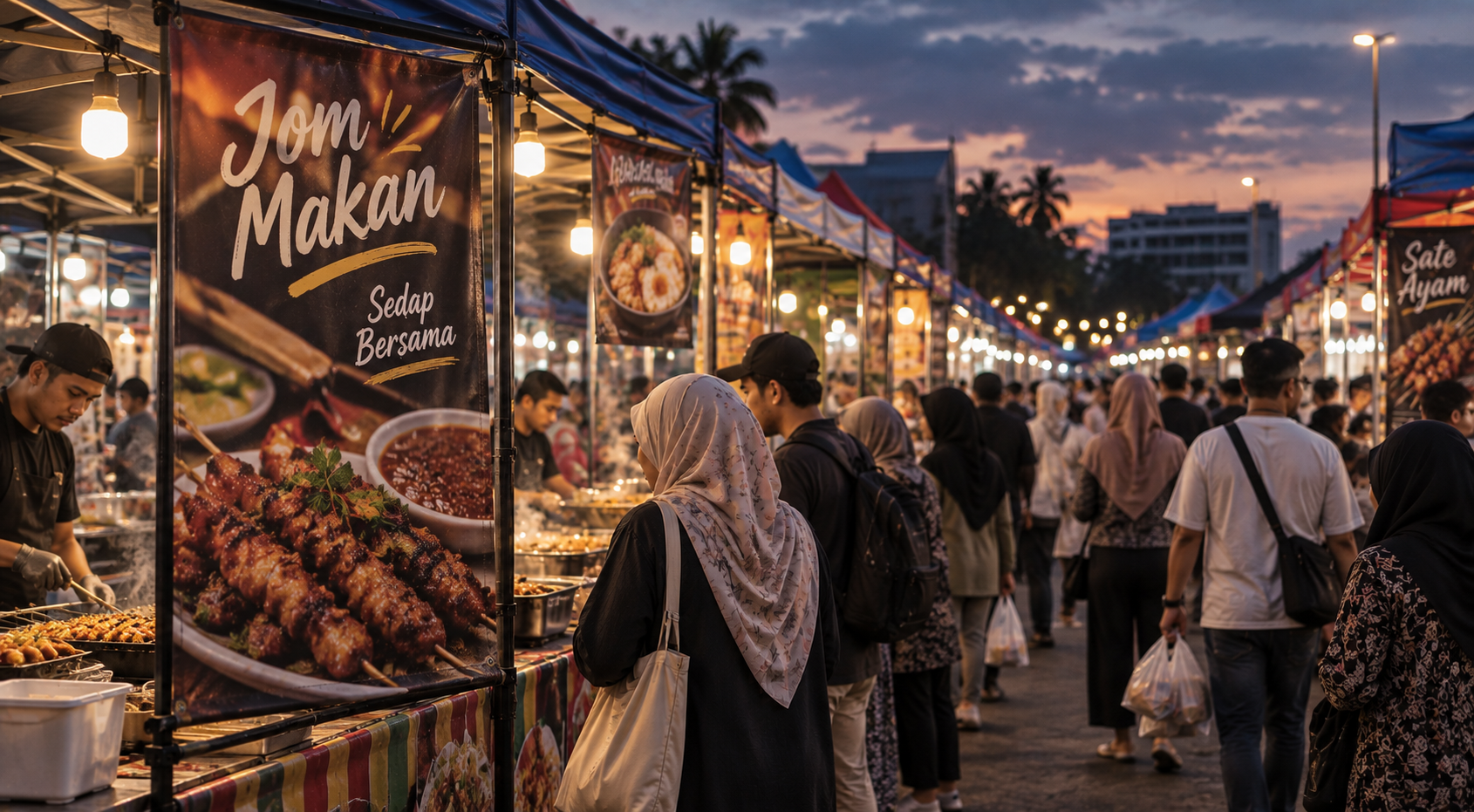
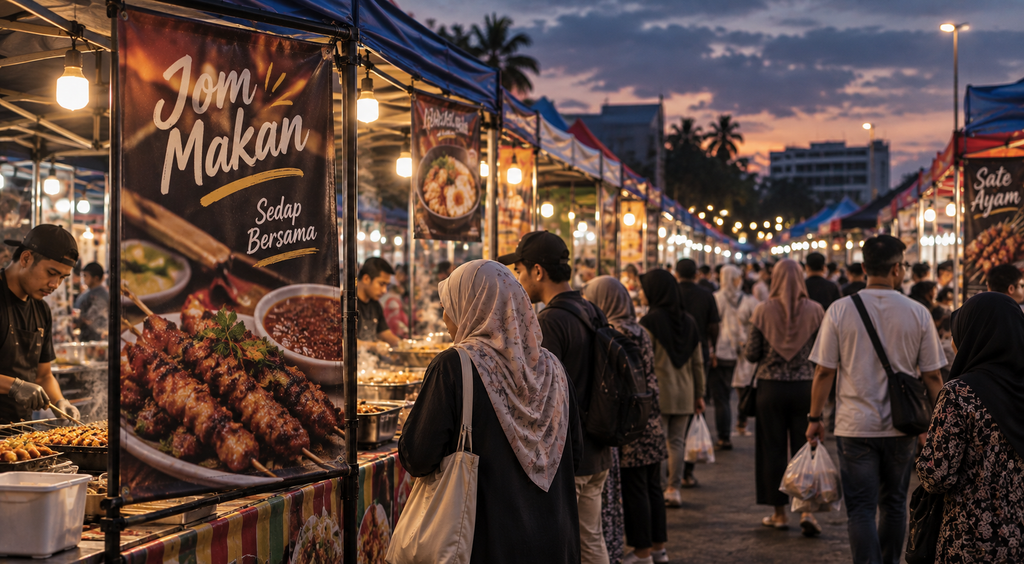
We see the same thing at food streets, pasar malam and small vendor stalls. Large printed banners, menu boards, posters and promotional materials using AI-generated images. Some are simple. Some are actually quite good. But once we start noticing them, we begin to see them everywhere.
Image illustrating AI-Generated banners used by food market stalls.
Then we go back online and the pattern continues.
LinkedIn carousels with the same kind of structure. Instagram captions that sound oddly familiar. Long reflective posts that feel polished but somehow empty. Promotional copy, campaign messages and even words written to support a cause that sound as though they came from the same place.
Sometimes it is not just the words. The entire thing has been generated.
The image. The caption. The headline. The carousel. The video.
And it is not only small businesses or individuals doing this.
We have seen large organisations use AI-generated videos and images for advertisements, health promotions, safety messages and public awareness campaigns. We have seen presentations at major conferences filled with AI-generated visuals and AI-written text. Speeches can be drafted by AI. Talking points can be generated in seconds.
Then there is the workplace.
I am sure many of us have been in a meeting where someone asks a question and another person checks ChatGPT or Gemini.
Or an idea appears in a WhatsApp group and suddenly everyone is discussing it. Maybe the person came up with it. Maybe AI did. Sometimes we cannot really tell.
Someone wants a slogan for a programme, a message to promote a cause, a response to an issue, an explanation for a decision. AI gives them something quickly, and that answer becomes part of the conversation.
Perhaps that is why the change has been so easy to miss. None of these moments feels significant enough on its own for us to stop and question it. We see one AI-generated banner and move on. We read a caption and keep scrolling. Someone quotes ChatGPT in a meeting and the discussion continues.
Image illustrating AI-Generatedcafe menus.
But after a while, these are no longer isolated little things happening around us. Together, they start to show just how much AI has quietly entered the way we communicate, create, work and even think through decisions.
We are no longer talking about AI as something that might become part of everyday life.
It already has.
And I am not sure we ever really stopped to ask what that means.
Where Does Assistance End?
I should probably make something clear here. I am not against using AI. I use it too, quite a lot actually. I use it to explore ideas, challenge my thinking, organise things, help me understand something unfamiliar and sometimes improve something I have written. I understand why we use it. It is useful, fast and often incredibly convenient.
But when I went back to the data from my 2025 Brunei and Generative AI survey, one finding started to interest me more than the adoption figure itself. Among the 431 respondents, 73.3 per cent said that whether Generative AI is ethical depends on how it is used.
I think that is worth stopping at for a moment.
They were not simply saying AI is good. They were not saying it is bad either. Most were saying, essentially, it depends.
Depends on what?
That becomes more interesting when we look at what those respondents considered acceptable. Among those who said ethics depended on how AI was used, 82.6 per cent were comfortable with AI assisting in writing, content creation or brainstorming. More than seven in ten accepted it for personal learning or tutoring.
But only 10.4 per cent accepted AI fully generating academic or workplace essays and reports. Only 14.9 per cent accepted decisions being made without human oversight. Replacing human jobs unfairly was accepted by just 5.4 per cent.
Don’t you think that tells us something?
The respondents did not seem particularly afraid of AI helping us. What they appeared much less comfortable with was AI replacing human judgement or responsibility.
And once I looked at the findings that way, I started thinking again about all those things we now see around us.
The AI-written LinkedIn post. The presentation that may have been almost entirely generated. The advertisement made without a designer. The speech that sounds good, but perhaps the person giving it did not actually write much of it. The idea from ChatGPT that enters a meeting and suddenly becomes everyone’s problem to discuss.
Where does assistance end and replacement begin?
Perhaps that sounds like an easy question until we try to answer it for ourselves.
If AI gives me ten ideas and I develop one of them, that feels like assistance. But what if AI develops the idea, writes the argument and gives me the examples, and I mainly edit the wording? Is that still assistance?
If AI helps a designer explore different concepts, that seems very different from a company deciding it no longer needs the designer at all. But where exactly do we draw that boundary?
And if most respondents in my survey seemed to believe that how AI is used matters, who is helping us decide what responsible use actually looks like?
So Who Decides the Boundaries?
This is where another finding becomes uncomfortable.
In the same 2025 survey, 81 per cent of respondents were either unaware of or unsure about organisational or national guidelines on the ethical use of Generative AI. Only 19 per cent said they were aware of such guidance.
Think about that for a moment.
On the one hand, people were telling us that the ethics of AI depends on how we use it. They were clearly distinguishing between AI helping people and AI taking over work, judgement or responsibility.
But at the same time, most were either unaware of or unsure about the guidance that might help them navigate those choices.
So what happens in the middle?
Do we simply work it out for ourselves?
Perhaps that is exactly what has been happening.
One person decides it is fine to generate an entire post without disclosure. Another person thinks that is dishonest. One organisation uses AI-generated images throughout a public campaign. Another refuses to do so. One manager is comfortable allowing AI to draft a recommendation. Another wants every AI-generated claim checked first.
We may all be talking about “responsible AI”, but are we actually talking about the same thing?
The workplace data raises another question. Among the 341 employed or self-employed respondents in my survey, 70.7 per cent said their workplace or university did not provide Generative AI training. At the same time, 86.3 per cent of the overall respondents said they would use Generative AI more if more training were available.
Again, this was 2025. I am not claiming those percentages describe Brunei today. Workplaces may have changed. Awareness may have improved. More guidance may now exist.
But surely the picture from that moment still deserves some reflection.
People were already using AI. Many believed responsible use depended on context. Many wanted more support. Yet structured training and awareness of guidance were limited among the respondents.
Is it any surprise, then, that the way we use AI in everyday life seems to be developing faster than our shared expectations around it?
Are We Only Teaching People How to Use AI?
And perhaps training itself needs to change too.
We are very good at showing people what AI can do. How to prompt it. How to generate an image. How to make a presentation faster. How to summarise a document. How to save time.
Those things are useful.
But should we not also be teaching people when to stop?
When should we disclose that AI did most of the work?
When does an answer need to be checked before it is repeated?
When should a person be able to explain an idea without opening ChatGPT again?
When is the faster option perhaps not the better option?
These questions become especially important when AI starts entering decisions.
My survey respondents were clearly uncomfortable with decisions being made without human oversight. Yet what does “human oversight” actually mean in practice? Does it mean a human being simply clicks approve? Does it mean someone reads the AI answer? Or does it mean someone understands the issue well enough to challenge the AI, reject it and take responsibility for whatever happens next?
There is a difference.
I keep thinking about the phrase we increasingly hear in meetings: “ChatGPT says…” There is nothing wrong with asking ChatGPT. But shouldn’t the next sentence matter more?
“I checked it.” “I disagree with it.” “It does not fit our context.” “I think we should do something else.” Or even, “I don’t know yet. I need to think about this.”
Perhaps one of the things AI is quietly changing is our patience with not knowing.
What Happens to What Is Ours?
Then there is creativity.
Only 5.4 per cent of those respondents accepted what the survey described as replacing human jobs unfairly. That sounds straightforward until we ask what “unfairly” actually means.
If a small food vendor uses AI to make a menu because they cannot afford a designer, is that unfair? Probably not.
What if a large company that can afford creative work replaces an entire campaign with generated images?
Is that different?
What if an organisation proudly talks about supporting local industries while using generated artwork instead of local artists?
Where should we draw the line?
I do not think there is one answer that works for every situation. That is precisely why I think we need the conversation. Especially in Brunei.
We are a small country. Our creative community is not enormous. Neither are our pools of writers, photographers, designers, musicians, videographers or illustrators. If “good enough and generated in five minutes” slowly becomes the default, what happens to those people? And perhaps just as importantly, what happens to what they would have created?
Would our posters look different? Would our advertisements sound different? Would our stories carry something more recognisably ours?
Would we even notice if that started disappearing?
Maybe this is why I am less interested now in another discussion telling people to “use AI responsibly”.
My own data suggests that respondents already understood something quite important: responsibility depends on what we allow AI to do and what responsibility we keep for ourselves. The bigger gap may be turning that instinct into everyday behaviour.
Maybe it means telling people when AI did most of something that others believe you created. Maybe it is checking an answer before bringing it into a decision. Maybe it is being able to defend an idea instead of saying, “ChatGPT suggested it.” Maybe it is organisations finally deciding what their own boundaries are rather than leaving every employee to guess. And sometimes maybe it is simply asking one question before opening the prompt box:
Do I actually want AI to do this for me?
I do not think we should stop using AI.
But my 2025 survey tells me something I find much more interesting now than I did when I first collected the responses. People seemed to know that there should be a line somewhere. They were comfortable with assistance, but far less comfortable when AI started replacing judgement, authorship or human responsibility.
Maybe this is the part we have missed. AI did not arrive through one big moment where we all decided we were ready for it. It came through small things: a caption, a poster, a presentation, an answer in a meeting, an idea in a WhatsApp group. Each one seemed useful enough, harmless enough, convenient enough. So life carried on.
And slowly, AI became part of how we work, create, communicate, make decisions and even express ourselves.
Have we really stopped to think about what that means for Brunei? If AI becomes part of the way we write, design, speak, decide and tell our stories, what happens to the things that make those things recognisably ours? Our judgement. Our creativity. Our language. Our culture. Our way of seeing the world.
This is no longer about AI becoming normal. It already is.
The question is: what kind of normal do we want, and what parts of ourselves as Bruneians are we not willing to hand over?
Because if we do not decide that consciously, one day we may look around and realise that “normal” was decided for us.
As the haze continues its grip on Brunei Darussalam, the public’s concerns from the last week or so has mounted, resulting in the authorities taking action as the Air Quality Indexed progressively worsened.
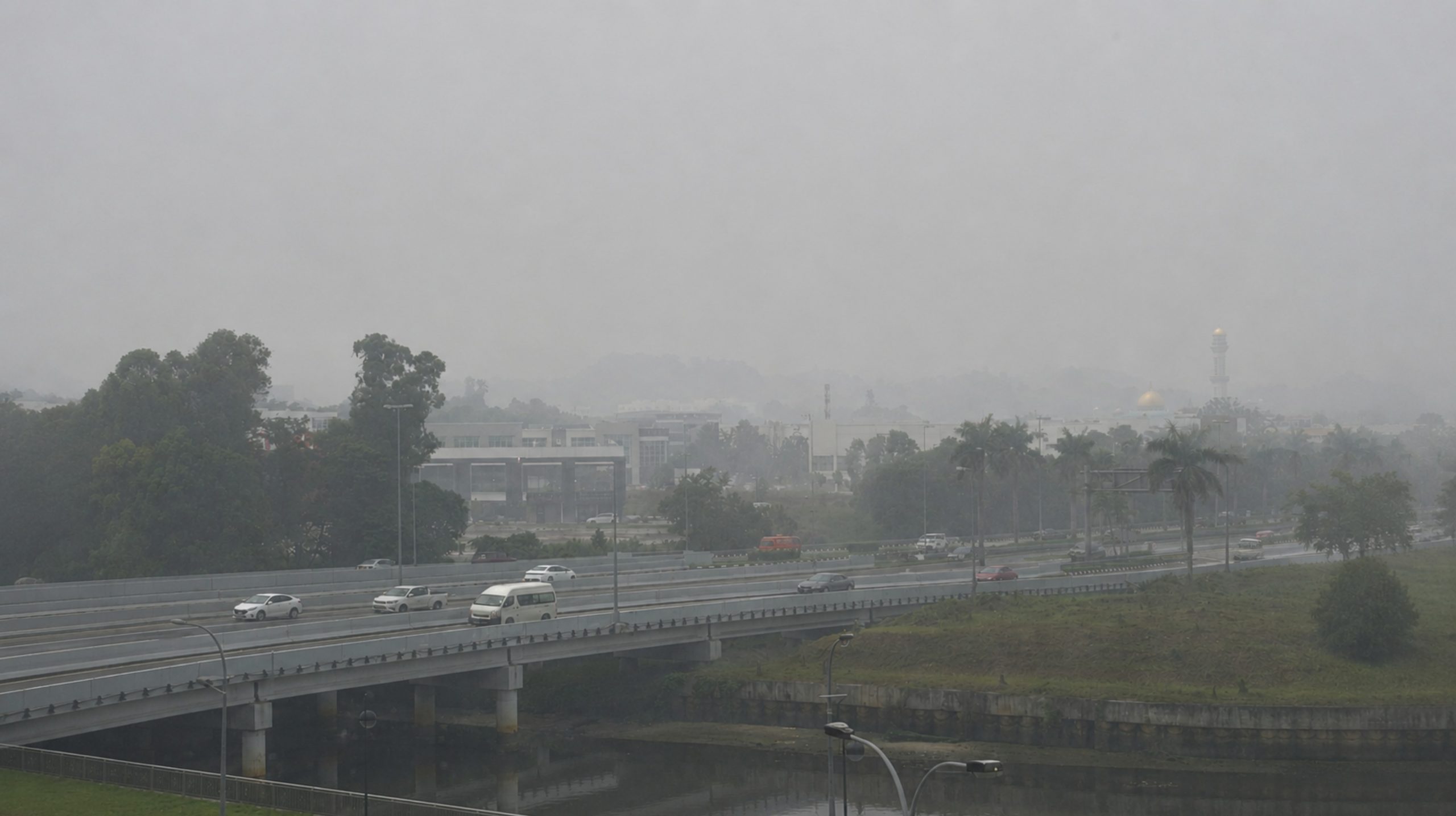
Coincidentally, from our office window in the capital, the view of Jame Asr Hassanil Bolkiah in Kiarong served as the barometer for the team at The New Brunei Digest and we saw in real time today the effects with our own eyes.
As the day progressed, the view of the largest masjid in Brunei Darussalam, began to be obscured by the growing thickness of the smog. By lunchtime the looking upon one of Brunei’s most treasured landmarks gave of a very ominous and surreal vibe.
Going back to when the haze first started to come about this year due to forest fires in the region, the thin layer of smoke had already made its mark, with more members of the public visiting the clinic. Headaches, sinus and respiratory related symptoms, eczema cases, all sounds trivial on paper until folks started to realise that the Air Pollution Index (API) was still showing green for the most part.
The API Index reads green up to 50, where the air quality is considered good, then the next category of moderate is 50 to 100, and once past 100 we enter unhealthy air quality, and at 200 over it is very unhealthy the beginning of the red zone. 300 and above is considered very dangerous.
By then the API had sailed over 200, eye watering for a country that enjoys almost single digit API during some parts of the year.
Almost 30 years ago, Brunei experienced what is presently an unfortunate recurring occurrence for the first time. I was back home for the holidays, my friends who were still studying in Brunei were pleased (somewhat) that they didn’t have to go to school, but like me, we were all disappointed at not being able to go out and see each other, play football.
Back then online gaming was still a long way from what it is today, and there was even less to see and do if you weren’t able to go outdoors. Although I do not recall seeing parts of Brunei resembling scenes from Silent Hill, both the video game and movie, but as I drove to pick up my son and wife today, thats what it seemed like from inside my car.
The haze enveloping the sun, making it redder than a blood moon, and the lush jungle greenery taking on a foreboding tint of embellishment. Online, someone in a friends group chat said it kind of looks like Kundasang in Sabah, but the attack on our senses by the stagnant heat and smoky odour outdoors scream otherwise.
Parents have understandably taken their kids out of school, one teacher I spoke to said that at the start of the week he had told his children to stay home, and was concerned about the welfare of the student body en masse.
My daughters have put on a brave face, especially my second daughter. Exasperated but having to sit her most important exams of her Primary School life, she said she would just mask up and do what needs to be done.
Thankfully since that first week, and especially today, the government agencies that had been monitoring the situation have taken steps to update Brunei with Air quality updates, now throughout the day, and also issued advisories on how to handle the situation as it begins to get worse.
As we returned to our office at lunchtime, we again witnessed strange things from our window, the traffic started to become congested, as thick as the haze enveloping it. Visibility in some places in the country had reduced to 100m. And the traffic, it was a result of parents rushing to schools as students were advised to go home.
The latest advisory from the Ministry of Education in the day highlighted that as the Air Quality readings were still in the red zone, schools have been instructed to switch classes online temporarily for the next two days. While some parents may question why this hasn’t been taken into effect sooner, it has to be said the speed at which the directives have been implemented are commendable.
The diligence shown there by the authorities and government agencies will be required, as the news from Kalimantan has indicated that the amount of acreage that is burning has nearly doubled, and most likely when you, our dear readers have finished reading this, that mark would have clearly passed.
I hope I’m wrong, but it seems like this might just be the start of the worse stretch, and one that we need to pulling through together. During such a time pointing out shortcomings and flaws is one thing, but delivering real pragmatic solutions in developing situations is another, perhaps far more required.