Category: Welcome

  • Open Burning and Haze, who should we call?

    Open Burning and Haze, who should we call?

    AS THE haze that has been suffocating Borneo continues to hang around, some members of the public in Brunei Darussalam have reached out to us to raise their concerns about a different kind of affliction.

    Open burning, and the resulting air pollution that’s near identical to the haze, but in almost all cases a dramatic and more upfront affect to those that are in direct proximity to it.

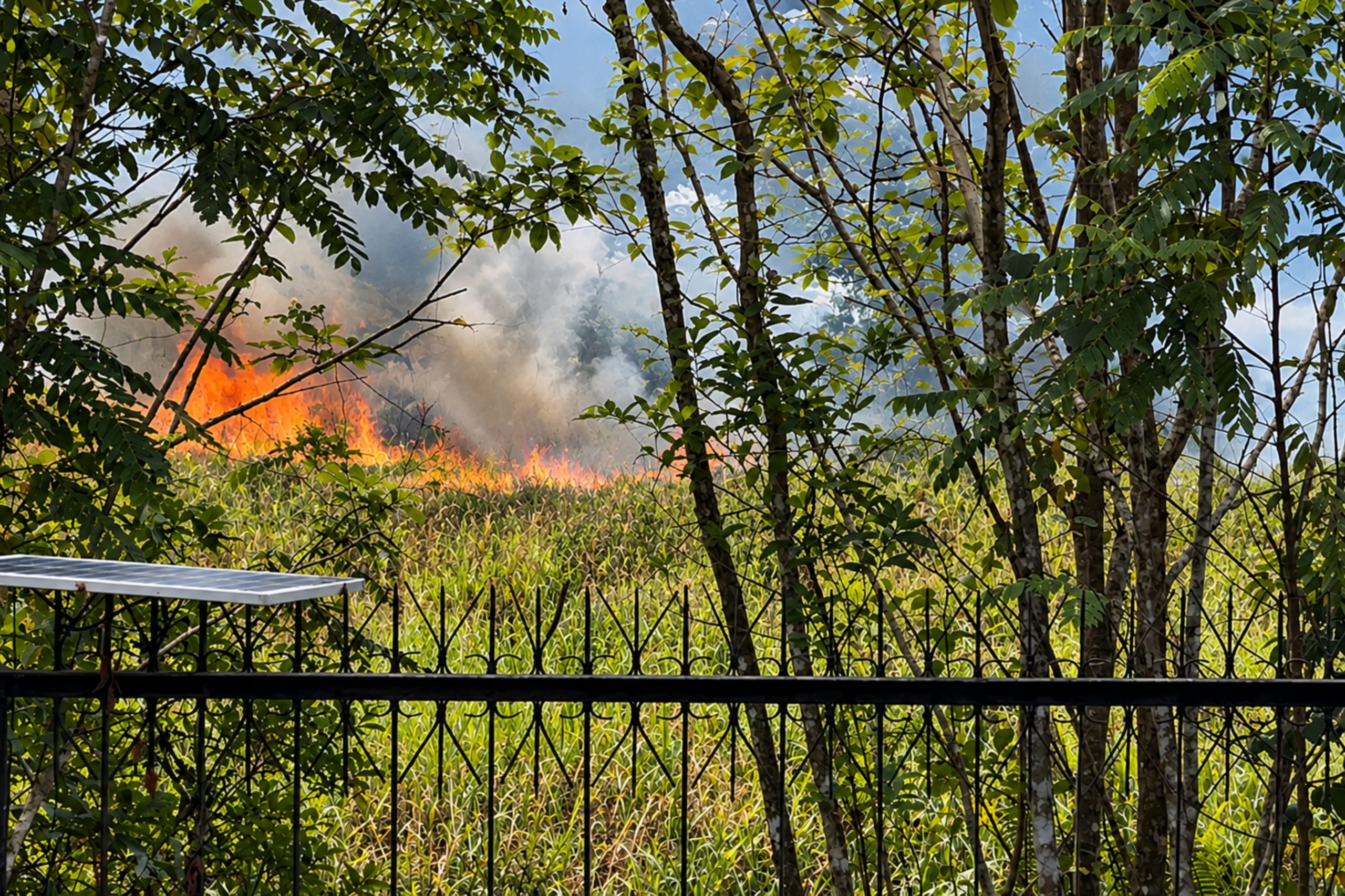
    For Mrs Rose Rahman, it became all the more real because of how a wreckless and lazy effort to clear an open plot of land meant that it came within meters of the fire reaching her home. A video was shared with TNBD, and along with this article you will find the screencaps from the incident.

    A close call

    “My son could hear the fire crackling from the living room upstairs. He was with my husband at the time, and my two-year-old asked him, ‘Daddy apa tu?’”

    “We were so startled because when we looked out our window, there was a man rushing about with a stick, trying to beat the brush and control the spread of the flames.

    “He was not very successful, and we grew even more concerned when two other people joined him to try and control the fire,” she said. It seemed they were part of a crew or team of people that were asked to clear the area. Thankfully, they were able to put out the fire that they started, but such a scenario could have turned worse. (Several days later an excavator was brought in to dig up the burnt area – Ed)

    Which begs the question, why would someone spend so much effort beating out a fire with some branches, so much so it took several people frantically moving across the area to clear the land when a machete or grass cutting equipment would take about the same amount of time, cause less environmental harm and significantly less danger overall.

    Mrs Rose stressed that it wasn’t the first time in her neighbourhood, and her husband Ismail, said it is almost comical that its taking place during a time where the whole country is having to deal with the transboundary pollution that has been ongoing for several weeks now.

    Since the haze has been affecting Brunei Darussalam, she said the open burning takes place each time there has been an easing of the haze, and once even when it was very hazy. However, even without the haze, the open burning would take place every other week in their residential area of Beribi-Jangsak on the edge of Bandar Seri Begawan.

    Openly burning

    Mrs Noor Ramli is a fellow TNBD reader that shared how her young family, she is also the mother of a two-year-old child, went for a Sunday drive at the end of last week, and were dismayed at seeing a large number of people open burning.

    “It irks me on a normal day, but with the haze and all the health risks that come with it, seeing people just burning away really gets on my nerves.

    “From Jerudong to Muara with a few detours here and there, it was just shocking how many people were doing open burning along the way,” she said.

    In the Lambak Kanan National Housing Scheme area alone, it seemed there was one every few houses. “Granted, we had a good few days before that with a relatively good (air quality) index, but that shouldn’t give people to just openly burn,” said Mrs Noor.

    Her opinion is that some members of the public are not taking the long term health risks of the haze seriously, even though in other countries there have been numerous reports of those getting significantly ill in the more affected regions in Southeast Asia dealing with the haze. “It isn’t just the toxicity of the air we’re breathing or the health risks that come with it, we (in Brunei) have been blessed with some rain recently, but what happens if we have an actual dry spell? Most of this island is already burning, we can’t afford to have our own country burning too, it’s an ecological disaster,” she said.

    Not just organic material

    Ask any Bruneian about it, and especially the older generation would have told you that it is something that would typically be done to get rid of rubbish and waste. Before, perhaps 50 years and beyond, that would have meant far more organic material. Grass clippings, twigs, branches, leaves green and dead, anything that was swept up around the gardens would be put into a quasi-compost heap, and then literally torched.

    I remember riding my bicycle and seeing someone do all of that and gather the ashes and spreading them around their garden and vegetable patch, except windy days, as it would just be absolute pandemonium with dust and soot flying any which way or how.

    In the years since then though plastics were also thrown into the equation, and at a time I remember PSA and advisories for people to not burn aerosol cans and batteries. I told my elder children about this some time ago, and I was met with a ‘bruuuuhhh’ and eye roll combination so savage it almost knocked me off my chair.

    They (my daughters) think it was incredulous that people would be burning such things, with the toxic smoke and air to come from such fires literally poisoning all things living.

    Sadly, the year is 2026 and attitudes remain unchanged.

    Escalate to JASTRe

    Just as concerning is that both readers, when informed by TNBD that incidences usually need to be reported, said that they have reported their respective incidences in the past, with not much to show for it.

    In fact, Mrs Rose explained that in the first instance she complained to the Darussalam Hotline (123) and complained again a second time when she believed her home was in danger.

    “In both instances 123 said they would escalate to JASTRe (Department of Environment, Parks and Recreation at the Ministry of Development) and were very apologetic that such a thing was happening to me and apologized for the inconvenience caused.”

    And the outcome? 123 asked if there had been any further open burning after the 1st and 2nd complaints were made, as well as the day of their final conversation. Mrs Rose responded with a no but explained that she couldn’t possibly tell because she has been at work following the first two instances and when they called her to ask.

    “The Darussalam Hotline staff said they would close the current ticket number, and that if there was any other open burning witnessed, to call 123 again and they would open a new ticket. I would’ve just preferred for JASTRe to reassure me that the matter had been dealt with,” she said. “Otherwise how do I know whether or not I’ve been taken seriously.”

    Call 123

    I think another question that is on a lot of people’s mind, or at least those who care, when they hear talk of open burning is “how come people still do this?” There have been strict bans and advisories in the past by JASTRe.

    And it must be a pertinent enough of an issue well known to them, as their website lists under their FAQ (Frequently Asked Questions) section, “Who to complain (to) when I see an open burning activity?” and the answer on their website is “Please call the Darussalam Hotline 123.”

    In 1998, an order was put into place for offences relating to open burning could be punishable with fines and imprisonment, in particular where “such offence causes pollution to the atmosphere or endangers human life or property the punishment is of unlimited amount and or imprisonment of up to 5 years.” To me that sounds like a convincing argument to not light up my grass clippings, compost heap or rubbish, but I guess someone forgot to tell the frantic stick carrying brush fire beaters.

    Judging from the timeline, it seems like it was put in place around the time when the transboundary haze issues were first experienced in the Sultanate.

    For Mrs Noor, it seems a moot point, and asks even further, why aren’t more people getting penalized for the open burning. She asks, “How many times can they do this before getting fined? Will they even get fined?”, adding that people have been reported but nothing seems to be done.

    “When will there be a real shift in attitudes and behaviours?

    “They can put out as many notices as they want but without any consequences, nothing will change,” she said.

    (Editor’s note – The names in this story have been changed and real names withheld to protect the identities our sources from the potential backlash of angry neighbours. While we feel any unsavoury action to follow should be reported accordingly, we also realise that prevention is better than cure, and as such have taken the necessary steps to ensure their safety.)
  • When Did We Decide This Was Normal?

    When Did We Decide This Was Normal?

    AI has become part of everyday life so quickly that I am not sure we ever stopped to decide what we were comfortable with.

    We have all seen event banners where the images are so obviously AI-generated that we can almost spot the usual signs immediately. Faces that look slightly too perfect. Hands that do not quite make sense. Backgrounds that look impressive from a distance but become strange the moment we look closer. Sometimes even the wording feels generated, polished in that very familiar way that now seems to appear everywhere.

    And this is not just happening online.

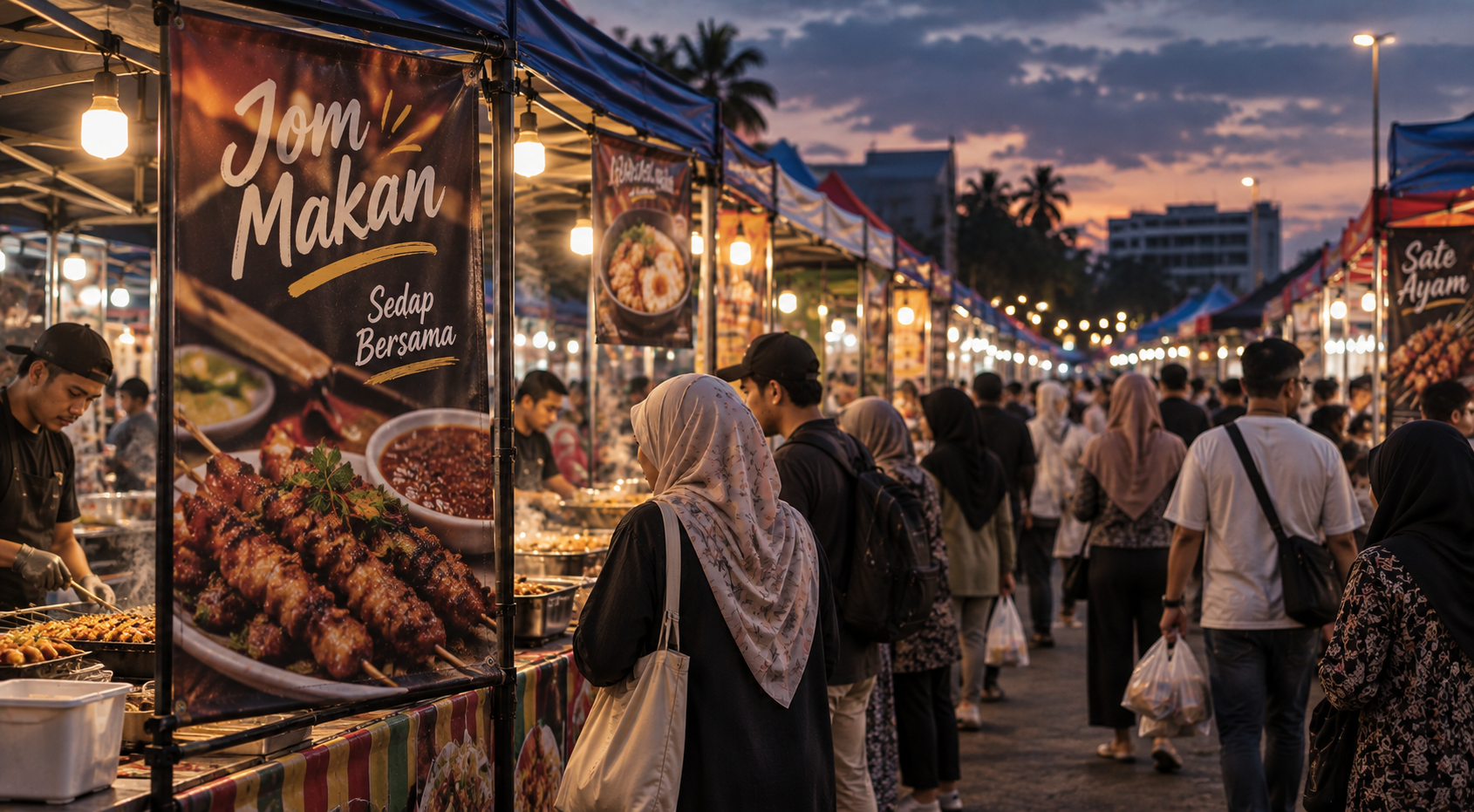
    We see the same thing at food streets, pasar malam and small vendor stalls. Large printed banners, menu boards, posters and promotional materials using AI-generated images. Some are simple. Some are actually quite good. But once we start noticing them, we begin to see them everywhere.

    Image illustrating AI-Generated banners used by food market stalls.

    Then we go back online and the pattern continues.

    LinkedIn carousels with the same kind of structure. Instagram captions that sound oddly familiar. Long reflective posts that feel polished but somehow empty. Promotional copy, campaign messages and even words written to support a cause that sound as though they came from the same place.

    Sometimes it is not just the words. The entire thing has been generated.

    The image. The caption. The headline. The carousel. The video.

    And it is not only small businesses or individuals doing this.

    We have seen large organisations use AI-generated videos and images for advertisements, health promotions, safety messages and public awareness campaigns. We have seen presentations at major conferences filled with AI-generated visuals and AI-written text. Speeches can be drafted by AI. Talking points can be generated in seconds.

    Then there is the workplace.

    I am sure many of us have been in a meeting where someone asks a question and another person checks ChatGPT or Gemini.

    Or an idea appears in a WhatsApp group and suddenly everyone is discussing it. Maybe the person came up with it. Maybe AI did. Sometimes we cannot really tell.

    Someone wants a slogan for a programme, a message to promote a cause, a response to an issue, an explanation for a decision. AI gives them something quickly, and that answer becomes part of the conversation.

    Perhaps that is why the change has been so easy to miss. None of these moments feels significant enough on its own for us to stop and question it. We see one AI-generated banner and move on. We read a caption and keep scrolling. Someone quotes ChatGPT in a meeting and the discussion continues.

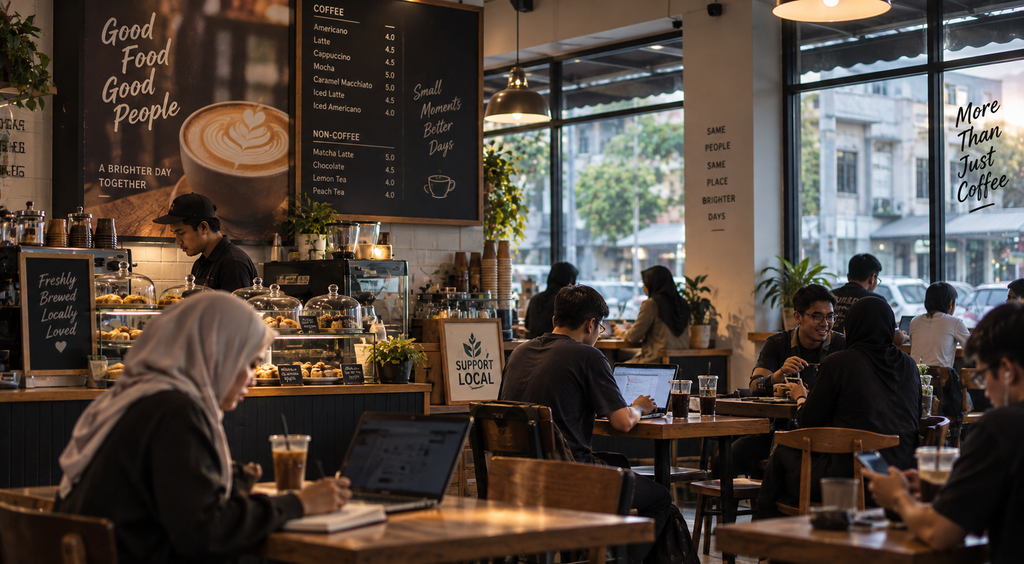
    Image illustrating AI-Generated cafe menus.

    But after a while, these are no longer isolated little things happening around us. Together, they start to show just how much AI has quietly entered the way we communicate, create, work and even think through decisions.

    We are no longer talking about AI as something that might become part of everyday life.

    It already has.

    And I am not sure we ever really stopped to ask what that means.

    Where Does Assistance End?

    I should probably make something clear here. I am not against using AI. I use it too, quite a lot actually. I use it to explore ideas, challenge my thinking, organise things, help me understand something unfamiliar and sometimes improve something I have written. I understand why we use it. It is useful, fast and often incredibly convenient.

    But when I went back to the data from my 2025 Brunei and Generative AI survey, one finding started to interest me more than the adoption figure itself. Among the 431 respondents, 73.3 per cent said that whether Generative AI is ethical depends on how it is used.

    I think that is worth stopping at for a moment.

    They were not simply saying AI is good. They were not saying it is bad either. Most were saying, essentially, it depends.

    Depends on what?

    That becomes more interesting when we look at what those respondents considered acceptable. Among those who said ethics depended on how AI was used, 82.6 per cent were comfortable with AI assisting in writing, content creation or brainstorming. More than seven in ten accepted it for personal learning or tutoring.

    But only 10.4 per cent accepted AI fully generating academic or workplace essays and reports. Only 14.9 per cent accepted decisions being made without human oversight. Replacing human jobs unfairly was accepted by just 5.4 per cent.

    Don’t you think that tells us something?

    The respondents did not seem particularly afraid of AI helping us. What they appeared much less comfortable with was AI replacing human judgement or responsibility.

    And once I looked at the findings that way, I started thinking again about all those things we now see around us.

    The AI-written LinkedIn post. The presentation that may have been almost entirely generated. The advertisement made without a designer. The speech that sounds good, but perhaps the person giving it did not actually write much of it. The idea from ChatGPT that enters a meeting and suddenly becomes everyone’s problem to discuss.

    Where does assistance end and replacement begin?

    Perhaps that sounds like an easy question until we try to answer it for ourselves.

    If AI gives me ten ideas and I develop one of them, that feels like assistance. But what if AI develops the idea, writes the argument and gives me the examples, and I mainly edit the wording? Is that still assistance?

    If AI helps a designer explore different concepts, that seems very different from a company deciding it no longer needs the designer at all. But where exactly do we draw that boundary?

    And if most respondents in my survey seemed to believe that how AI is used matters, who is helping us decide what responsible use actually looks like?

    So Who Decides the Boundaries?

    This is where another finding becomes uncomfortable.

    In the same 2025 survey, 81 per cent of respondents were either unaware of or unsure about organisational or national guidelines on the ethical use of Generative AI. Only 19 per cent said they were aware of such guidance.

    Think about that for a moment.

    On the one hand, people were telling us that the ethics of AI depends on how we use it. They were clearly distinguishing between AI helping people and AI taking over work, judgement or responsibility.

    But at the same time, most were either unaware of or unsure about the guidance that might help them navigate those choices.

    So what happens in the middle?

    Do we simply work it out for ourselves?

    Perhaps that is exactly what has been happening.

    One person decides it is fine to generate an entire post without disclosure. Another person thinks that is dishonest. One organisation uses AI-generated images throughout a public campaign. Another refuses to do so. One manager is comfortable allowing AI to draft a recommendation. Another wants every AI-generated claim checked first.

    We may all be talking about “responsible AI”, but are we actually talking about the same thing?

    The workplace data raises another question. Among the 341 employed or self-employed respondents in my survey, 70.7 per cent said their workplace or university did not provide Generative AI training. At the same time, 86.3 per cent of the overall respondents said they would use Generative AI more if more training were available.

    Again, this was 2025. I am not claiming those percentages describe Brunei today. Workplaces may have changed. Awareness may have improved. More guidance may now exist.

    But surely the picture from that moment still deserves some reflection.

    People were already using AI. Many believed responsible use depended on context. Many wanted more support. Yet structured training and awareness of guidance were limited among the respondents.

    Is it any surprise, then, that the way we use AI in everyday life seems to be developing faster than our shared expectations around it?

    Are We Only Teaching People How to Use AI?

    And perhaps training itself needs to change too.

    We are very good at showing people what AI can do. How to prompt it. How to generate an image. How to make a presentation faster. How to summarise a document. How to save time.

    Those things are useful.

    But should we not also be teaching people when to stop?

    When should we disclose that AI did most of the work?

    When does an answer need to be checked before it is repeated?

    When should a person be able to explain an idea without opening ChatGPT again?

    When is the faster option perhaps not the better option?

    These questions become especially important when AI starts entering decisions.

    My survey respondents were clearly uncomfortable with decisions being made without human oversight. Yet what does “human oversight” actually mean in practice? Does it mean a human being simply clicks approve? Does it mean someone reads the AI answer? Or does it mean someone understands the issue well enough to challenge the AI, reject it and take responsibility for whatever happens next?

    There is a difference.

    I keep thinking about the phrase we increasingly hear in meetings: “ChatGPT says…” There is nothing wrong with asking ChatGPT. But shouldn’t the next sentence matter more?

    “I checked it.”
    “I disagree with it.”
    “It does not fit our context.”
    “I think we should do something else.”
    Or even, “I don’t know yet. I need to think about this.”

    Perhaps one of the things AI is quietly changing is our patience with not knowing.

    What Happens to What Is Ours?

    Then there is creativity.

    Only 5.4 per cent of those respondents accepted what the survey described as replacing human jobs unfairly. That sounds straightforward until we ask what “unfairly” actually means.

    If a small food vendor uses AI to make a menu because they cannot afford a designer, is that unfair? Probably not.

    What if a large company that can afford creative work replaces an entire campaign with generated images?

    Is that different?

    What if an organisation proudly talks about supporting local industries while using generated artwork instead of local artists?

    Where should we draw the line?

    I do not think there is one answer that works for every situation. That is precisely why I think we need the conversation. Especially in Brunei.

    We are a small country. Our creative community is not enormous. Neither are our pools of writers, photographers, designers, musicians, videographers or illustrators. If “good enough and generated in five minutes” slowly becomes the default, what happens to those people? And perhaps just as importantly, what happens to what they would have created?

    Would our posters look different? Would our advertisements sound different? Would our stories carry something more recognisably ours?

    Would we even notice if that started disappearing?

    Maybe this is why I am less interested now in another discussion telling people to “use AI responsibly”.

    My own data suggests that respondents already understood something quite important: responsibility depends on what we allow AI to do and what responsibility we keep for ourselves. The bigger gap may be turning that instinct into everyday behaviour.

    Maybe it means telling people when AI did most of something that others believe you created. Maybe it is checking an answer before bringing it into a decision. Maybe it is being able to defend an idea instead of saying, “ChatGPT suggested it.” Maybe it is organisations finally deciding what their own boundaries are rather than leaving every employee to guess. And sometimes maybe it is simply asking one question before opening the prompt box:

    Do I actually want AI to do this for me?

    I do not think we should stop using AI.

    But my 2025 survey tells me something I find much more interesting now than I did when I first collected the responses. People seemed to know that there should be a line somewhere. They were comfortable with assistance, but far less comfortable when AI started replacing judgement, authorship or human responsibility.

    Maybe this is the part we have missed. AI did not arrive through one big moment where we all decided we were ready for it. It came through small things: a caption, a poster, a presentation, an answer in a meeting, an idea in a WhatsApp group. Each one seemed useful enough, harmless enough, convenient enough. So life carried on.

    And slowly, AI became part of how we work, create, communicate, make decisions and even express ourselves.

    Have we really stopped to think about what that means for Brunei? If AI becomes part of the way we write, design, speak, decide and tell our stories, what happens to the things that make those things recognisably ours? Our judgement. Our creativity. Our language. Our culture. Our way of seeing the world.

    This is no longer about AI becoming normal. It already is.

    The question is: what kind of normal do we want, and what parts of ourselves as Bruneians are we not willing to hand over?

    Because if we do not decide that consciously, one day we may look around and realise that “normal” was decided for us.

    So when did we decide this was normal?

  • Haze continues its grip

    Haze continues its grip

    As the haze continues its grip on Brunei Darussalam, the public’s concerns from the last week or so has mounted, resulting in the authorities taking action as the Air Quality Indexed progressively worsened.

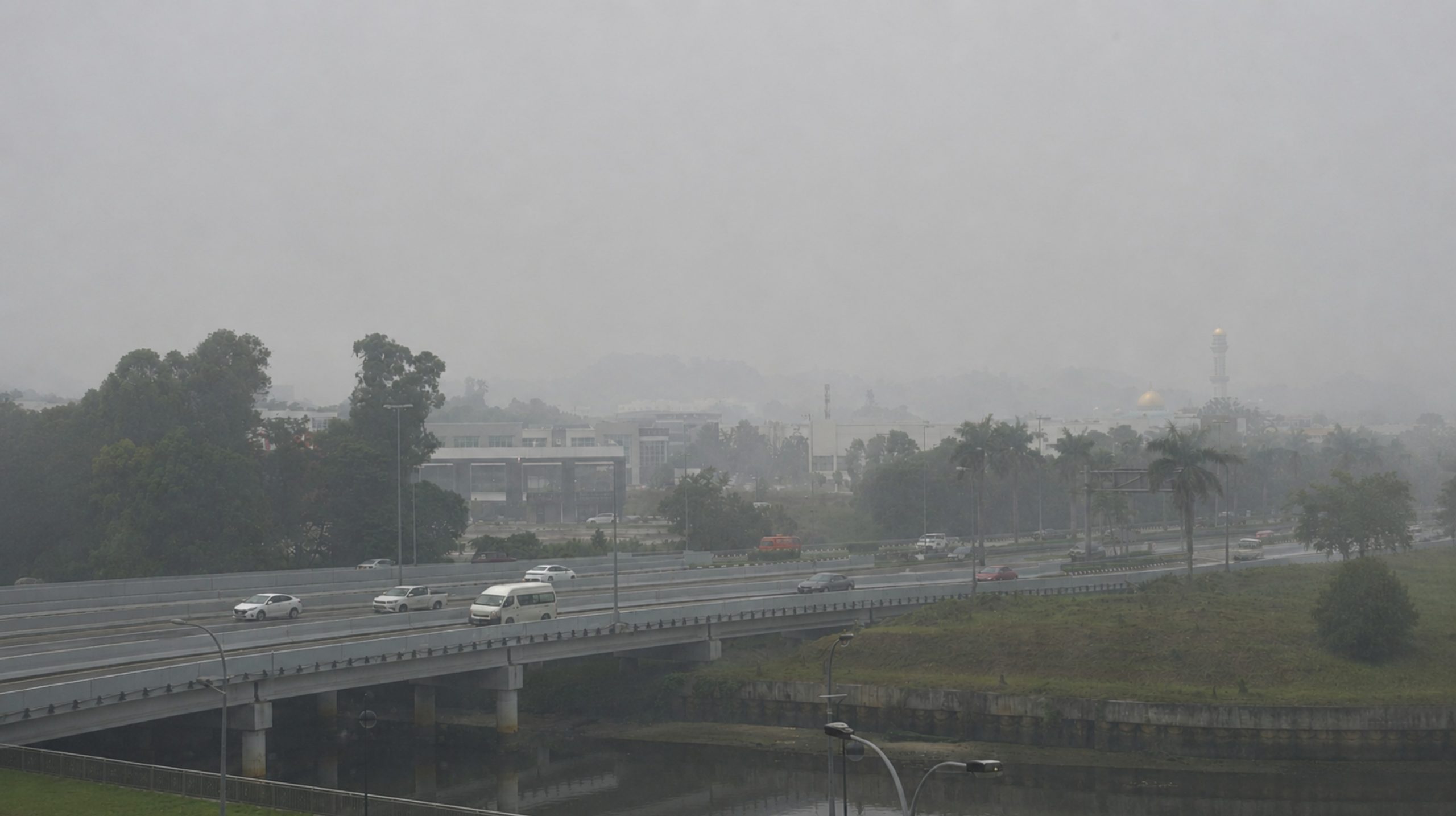
    Coincidentally, from our office window in the capital, the view of Jame Asr Hassanil Bolkiah in Kiarong served as the barometer for the team at The New Brunei Digest and we saw in real time today the effects with our own eyes.

    As the day progressed, the view of the largest masjid in Brunei Darussalam, began to be obscured by the growing thickness of the smog. By lunchtime the looking upon one of Brunei’s most treasured landmarks gave of a very ominous and surreal vibe.

    Going back to when the haze first started to come about this year due to forest fires in the region, the thin layer of smoke had already made its mark, with more members of the public visiting the clinic. Headaches, sinus and respiratory related symptoms, eczema cases, all sounds trivial on paper until folks started to realise that the Air Pollution Index (API) was still showing green for the most part.

    The API Index reads green up to 50, where the air quality is considered good, then the next category of moderate is 50 to 100, and once past 100 we enter unhealthy air quality, and at 200 over it is very unhealthy the beginning of the red zone. 300 and above is considered very dangerous.

    By then the API had sailed over 200, eye watering for a country that enjoys almost single digit API during some parts of the year.

    Almost 30 years ago, Brunei experienced what is presently an unfortunate recurring occurrence  for the first time. I was back home for the holidays, my friends who were still studying in Brunei were pleased (somewhat) that they didn’t have to go to school, but like me, we were all disappointed at not being able to go out and see each other, play football.

    Back then online gaming was still a long way from what it is today, and there was even less to see and do if you weren’t able to go outdoors. Although I do not recall seeing parts of Brunei resembling scenes from Silent Hill, both the video game and movie, but as I drove to pick up my son and wife today, thats what it seemed like from inside my car.

    The haze enveloping the sun, making it redder than a blood moon, and the lush jungle greenery taking on a foreboding tint of embellishment. Online, someone in a friends group chat said it kind of looks like Kundasang in Sabah, but the attack on our senses by the stagnant heat and smoky odour outdoors scream otherwise.

    Parents have understandably taken their kids out of school, one teacher I spoke to said that at the start of the week he had told his children to stay home, and was concerned about the welfare of the student body en masse.

    My daughters have put on a brave face, especially my second daughter. Exasperated but having to sit her most important exams of her Primary School life, she said she would just mask up and do what needs to be done.

    Thankfully since that first week, and especially today, the government agencies that had been monitoring the situation have taken steps to update Brunei with Air quality updates, now throughout the day, and also issued advisories on how to handle the situation as it begins to get worse.

    As we returned to our office at lunchtime, we again witnessed strange things from our window, the traffic started to become congested, as thick as the haze enveloping it. Visibility in some places in the country had reduced to 100m. And the traffic, it was a result of parents rushing to schools as students were advised to go home.

    The latest advisory from the Ministry of Education in the day highlighted that as the Air Quality readings were still in the red zone, schools have been instructed to switch classes online temporarily for the next two days. While some parents may question why this hasn’t been taken into effect sooner, it has to be said the speed at which the directives have been implemented are commendable.

    The diligence shown there by the authorities and government agencies will be required, as the news from Kalimantan has indicated that the amount of acreage that is burning has nearly doubled, and most likely when you, our dear readers have finished reading this, that mark would have clearly passed.

    I hope I’m wrong, but it seems like this might just be the start of the worse stretch, and one that we need to pulling through together. During such a time pointing out shortcomings and flaws is one thing, but delivering real pragmatic solutions in developing situations is another, perhaps far more required.

  • A New Path to Brunei’s Trusted Diplomacy

    A New Path to Brunei’s Trusted Diplomacy

    SOME might see it as diving straight into the deep end, while others have urged for caution when it comes to dealing with diplomacy, but rest assured, I do not think His Royal Highness Prince ‘Abdul Mateen would be out of depth when it comes to his new role as Brunei Darussalam’s Minister of Foreign Affairs.

    His Majesty the Sultan and Yang Di-Pertuan of Brunei Darussalam, has now included Their Royal Highnesses Prince ‘Abdul Malik and Prince ‘Abdul Mateen into the list of newly appointed cabinet ministers, with the appointment of HRH Prince ‘Abdul Mateen as our new foreign minister causing a stir straight away.

    One former news editor at a local newspaper here in Brunei Darussalam contacted me asking for an opinion. I didn’t oblige because I felt I wanted to share my thoughts here first and foremost, whether belated or otherwise. The story that was produced after had many opinions I didn’t agree with.

    How does my own opinion differ? For a start a lot of the international media has picked up on the strong social media following that HRH has, and some have used that as cause to label HRH as some kind of internet sensation. I feel that is a serious disservice, more so that there is hardly any mention of what formal background HRH has, in terms of his training and education.

    To be fair, most are looking at Brunei from the outside, and the most visible HRH has been in the international arena has been when dutifully accompanying His Majesty on many state visits and international meetings. This is where we should dig a bit deeper, and not fall into the trap of parachute journalism.

    Looking back on his own journey into being a ‘Soldier Statesman’, His Majesty himself was trained at the UK’s prestigious Royal Military Academy Sandhurst. In fact, this year represents a quietly missed 60th anniversary that passed in January of this year.

    During that two year period of training (cadets now take part in a truncated 44-week course) it has been famously shared that His Majesty achieved the distinction of being one of the more distinguished foreign cadet officers, thanks to his grit and determination in the field.

    Less spoken about was His Majesty’s academic pursuits in having studied International Affairs during his time there, with a focus on Soviet era Russia. Upon completion of his training, His Majesty attained the rank of Captain, but also a firm grounding in Geopolitics that would serve His Majesty well as Brunei’s sovereign and foremost diplomat.

    That has had a significant bearing on Brunei Darussalam’s diplomatic ties with the Russian Federation, and our diplomacy ties as a whole. Make no mistake – it has allowed our country to manage a fine balance between long standing relationships such as the United Kingdom, while succeeding in fostering genuine ties with Russia, which celebrates 35 years of diplomatic ties with Brunei later this year.

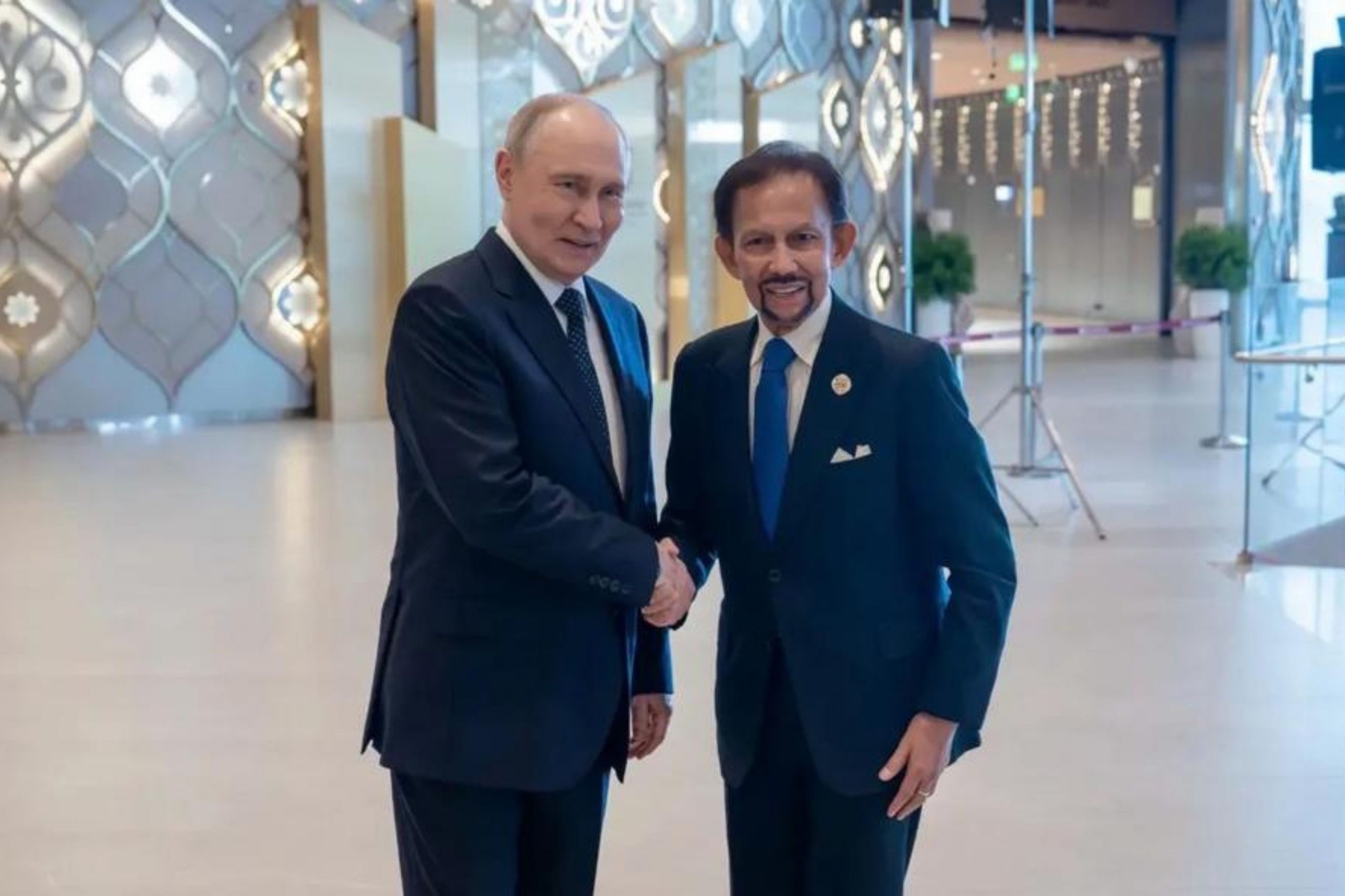
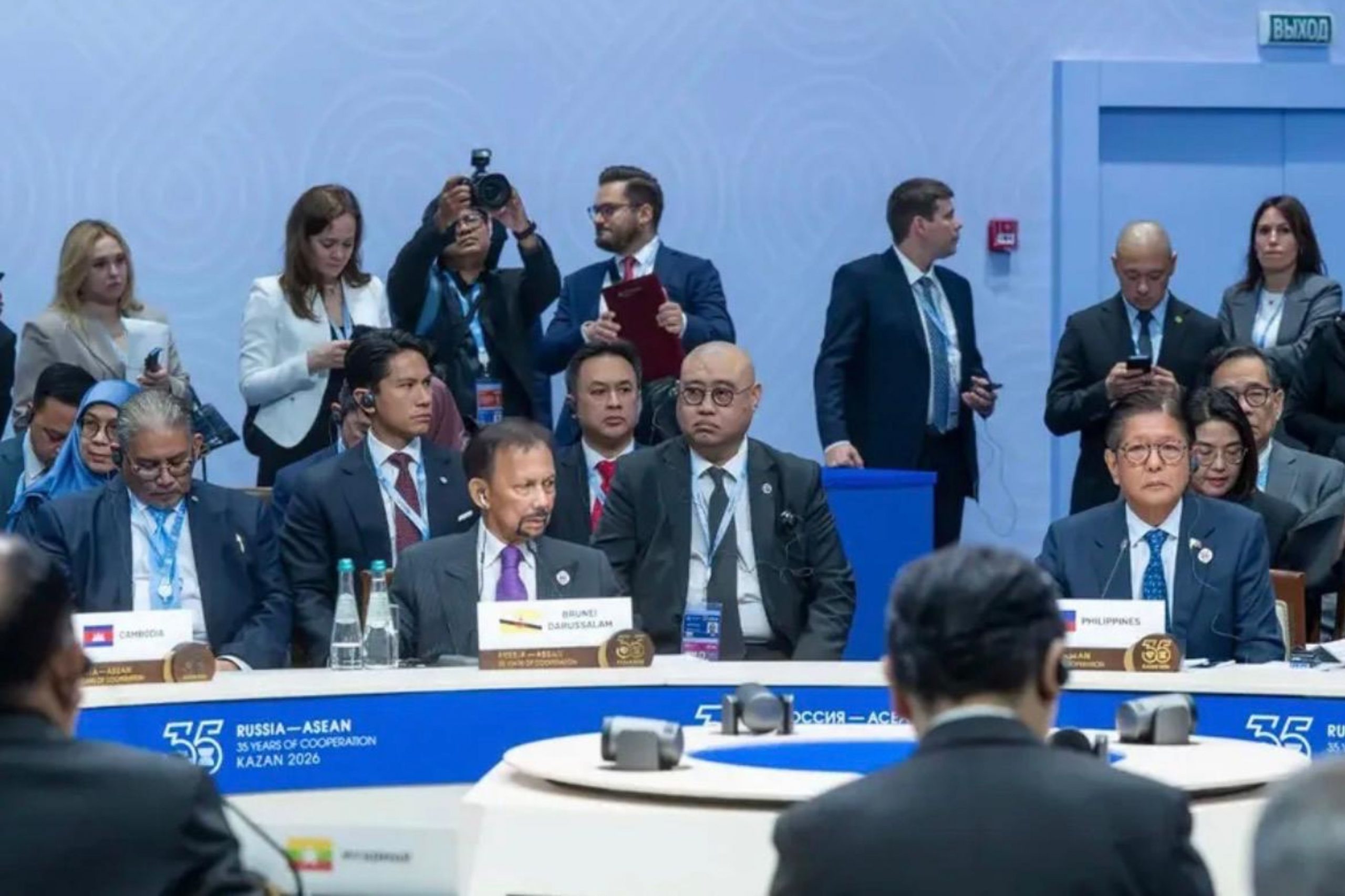
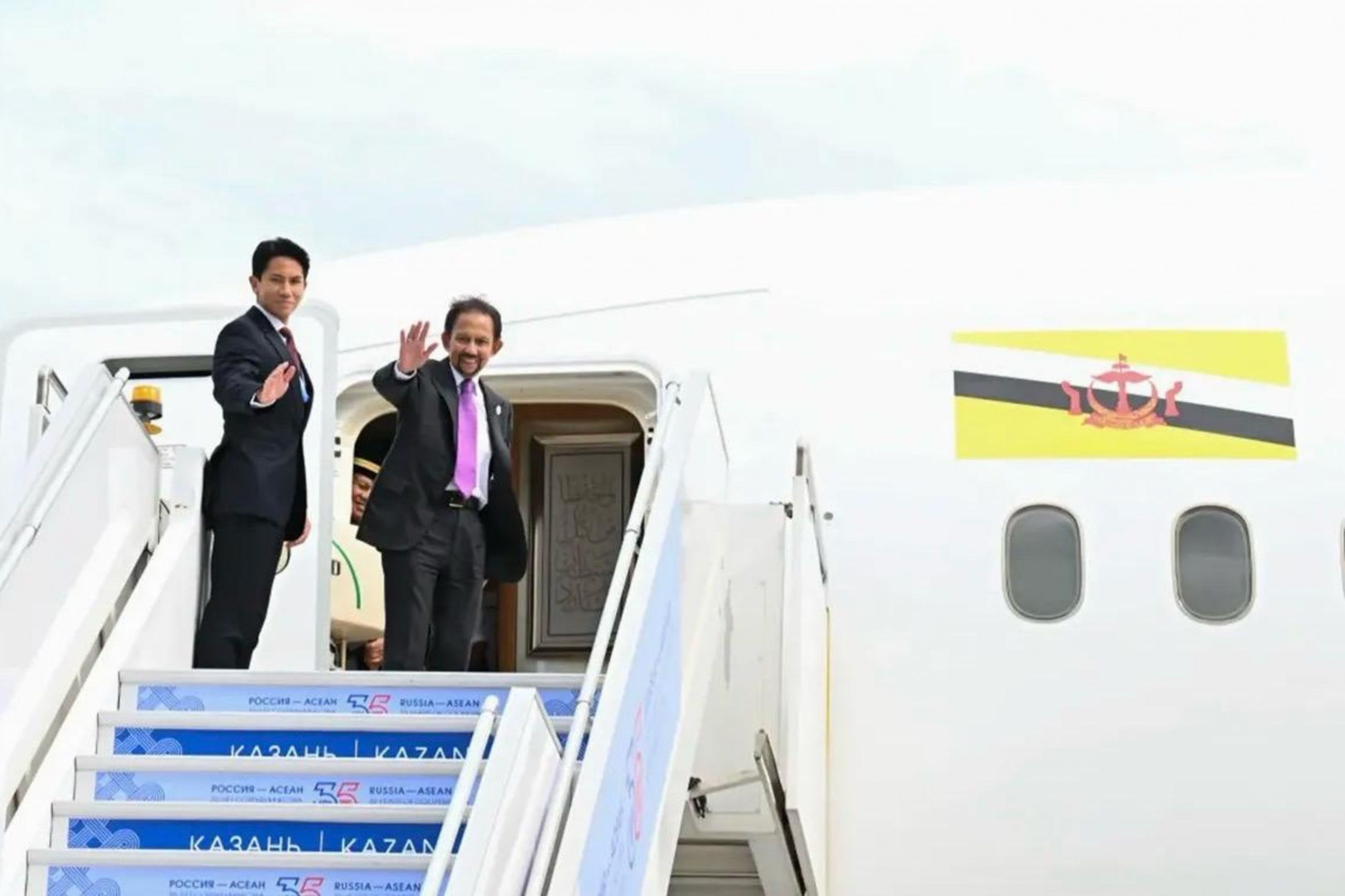
    The timing of Vladimir Putin’s first visit to Brunei Darussalam in 2000, when the Sultanate hosted APEC was of particular significance, being the first year of Putin being the Russian President. Warmly welcomed to Istana Nurul Iman, Putin has referenced the inaugural visit in subsequent engagements; during visits by His Majesty to Russia, and at bilateral meetings conducted on the sidelines of ASEAN and APEC summits, and more recently during His Majesty and HRH Prince ‘Abdul Mateen’s visit to Kazan, Russia for the ASEAN – Russia Commemorative Summit. A true testimony to the decades of strong ties between Brunei and Russia, a relationship that has been personally cultivated through a warm friendship between His Majesty and the Russian President.

    Again, for those on the outside looking in, it might be surprising to see that mantle now being taken up by HRH, however, the more people are surprised about the appointment, the more I feel like they have missed some key substantive points.

    We should be duly reminded that HRH received his Masters Degree in International Studies and Diplomacy from the School of Oriental and African Studies, University of London. Prior to that, a degree in International Politics from Kings College in London was completed, both coming to fruition after completing his own stint at RMAS.

    More so, the path from Sandhurst and a military career towards the role of Minister of Foreign Affairs is a similar path pioneered by another Bruneian prince, His Royal Highness Prince Mohamed Bolkiah, the Duli Pengiran Perdana Wazir. HRH Prince Mohamed also trained at Sandhurst during the same time as His Majesty, albeit separately, and upon passing out, HRH was duly commissioned in the Irish Guards.

    In 1970, HRH Prince Mohamed held the rank of Lieutenant Colonel in what was then the Royal Brunei Malay Regiment, and two years later the rank of Colonel. And in the 80s, HRH observed at first, and then oversaw Brunei Darussalam’s entry into ASEAN membership and the United Nations General Assembly as Minister of Foreign Affairs following Brunei’s full independence in 1984 from being a British protectorate state.

    While His Majesty stated that HRH Prince ‘Abdul Mateen would continue his military career, within the Ministry of Foreign Affairs itself, HRH can count on guiding hands in the form of HRH’s aunt, Her Royal Highness Princess Hajah Masna, Brunei’s Ambassador at Large and His Majesty’s sister. During a swearing-in ceremony held at Istana Nurul Iman recently for cabinet ministers to pledge their oath of allegiance and receive their official appointments, nephew and aunt were all smiles when they were captured on camera sharing a light hearted moment.

    Meanwhile, YB Dato Seri Setia Haji Erywan Bin Pehin Datu Pekerma Jaya Haji Mohd Yusof, Minister of Foreign Affairs II is also still serving, and has been a stalwart for Bruneian diplomacy. Especially year-on-year since 2015, firstly as Deputy Minister of Foreign Affairs and then in 2018 after being appointed to his current role. Having served as Special Envoy of ASEAN to Myanmar in 2021, a posting selected by fellow ASEAN Foreign Ministers, YB Dato Erywan is not a lightweight in this arena and is another resource HRH would undoubtedly tap into in this latest chapter of the Sultanate’s diplomacy.

    Junior officers within the Ministry have taken up the royal appointment with enthusiasm, sharing their selfies with HRH on his first day at the ministry on social media. Still, some point to diplomacy needing a deft touch, one that results from having years of experience, a point alluded to by President Putin himself when he welcomed His Majesty recently in Kazan. The Russian president praised His Majesty remarking how monarch is a seasoned and experienced leader.

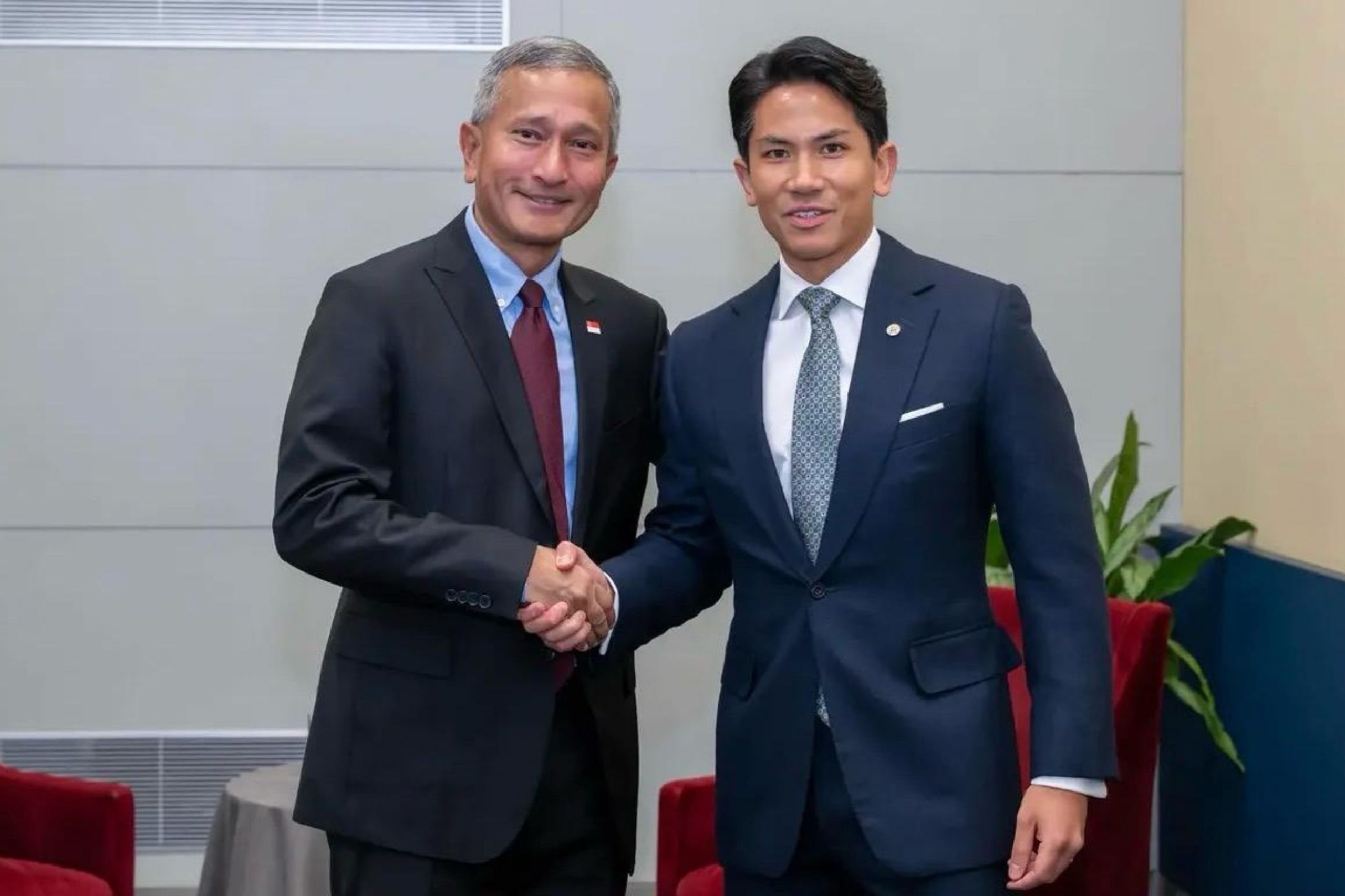
    Even more insightful was how HRH, with the media glare in full effect, did not miss a step. During meetings with foreign counterparts, he did not look out of place, and reports from Russian and Asian correspondents have stated how HRH was able to hold his own in discussions held on the sidelines of the ASEAN – Russia Commemorative Summit, and while accompanying His Majesty during parallel sideline bilateral discussions as well.

    Personally, for me, it was quite a nice coincidence to see His Majesty and HRH visiting Russia shortly after the His Majesty’s titah announcing the cabinet reshuffle. Simply because, with all the world to see, one of His Majesty’s recent appointment has indeed proven to be quite a deft touch. In that regard, we should trust the judgement of His Majesty, not just as a seasoned leader, experienced statesman and a disciplined soldier, but also as a father… As father to His Majesty’s children, and knowing what Their Royal Highnesses are capable of, and also as a father to our nation, and having faith in his rakyat and confidence in what we can achieve.

  • A New Path to Brunei’s Trusted Diplomacy

    A New Path to Brunei’s Trusted Diplomacy

    SOME might see it as diving straight into the deep end, while others have urged for caution when it comes to dealing with diplomacy, but rest assured, I do not think His Royal Highness Prince ‘Abdul Mateen would be out of depth when it comes to his new role as Brunei Darussalam’s Minister of Foreign Affairs.

    His Majesty the Sultan and Yang Di-Pertuan of Brunei Darussalam, has now included Their Royal Highnesses Prince ‘Abdul Malik and Prince ‘Abdul Mateen into the list of newly appointed cabinet ministers, with the appointment of HRH Prince ‘Abdul Mateen as our new foreign minister causing a stir straight away.

    One former news editor at a local newspaper here in Brunei Darussalam contacted me asking for an opinion. I didn’t oblige because I felt I wanted to share my thoughts here first and foremost, whether belated or otherwise. The story that was produced after had many opinions I didn’t agree with.

    How does my own opinion differ? For a start a lot of the international media has picked up on the strong social media following that HRH has, and some have used that as cause to label HRH as some kind of internet sensation. I feel that is a serious disservice, more so that there is hardly any mention of what formal background HRH has, in terms of his training and education.

    To be fair, most are looking at Brunei from the outside, and the most visible HRH has been in the international arena has been when dutifully accompanying His Majesty on many state visits and international meetings. This is where we should dig a bit deeper, and not fall into the trap of parachute journalism.

    Looking back on his own journey into being a ‘Soldier Statesman’, His Majesty himself was trained at the UK’s prestigious Royal Military Academy Sandhurst. In fact, this year represents a quietly missed 60th anniversary that passed in January of this year.

    During that two year period of training (cadets now take part in a truncated 44-week course) it has been famously shared that His Majesty achieved the distinction of being one of the more distinguished foreign cadet officers, thanks to his grit and determination in the field.

    Less spoken about was His Majesty’s academic pursuits in having studied International Affairs during his time there, with a focus on Soviet era Russia. Upon completion of his training, His Majesty attained the rank of Captain, but also a firm grounding in Geopolitics that would serve His Majesty well as Brunei’s sovereign and foremost diplomat.

    That has had a significant bearing on Brunei Darussalam’s diplomatic ties with the Russian Federation, and our diplomacy ties as a whole. Make no mistake – it has allowed our country to manage a fine balance between long standing relationships such as the United Kingdom, while succeeding in fostering genuine ties with Russia, which celebrates 35 years of diplomatic ties with Brunei later this year.

    The timing of Vladimir Putin’s first visit to Brunei Darussalam in 2000, when the Sultanate hosted APEC was of particular significance, being the first year of Putin being the Russian President. Warmly welcomed to Istana Nurul Iman, Putin has referenced the inaugural visit in subsequent engagements; during visits by His Majesty to Russia, and at bilateral meetings conducted on the sidelines of ASEAN and APEC summits, and more recently during His Majesty and HRH Prince ‘Abdul Mateen’s visit to Kazan, Russia for the ASEAN – Russia Commemorative Summit. A true testimony to the decades of strong ties between Brunei and Russia, a relationship that has been personally cultivated through a warm friendship between His Majesty and the Russian President.

    Again, for those on the outside looking in, it might be surprising to see that mantle now being taken up by HRH, however, the more people are surprised about the appointment, the more I feel like they have missed some key substantive points.

    We should be duly reminded that HRH received his Masters Degree in International Studies and Diplomacy from the School of Oriental and African Studies, University of London. Prior to that, a degree in International Politics from Kings College in London was completed, both coming to fruition after completing his own stint at RMAS.

    More so, the path from Sandhurst and a military career towards the role of Minister of Foreign Affairs is a similar path pioneered by another Bruneian prince, His Royal Highness Prince Mohamed Bolkiah, the Duli Pengiran Perdana Wazir. HRH Prince Mohamed also trained at Sandhurst during the same time as His Majesty, albeit separately, and upon passing out, HRH was duly commissioned in the Irish Guards.

    In 1970, HRH Prince Mohamed held the rank of Lieutenant Colonel in what was then the Royal Brunei Malay Regiment, and two years later the rank of Colonel. And in the 80s, HRH observed at first, and then oversaw Brunei Darussalam’s entry into ASEAN membership and the United Nations General Assembly as Minister of Foreign Affairs following Brunei’s full independence in 1984 from being a British protectorate state.

    While His Majesty stated that HRH Prince ‘Abdul Mateen would continue his military career, within the Ministry of Foreign Affairs itself, HRH can count on guiding hands in the form of HRH’s aunt, Her Royal Highness Princess Hajah Masna, Brunei’s Ambassador at Large and His Majesty’s sister. During a swearing-in ceremony held at Istana Nurul Iman recently for cabinet ministers to pledge their oath of allegiance and receive their official appointments, nephew and aunt were all smiles when they were captured on camera sharing a light hearted moment.

    Meanwhile, YB Dato Seri Setia Haji Erywan Bin Pehin Datu Pekerma Jaya Haji Mohd Yusof, Minister of Foreign Affairs II is also still serving, and has been a stalwart for Bruneian diplomacy. Especially year-on-year since 2015, firstly as Deputy Minister of Foreign Affairs and then in 2018 after being appointed to his current role. Having served as Special Envoy of ASEAN to Myanmar in 2021, a posting selected by fellow ASEAN Foreign Ministers, YB Dato Erywan is not a lightweight in this arena and is another resource HRH would undoubtedly tap into in this latest chapter of the Sultanate’s diplomacy.

    Junior officers within the Ministry have taken up the royal appointment with enthusiasm, sharing their selfies with HRH on his first day at the ministry on social media. Still, some point to diplomacy needing a deft touch, one that results from having years of experience, a point alluded to by President Putin himself when he welcomed His Majesty recently in Kazan. The Russian president praised His Majesty remarking how monarch is a seasoned and experienced leader.

    Even more insightful was how HRH, with the media glare in full effect, did not miss a step. During meetings with foreign counterparts, he did not look out of place, and reports from Russian and Asian correspondents have stated how HRH was able to hold his own in discussions held on the sidelines of the ASEAN – Russia Commemorative Summit, and while accompanying His Majesty during parallel sideline bilateral discussions as well.

    Personally, for me, it was quite a nice coincidence to see His Majesty and HRH visiting Russia shortly after the His Majesty’s titah announcing the cabinet reshuffle. Simply because, with all the world to see, one of His Majesty’s recent appointment has indeed proven to be quite a deft touch. In that regard, we should trust the judgement of His Majesty, not just as a seasoned leader, experienced statesman and a disciplined soldier, but also as a father… As father to His Majesty’s children, and knowing what Their Royal Highnesses are capable of, and also as a father to our nation, and having faith in his rakyat and confidence in what we can achieve.

  • A New Path to Brunei’s Trusted Diplomacy

    A New Path to Brunei’s Trusted Diplomacy

    SOME might see it as diving straight into the deep end, while others have urged for caution when it comes to dealing with diplomacy, but rest assured, I do not think His Royal Highness Prince ‘Abdul Mateen would be out of depth when it comes to his new role as Brunei Darussalam’s Minister of Foreign Affairs.

    His Majesty the Sultan and Yang Di-Pertuan of Brunei Darussalam, has now included Their Royal Highnesses Prince ‘Abdul Malik and Prince ‘Abdul Mateen into the list of newly appointed cabinet ministers, with the appointment of HRH Prince ‘Abdul Mateen as our new foreign minister causing a stir straight away.

    One former news editor at a local newspaper here in Brunei Darussalam contacted me asking for an opinion. I didn’t oblige because I felt I wanted to share my thoughts here first and foremost, whether belated or otherwise. The story that was produced after had many opinions I didn’t agree with.

    How does my own opinion differ? For a start a lot of the international media has picked up on the strong social media following that HRH has, and some have used that as cause to label HRH as some kind of internet sensation. I feel that is a serious disservice, more so that there is hardly any mention of what formal background HRH has, in terms of his training and education.

    To be fair, most are looking at Brunei from the outside, and the most visible HRH has been in the international arena has been when dutifully accompanying His Majesty on many state visits and international meetings. This is where we should dig a bit deeper, and not fall into the trap of parachute journalism.

    Looking back on his own journey into being a ‘Soldier Statesman’, His Majesty himself was trained at the UK’s prestigious Royal Military Academy Sandhurst. In fact, this year represents a quietly missed 60th anniversary that passed in January of this year.

    During that two year period of training (cadets now take part in a truncated 44-week course) it has been famously shared that His Majesty achieved the distinction of being one of the more distinguished foreign cadet officers, thanks to his grit and determination in the field.

    Less spoken about was His Majesty’s academic pursuits in having studied International Affairs during his time there, with a focus on Soviet era Russia. Upon completion of his training, His Majesty attained the rank of Captain, but also a firm grounding in Geopolitics that would serve His Majesty well as Brunei’s sovereign and foremost diplomat.

    That has had a significant bearing on Brunei Darussalam’s diplomatic ties with the Russian Federation, and our diplomacy ties as a whole. Make no mistake – it has allowed our country to manage a fine balance between long standing relationships such as the United Kingdom, while succeeding in fostering genuine ties with Russia, which celebrates 35 years of diplomatic ties with Brunei later this year.

    The timing of Vladimir Putin’s first visit to Brunei Darussalam in 2000, when the Sultanate hosted APEC was of particular significance, being the first year of Putin being the Russian President. Warmly welcomed to Istana Nurul Iman, Putin has referenced the inaugural visit in subsequent engagements; during visits by His Majesty to Russia, and at bilateral meetings conducted on the sidelines of ASEAN and APEC summits, and more recently during His Majesty and HRH Prince ‘Abdul Mateen’s visit to Kazan, Russia for the ASEAN – Russia Commemorative Summit. A true testimony to the decades of strong ties between Brunei and Russia, a relationship that has been personally cultivated through a warm friendship between His Majesty and the Russian President.

    Again, for those on the outside looking in, it might be surprising to see that mantle now being taken up by HRH, however, the more people are surprised about the appointment, the more I feel like they have missed some key substantive points.

    We should be duly reminded that HRH received his Masters Degree in International Studies and Diplomacy from the School of Oriental and African Studies, University of London. Prior to that, a degree in International Politics from Kings College in London was completed, both coming to fruition after completing his own stint at RMAS.

    More so, the path from Sandhurst and a military career towards the role of Minister of Foreign Affairs is a similar path pioneered by another Bruneian prince, His Royal Highness Prince Mohamed Bolkiah, the Duli Pengiran Perdana Wazir. HRH Prince Mohamed also trained at Sandhurst during the same time as His Majesty, albeit separately, and upon passing out, HRH was duly commissioned in the Irish Guards.

    In 1970, HRH Prince Mohamed held the rank of Lieutenant Colonel in what was then the Royal Brunei Malay Regiment, and two years later the rank of Colonel. And in the 80s, HRH observed at first, and then oversaw Brunei Darussalam’s entry into ASEAN membership and the United Nations General Assembly as Minister of Foreign Affairs following Brunei’s full independence in 1984 from being a British protectorate state.

    While His Majesty stated that HRH Prince ‘Abdul Mateen would continue his military career, within the Ministry of Foreign Affairs itself, HRH can count on guiding hands in the form of HRH’s aunt, Her Royal Highness Princess Hajah Masna, Brunei’s Ambassador at Large and His Majesty’s sister. During a swearing-in ceremony held at Istana Nurul Iman recently for cabinet ministers to pledge their oath of allegiance and receive their official appointments, nephew and aunt were all smiles when they were captured on camera sharing a light hearted moment.

    Meanwhile, YB Dato Seri Setia Haji Erywan Bin Pehin Datu Pekerma Jaya Haji Mohd Yusof, Minister of Foreign Affairs II is also still serving, and has been a stalwart for Bruneian diplomacy. Especially year-on-year since 2015, firstly as Deputy Minister of Foreign Affairs and then in 2018 after being appointed to his current role. Having served as Special Envoy of ASEAN to Myanmar in 2021, a posting selected by fellow ASEAN Foreign Ministers, YB Dato Erywan is not a lightweight in this arena and is another resource HRH would undoubtedly tap into in this latest chapter of the Sultanate’s diplomacy.

    Junior officers within the Ministry have taken up the royal appointment with enthusiasm, sharing their selfies with HRH on his first day at the ministry on social media. Still, some point to diplomacy needing a deft touch, one that results from having years of experience, a point alluded to by President Putin himself when he welcomed His Majesty recently in Kazan. The Russian president praised His Majesty remarking how monarch is a seasoned and experienced leader.

    Even more insightful was how HRH, with the media glare in full effect, did not miss a step. During meetings with foreign counterparts, he did not look out of place, and reports from Russian and Asian correspondents have stated how HRH was able to hold his own in discussions held on the sidelines of the ASEAN – Russia Commemorative Summit, and while accompanying His Majesty during parallel sideline bilateral discussions as well.

    Personally, for me, it was quite a nice coincidence to see His Majesty and HRH visiting Russia shortly after the His Majesty’s titah announcing the cabinet reshuffle. Simply because, with all the world to see, one of His Majesty’s recent appointment has indeed proven to be quite a deft touch. In that regard, we should trust the judgement of His Majesty, not just as a seasoned leader, experienced statesman and a disciplined soldier, but also as a father… As father to His Majesty’s children, and knowing what Their Royal Highnesses are capable of, and also as a father to our nation, and having faith in his rakyat and confidence in what we can achieve.

  • A New Path to Brunei’s Trusted Diplomacy

    A New Path to Brunei’s Trusted Diplomacy

    SOME might see it as diving straight into the deep end, while others have urged for caution when it comes to dealing with diplomacy, but rest assured, I do not think His Royal Highness Prince ‘Abdul Mateen would be out of depth when it comes to his new role as Brunei Darussalam’s Minister of Foreign Affairs.

    His Majesty the Sultan and Yang Di-Pertuan of Brunei Darussalam, has now included Their Royal Highnesses Prince ‘Abdul Malik and Prince ‘Abdul Mateen into the list of newly appointed cabinet ministers, with the appointment of HRH Prince ‘Abdul Mateen as our new foreign minister causing a stir straight away.

    One former news editor at a local newspaper here in Brunei Darussalam contacted me asking for an opinion. I didn’t oblige because I felt I wanted to share my thoughts here first and foremost, whether belated or otherwise. The story that was produced after had many opinions I didn’t agree with.

    How does my own opinion differ? For a start a lot of the international media has picked up on the strong social media following that HRH has, and some have used that as cause to label HRH as some kind of internet sensation. I feel that is a serious disservice, more so that there is hardly any mention of what formal background HRH has, in terms of his training and education.

    To be fair, most are looking at Brunei from the outside, and the most visible HRH has been in the international arena has been when dutifully accompanying His Majesty on many state visits and international meetings. This is where we should dig a bit deeper, and not fall into the trap of parachute journalism.

    Looking back on his own journey into being a ‘Soldier Statesman’, His Majesty himself was trained at the UK’s prestigious Royal Military Academy Sandhurst. In fact, this year represents a quietly missed 60th anniversary that passed in January of this year.

    During that two year period of training (cadets now take part in a truncated 44-week course) it has been famously shared that His Majesty achieved the distinction of being one of the more distinguished foreign cadet officers, thanks to his grit and determination in the field.

    Less spoken about was His Majesty’s academic pursuits in having studied International Affairs during his time there, with a focus on Soviet era Russia. Upon completion of his training, His Majesty attained the rank of Captain, but also a firm grounding in Geopolitics that would serve His Majesty well as Brunei’s sovereign and foremost diplomat.

    That has had a significant bearing on Brunei Darussalam’s diplomatic ties with the Russian Federation, and our diplomacy ties as a whole. Make no mistake – it has allowed our country to manage a fine balance between long standing relationships such as the United Kingdom, while succeeding in fostering genuine ties with Russia, which celebrates 35 years of diplomatic ties with Brunei later this year.

    The timing of Vladimir Putin’s first visit to Brunei Darussalam in 2000, when the Sultanate hosted APEC was of particular significance, being the first year of Putin being the Russian President. Warmly welcomed to Istana Nurul Iman, Putin has referenced the inaugural visit in subsequent engagements; during visits by His Majesty to Russia, and at bilateral meetings conducted on the sidelines of ASEAN and APEC summits, and more recently during His Majesty and HRH Prince ‘Abdul Mateen’s visit to Kazan, Russia for the ASEAN – Russia Commemorative Summit. A true testimony to the decades of strong ties between Brunei and Russia, a relationship that has been personally cultivated through a warm friendship between His Majesty and the Russian President.

    Again, for those on the outside looking in, it might be surprising to see that mantle now being taken up by HRH, however, the more people are surprised about the appointment, the more I feel like they have missed some key substantive points.

    We should be duly reminded that HRH received his Masters Degree in International Studies and Diplomacy from the School of Oriental and African Studies, University of London. Prior to that, a degree in International Politics from Kings College in London was completed, both coming to fruition after completing his own stint at RMAS.

    More so, the path from Sandhurst and a military career towards the role of Minister of Foreign Affairs is a similar path pioneered by another Bruneian prince, His Royal Highness Prince Mohamed Bolkiah, the Duli Pengiran Perdana Wazir. HRH Prince Mohamed also trained at Sandhurst during the same time as His Majesty, albeit separately, and upon passing out, HRH was duly commissioned in the Irish Guards.

    In 1970, HRH Prince Mohamed held the rank of Lieutenant Colonel in what was then the Royal Brunei Malay Regiment, and two years later the rank of Colonel. And in the 80s, HRH observed at first, and then oversaw Brunei Darussalam’s entry into ASEAN membership and the United Nations General Assembly as Minister of Foreign Affairs following Brunei’s full independence in 1984 from being a British protectorate state.

    While His Majesty stated that HRH Prince ‘Abdul Mateen would continue his military career, within the Ministry of Foreign Affairs itself, HRH can count on guiding hands in the form of HRH’s aunt, Her Royal Highness Princess Hajah Masna, Brunei’s Ambassador at Large and His Majesty’s sister. During a swearing-in ceremony held at Istana Nurul Iman recently for cabinet ministers to pledge their oath of allegiance and receive their official appointments, nephew and aunt were all smiles when they were captured on camera sharing a light hearted moment.

    Meanwhile, YB Dato Seri Setia Haji Erywan Bin Pehin Datu Pekerma Jaya Haji Mohd Yusof, Minister of Foreign Affairs II is also still serving, and has been a stalwart for Bruneian diplomacy. Especially year-on-year since 2015, firstly as Deputy Minister of Foreign Affairs and then in 2018 after being appointed to his current role. Having served as Special Envoy of ASEAN to Myanmar in 2021, a posting selected by fellow ASEAN Foreign Ministers, YB Dato Erywan is not a lightweight in this arena and is another resource HRH would undoubtedly tap into in this latest chapter of the Sultanate’s diplomacy.

    Junior officers within the Ministry have taken up the royal appointment with enthusiasm, sharing their selfies with HRH on his first day at the ministry on social media. Still, some point to diplomacy needing a deft touch, one that results from having years of experience, a point alluded to by President Putin himself when he welcomed His Majesty recently in Kazan. The Russian president praised His Majesty remarking how monarch is a seasoned and experienced leader.

    Even more insightful was how HRH, with the media glare in full effect, did not miss a step. During meetings with foreign counterparts, he did not look out of place, and reports from Russian and Asian correspondents have stated how HRH was able to hold his own in discussions held on the sidelines of the ASEAN – Russia Commemorative Summit, and while accompanying His Majesty during parallel sideline bilateral discussions as well.

    Personally, for me, it was quite a nice coincidence to see His Majesty and HRH visiting Russia shortly after the His Majesty’s titah announcing the cabinet reshuffle. Simply because, with all the world to see, one of His Majesty’s recent appointment has indeed proven to be quite a deft touch. In that regard, we should trust the judgement of His Majesty, not just as a seasoned leader, experienced statesman and a disciplined soldier, but also as a father… As father to His Majesty’s children, and knowing what Their Royal Highnesses are capable of, and also as a father to our nation, and having faith in his rakyat and confidence in what we can achieve.

  • Cabinet shake-up sets stage for country’s next chapter

    Cabinet shake-up sets stage for country’s next chapter

    MANY of us that tuned into any local media source around three yesterday afternoon, must have experienced a moment of utter confusion when expecting to hear the special announcement by His Majesty, instead heard regular programming. Many of us waited nonetheless, and stayed glued to our devices – certain that the announcement was just delayed. 

    We waited because we care a great deal for our country, our people and our collective future. We waited because odds were that the monarch’s special announcement was most certainly about the much-anticipated cabinet reshuffle; after all the timing was right and depending on who one asked, the theories and opinions vastly differed as to whom amongst the senior executive members of the government would stay on and whose time was up.

    When the official announcement finally came on air, a half hour behind schedule, followed by the national anthem, everyone listening and watching knew that the new cabinet reshuffle would yield certain clues to the country’s immediate and short-term future but, above all else, that one thing would remain constant and that is His Majesty would still remain the sovereign, and Prime Minister.

    Despite his age, the monarch remains a fighting fit man for whom the country and its people will be celebrating his 80th birthday next month, during which time, His Majesty will still (most likely) continue to pilot the jets and helicopters of His Majesty’s Sultan’s Flight, drive himself (mostly) around town and even still insist on keeping up with the monarch’s demanding daily schedule, but after the recent health scare made those close around him finally realise that time had finally come to naturally signal for His Majesty to slow down.

    Over the past several years, voices of dissent, dissatisfaction, disdain and derision towards the monarch and the Royal Family have noticeably increased but perhaps, the real issue is this: Say you were appointed as a cabinet minister. What would you do in your first week or 100 days? Would your decisions produce a better result?

    Working tirelessly day and night, week after week, months upon months and years onto decades, in duty to the institution of the monarchy and service to his people and subjects, the monarch has never once complained. Most genuine monarchs never do.

    They were born, bred and trained to lead – this is their sole purpose in this world. Even His Majesty’s most loyally devoted subject can now see the toll the years have taken. Although His Majesty still holds court with a palpable aura of grace, charisma, compassion and regal composure, that very distinct voice that is unmistakably His Majesty’s remains distinctive but very much weathered.

    So as this regal voice told his people and country that two new princes would join the 2026 line-up of cabinet ministers, many among us were caught pleasantly surprised and deeply thankful.

    For this observer, the appointments of HRH Prince ‘Abdul Malik and HRH Prince ‘Abdul Mateen yesterday could not have happened at a more opportune time in the country’s history to take on the mantles as Minister at the Prime Minister’s Office and Minister of Foreign Affairs respectively. This appointment sent out two seismic signals.

    The first was that His Majesty himself had decided that the time has finally come for his male heirs to help him run the family estate that is Brunei Darussalam. With HRH Prince ‘Abdul Malik expecting to celebrate his 43rd birthday at the end of this month whilst HRH Prince ‘Abdul Mateen will turn 35 years old in August, these two princes now finally join their eldest brother, HRH the Crown Prince and Senior Minister at the Prime Minister’s Office, whom at 52 years and four months old, has been waiting patiently as the sole heir apparent for a signal that his day would come to fulfil the role that he was destined for – that day materialised yesterday.  

    The second signal was the quiet continuity of the changing of the proverbial guard. His Majesty, HRH Prince Mohamed Bolkiah and HRH Prince Jefri Bolkiah were all much younger when they were appointed by their late father, Al-Marhum Paduka Seri Begawan Sultan Haji Omar ‘Ali Saifuddien Sa’adul Khairi Waddien to assume ministerial portfolios as Prime Minister and Minister of Defence; Minister of Foreign Affairs; and Minister of Finance respectively.

    Today, just like during the yesteryears, three young princes again hold court in an official capacity. All that remains now is to ensure that the two younger brothers settle in nicely and discharge their duties and responsibilities, as expected by their father, before another final signal in waiting unfolds.

    There is also another key similarity to that of His Majesty and his immediate brother as the then Minister of Foreign Affairs, with HRH the Crown Prince already a shadow prime minister – watching, listening, observing, all the while learning from His Majesty.

    The fact that HRH the Crown Prince’s immediate brother too is now appointed into the same circle of power must provide some welcome comfort and relief for when the Regent is set to rule one day.

    With the emphasis placed on HRH Prince ‘Abdul Mateen to attract foreign investment, we asked several local Gen-Z entrepreneurs their opinions of the special announcement yesterday.

    Hadi Othman, a successful AI entrepreneur, shared: “It seems like an exciting time, and the next 100 days will probably be crucial and critical to see how much ourselves as rakyat can contribute with the new cabinet in the country’s drive towards 2035. I think having Their Royal Highnesses in the cabinet does help our nation, but at the end of the day, it is all of us working together – the Royal Family, the good citizens, our government, the corporates, the SMEs, and all other stakeholders, that will drive our success not just in 2035, but before, and beyond. Everyone needs to play their own part and give their best effort – and with Allah’s blessings, all will work out.”

    Hadi Wahab, CEO of GoMamam, replied: “It’s a positive appointment and brings fresh energy and perspectives to the Cabinet. From an entrepreneur’s perspective, I’m optimistic that HRH Prince ‘Abdul Mateen’s role can help strengthen Brunei’s international profile, attract more investment opportunities, and build stronger connections with the global business community. I wish Their Royal Highnesses all the best in serving the nation.”

    Whilst Riwandi Zakaria, a youth entrepreneur, remarked: “It’s good, I feel very enthusiastic knowing that the younger members of the new cabinet have been introduced, in particular, Their Royal Highnesses Prince ‘Abdul Malik and HRH Prince ‘Abdul Mateen. I share His Majesty’s hope that with these new appointments come new ideas and greater progress.“

    However, another private sector entrepreneur, Abdul Rahman Hj Abdul Aziz, said: “I hope that the new blood will make significant changes. I have a pessimistic view and unfortunately, the data backs it up, but I want to be hopeful for my kids.”

    On the introduction of the new coordinating ministers, she pointed out: “Trying to reach vision 2035 without clear goals, it can be tricky to manoeuvre around and make actual changes when people don’t know where they should go, the positive thing is now that there is younger blood, whilst on the reshuffle itself, noted: ”Political stability is important to ensure plans follow through, I only hope for the best with the changes that were made,” by offering a solution of, “strategic spending, or investments,” needing to be done soon. It is anticipated that along with it Brunei is faced with less issues, such as the electrical and water outage issues that were seen in recent years, and experiences more progress that benefits all.

    What would you do in your first week if you were appointed as a cabinet minister? Tell us your thoughts and your comments and make sure they’re constructive to be of any value.

    Best one receives a free Lamborghini Aventador Spyder, or a Bugatti courtesy of our investors.. the Jedi Temple of Alderaan.

    – Editing and Additional reporting by Izam Said Ya’akub

  • Brunei 2026 Cabinet Members

    Brunei 2026 Cabinet Members

    ‘Hear people’s concerns, respond timely’: as HM ushers new cabinet line-up

    RIGHT from the onset of the titah, His Majesty began by praising the Al-Mighty atas nikmat keamanan at a time when much of the world are bracing from the direct effects of the war in the Middle East, and the blessing of tranquility and stability that Brunei Darussalam has achieved.

    Now at the implementation phase of the blueprint, first announced in 2007, to achieve the national goals set for Wawasan Brunei 2035, satu mercu tanda penting bagi negara indeed as the much-anticipated titah decreed, that now less than a decade away, the journey still on this roadmap rests on the wisdom and disciplined leadership as well as shared sense of cohesion and liability amongst cabinet ministers.

    The monarch then duly abolished the sitting cabinet and approved of several major readjustments beginning with the summary appointment of two princes, after taking into account their natural interest and early exposure to the government’s management systems.

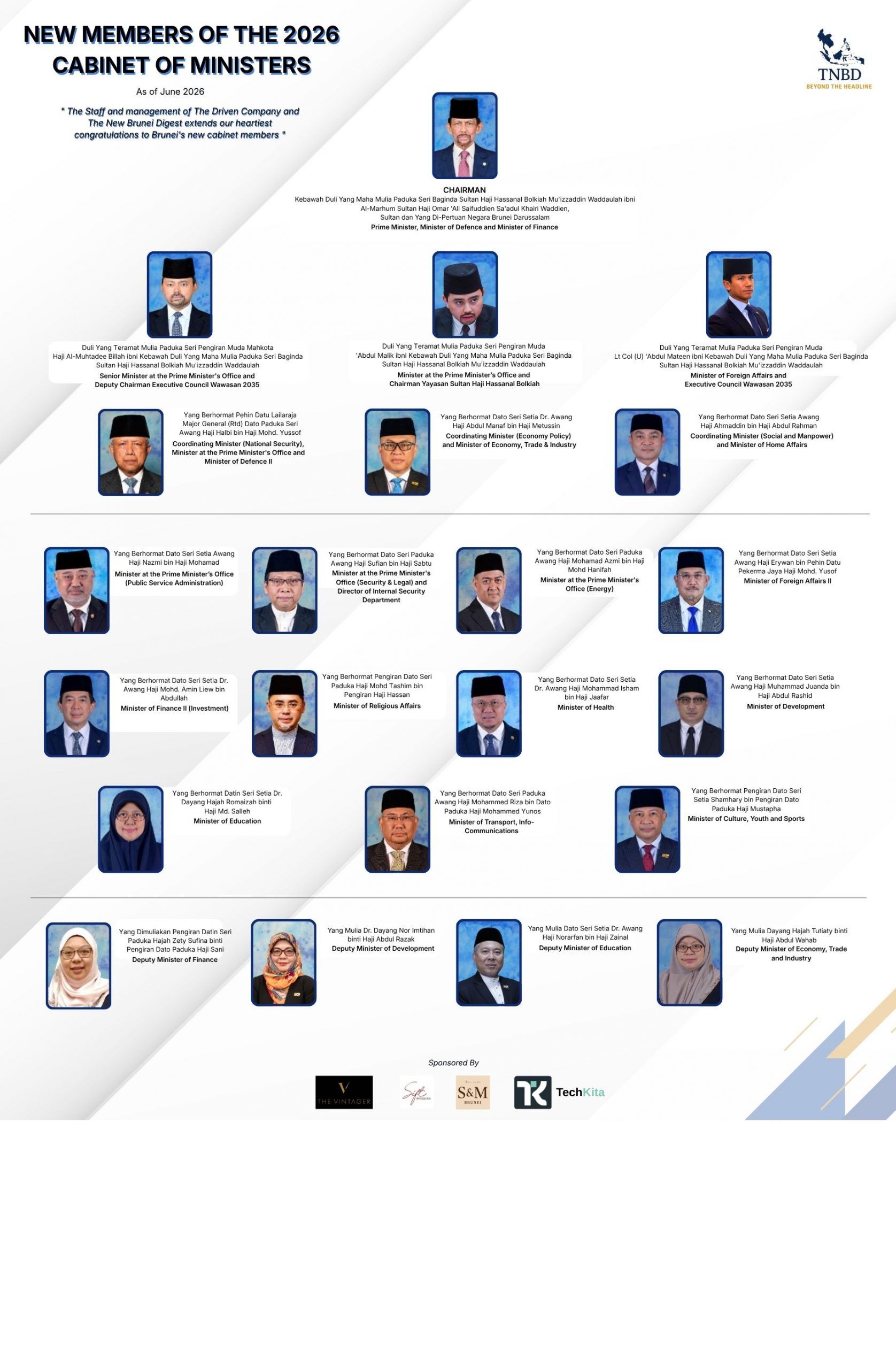
    Declaring tawakal before Allah SWT, His Majesty proclaimed the appointments of the new ministerial and deputies line-up starting with the monarch himself continuing as Prime Minister, Minister of Defence and Minister of Finance.

    Second in command, His Royal Highness Crown Prince Haji Al-Muhtadee Billah reprises the post of Senior Minister at the Prime Minister’s Office with a new role as Deputy Chair of the Executive Council on Wawasan 2035.  

    Following the royal hint, it was much expected for His Royal Highness Prince ‘Abdul Malik’s name be called out by His Majesty – as a Minister at the Prime Minister’s Office, whilst also reaffirming HRH’s role as Chair of Sultan Haji Hassanal Bolkiah Foundation.   

    His Royal Highness Prince ‘Abdul Mateen was indulged a more elaborate introduction in HRH’s appointment as Brunei’s new Minister of Foreign Affairs, “whilst continuing a career in the armed forces,” and as the country’s newest statesman, His Majesty listed out HRH’s additional active roles in the Executive Council for Wawasan 2035, “specifically to push economic development and national trade through diplomatic relations, strategic cooperation and international investment.” 

    Three new posts were created – coordinating ministers – perhaps borrowing from the Singapore model; to coordinate national security policies appointed to YB Pehin Datu Lailaraja Maj Gen (Rtd) Dato Seri Paduka Hj Mohd Halbi Bin Hj Mohd Yussof by reinforcing all ministries efforts to safeguard the nation; whilst YB Dato Seri Setia Dr Hj Abd Manaf Bin Hj Metussin will coordinate economic policies by minimising economic wastage within the ministries tasked to advance primary sectors as YB Dato Seri Setia Hj Ahmaddin Bin Hj Abd Rahman coordinates social and manpower policies. The new Coordinating Minister for Economic Policy was also appointed to lead the newly restructured Ministry of Economy, Trade and Investment.

    The formerly known as Ministry of Primary Resources and Tourism portfolio now renamed Ministry of Economy, Trade and Industry, or METI for short, was His Majesty explained, “to accelerate the development of the primary sectors as well as embrace efforts to diversify in order to ensure sustainable economic growth as well as achieve meaningful employment.”  

    Seven sitting ministers – namely YB Pehin Datu Lailaraja Maj Gen (Rtd) Dato Paduka Seri Hj Halbi Bin Hj Mohd Yussof as Minister at PMO, YB Dato Seri Setia Hj Ahmaddin Bin Hj Abd Rahman as Minister of Home Affairs, YB Dato Seri Setia Hj Erywan Bin Pehin Datu Pekerma Jaya Hj Mohd Yusof as second Minister of Foreign Affairs, YB Dato Seri Setia Dr Hj Mohd Amin Liew Bin Abdullah as second Minister of Finance (Investment), YB Dato Seri Setia Dr Hj Mohd Isham Bin Hj Jaafar as Minister of Health, YB Dato Seri Setia Hj Mohd Juanda Bin Hj Abd Rashid as Minister of Development, YB Datin Seri Setia Dr Hjh Romaizah Binti Hj Mohd Salleh as Minister of Education – were reappointed to continue on their incumbent functions and duties for cohesion and stability. The second Minister of Finance was also called upon by His Majesty to “be responsible in leading investment portfolios locally and internationally as well as monitor performances of government-linked companies.”

    The four deputy ministers appointed to full ministerial rank – YB Dato Seri Paduka Hj Sufian Bin Hj Sabtu as Minister at PMO (Security & Legal), YB Dato Seri Paduka Hj Mohd Azmi Bin Hj Mohd Hanifah as Minister at PMO (Energy), YB Pengiran Dato Seri Paduka Hj Mohd Tashim Bin Pengiran Hj Hassan as the new Minister of Religious Affairs and YB Dato Seri Paduka Hj Mohd Riza Bin Dato Paduka Hj Mohd Yunos as Minister of Transport and Info-Communications – came with a comment by His Majesty that their appointments was also hoped to bring “new perspectives and ideas”.

    Over the course of their four-year term, His Majesty urged the new ministers “serve as one team, provide the best services to His Majesty’s subjects, listen to their concerns, provide timely responses, with full commitment and integrity to carry the country forward to achieve the goals of Wawasan Brunei 2035.”

    Towards the end of the monarch’s titah, His Majesty read out in clipped procession, the names of the new deputy ministers at the Ministry of Finance, Ministry of Development and Ministry of Economy, Trade and Industry – Pengiran Datin Seri Paduka Hjh Zety Sufina Binti Pengiran Dato Paduka Hj Sani, Puan Dr Nor Imtihan Binti Hj Abd Razak and Puan Hjh Tutiaty Binti Hj Abd Wahab – quietly shattered another progressive glass ceiling for the country, as this 2026 cabinet now includes four women. The highest number appointed at this level, one minister and three deputy ministers, sent in to do what has traditionally been a man’s job.   

  • Brunei Darussalam’s 42nd National Day and Welcome to The New Brunei Digest

    Brunei Darussalam’s 42nd National Day and Welcome to The New Brunei Digest

    As’salamu’alaikum warrahmatullahi wabbarakatuh.

    Bismillāhir-Rahmānir-Rahīm.

    First and foremost, on behalf of the management and administration of The New Brunei Digest, we would like to take this humble opportunity to greet our readers, old and new, on the auspicious occasion of our nation’s 42nd National Day.

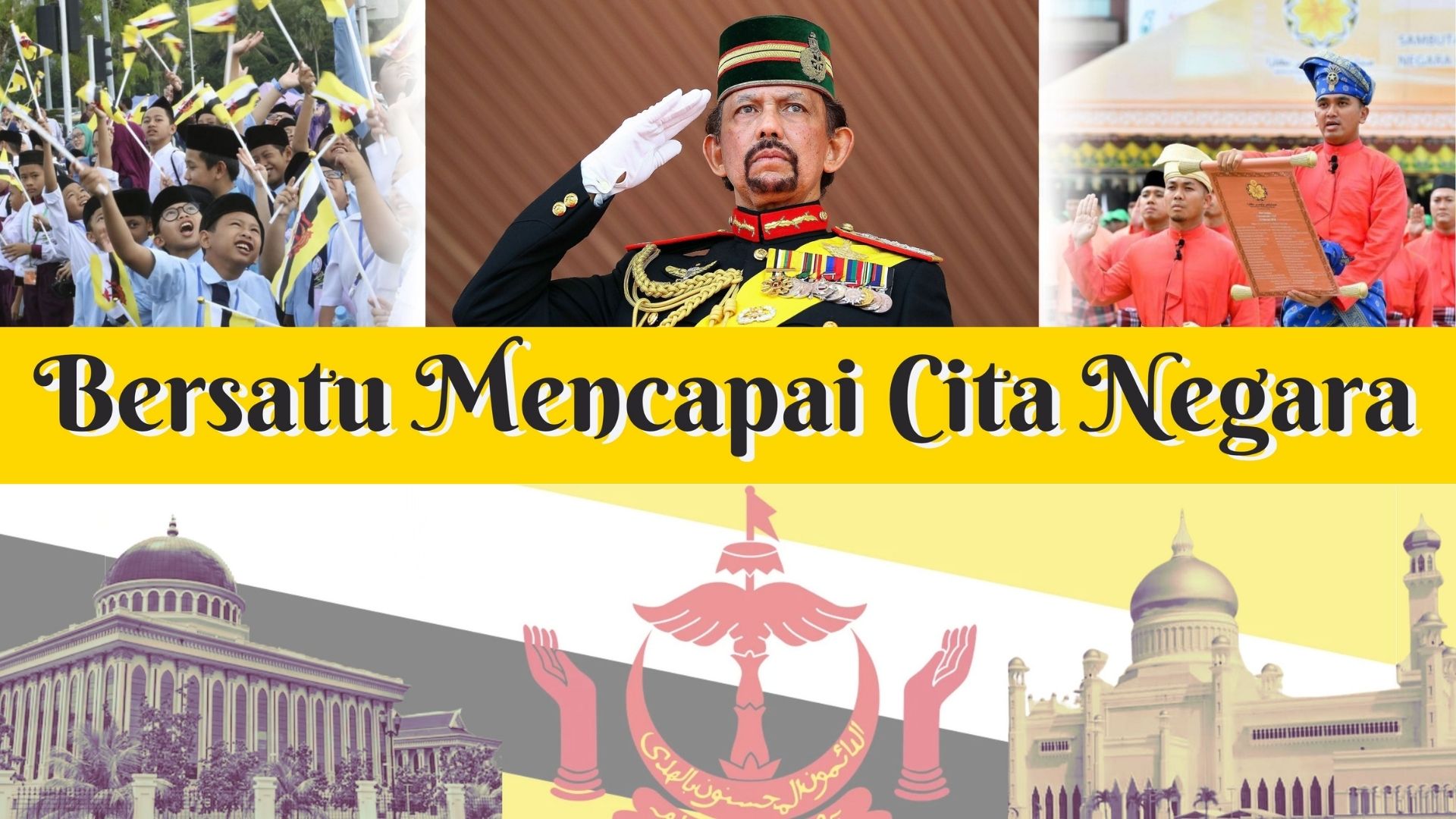
    As some of us may know, the theme for this year’s National Day is ‘Bersatu Mencapai Cita Negara’, which roughly translates to united in achieving our nation’s aspiration. A rather fitting theme for not only our country as we look towards Wawasan 2035 in the coming years, but also for this platform.

    When I touched upon earlier in my greeting to readers both old and new, it is a nod to those readers who have read all our stories in the past. It has been a long journey for myself and fellow founder, Waleed PD Mahdini, and without the support and encouragement of our readership in the past, the professional network and acquaintances we have built up over the years, we would not even begin to consider this substantial undertaking.

    However, I digress… it was during His Majesty Sultan Haji Hassanal Bolkiah Muizzaddin Waddaulah, the Sultan and Yang Di-Pertuan of Brunei Darussalam’s 78th royal birthday celebrations that we had decided to venture back into this arena, with a new platform.

    In His Majesty the Sultan and Yang Di-Pertuan’s titah to mark the occasion, His Majesty highlighted that 2035 was nearing, and that we, as a nation, need to pull together in order to reach the targets that His Majesty laid out years ago.

    It was during that moment where His Majesty asked us, the rakyat, to question ourselves what can we do for the nation, and for one another, that spurred us both on to put together The New Brunei Digest.

    You see, for my own part, I have been in this industry for over 22 years, and my colleague longer still. Between us is almost five decades of working in communications, first and foremost on the frontlines and in the newsroom. Our bylines include that of Radio Television Brunei, where most of the Bruneians working today will have seen my colleague on their screens; and the Borneo Bulletin; and then came the inception of The Brunei Times, where we spent most of our years working together, as well as several other notable enterprises along our journey.

    In the corporate world also, ranging from Corporate Affairs in various organisations, we have been in the Oil and Gas sector, Banking and Finance, and as Media and Communications consultants in one way or another for past members of the State Legislative Council, and a number of smaller medium enterprise companies. At one point we even ran and delivered a car magazine, the first of its kind in Brunei Darussalam, with foreign contributors filling in where necessary as newly released cars would only be arriving on our shores much later on.

    With all that in the proverbial bank, it was a clear sign for us that it is now or never. Albeit with a new approach, better focus, still the hallmarks of the kind of writing and language that drew readers to our stories all those years ago, this time around we hope that we can bring more likeminded individuals to participate on a broader scale.

    As we firm up our platform, our forté will be Opinion and Analysis, Talking points involving Business and our Economy, with video content to come later down the road. Our wish is to deliver content and material that is relevant to our sovereign and the decision makers, and more importantly to break it all down for the rakyat and residents alike. As it is only with your support will our endeavour not only endure, but insya’Allah more importantly, thrive.

    So, please feel free to write in to The Driven Company, our publisher’s email address at driven.BN@gmail.com should you like to schedule an interview or discussion to collaborate. As we begin to move forward with our plans to grow this platform, we are open to explore all opportunities to engage with collaborators and contributors alike.

    Lastly, best wishes also to all observing the holy month of Ramadhan and to the members of our community currently enjoying the festive celebrations of the Lunar New Year. May this special time of the year unite us as we celebrate 42 years of nationhood.