Blog

  • Severe traffic accidents concerning Brunei society

    Severe traffic accidents concerning Brunei society

    Recently there have been two significant road accidents resulting in fatalities, a number of other accidents which have gone viral due to the photos highlighting the severity of the crashes. The most recent severe accident took place in Temburong on the eve of National Day, all of which have concerned our society.

    Most tragic are undoubtedly the lives lost, with grieving family members left to pick themselves and move on, it leaves every Bruneian with a grim feeling, especially when we sit back and realise that many accidents can be prevented and curbed.

    Sometime ago, when it was called the Ministry of Communications and not what it is today, I was in the Belait District to speak to the Ministry’s Permanent Secretary, after he had delivered a key note address at the launch of a programme aimed at raising the calibre of driving instructors nationwide.

    It remains very firmly in my mind as its been the only time a Permanent Secretary, who had to rush back to Bandar Seri Begawan to attend to his other responsibilities, instructed me to call him in 20 mins on his personal line. He gave me his number, and departed in his official government vehicle, and the following conversation he outlined what the aim for the programme was. I was grateful that it wasn’t just lip-service or a ploy to leave me standing at the altar so to speak.

    Apologizing for his haste in leaving, Dato at the time explained that the education aspect, or training the trainers, was crucial in delivering a higher standard of driver. However, he did admit that it would take time and the standards upheld in order for there to be a significant change in accidents.

    My point in highlighting this isn’t to criticise or question whether or not the policy bore fruit, but rather to encapsulate what the severity of those accidents have in common.

    Speed.

    In my time as the motoring columnist at the Brunei Times, I had the privilege of speaking to accident investigators from the Royal Brunei Police Force, in particular when they invited Australian experts to help assist and teach them on specific aspects of understanding vehicle accidents.

    It was made very clear to all, with no uncertain terms, that the number one cause of fatalities in road accidents is speed.

    I go back to this simply because the images shared online show very clearly aspects of the road accidents, cars which have already been designed to crumple to reduce the impact on other vehicles, pedestrians and road users, compacted to highlight the forces involved.

    In one image, a government vehicle, a Pajero, was smashed head on and the chassis clearly contorted. In another incident this week, the vehicle remained mostly in one piece, but was turfed so far away from the road and facing the opposite direction, that people wondered how it got there, another telling aspect of this accident was that there were hardly any indications or markings on the ground nearby, implications of a vehicle traveling at speed and then in the air before landing in a heap.

    Just my humble opinion, but maybe we should continue with the current push to raise the calibre of drivers, while at the same time, we raise awareness and enforcement to curb the severity of these incidents.

    In the past, the Ministry of Transport and Info Communications had made notable strides in doing so, alongside the Road Safety Council. Maybe it is timely for us to revisit some of the initiatives that made it such a success, and see if we can replicate it for the benefit of all road users in Brunei.

  • Stay tuned for more stories!

    Stay tuned for more stories!

    The New Brunei Digest is home to Opinion and Analysis articles centred on Brunei Darussalam. Our Writers and Contributors span from the Sultanate’s News and Media sector as well as experts from a wide variety of Industries. It is our hope that our readers will benefit from our insights and perspectives, spurring Brunei Darussalam’s efforts to achieve its ‘Wawasan 2035’ targets.

  • Brunei Darussalam’s 42nd National Day and Welcome to The New Brunei Digest

    Brunei Darussalam’s 42nd National Day and Welcome to The New Brunei Digest

    As’salamu’alaikum warrahmatullahi wabbarakatuh.

    Bismillāhir-Rahmānir-Rahīm.

    First and foremost, on behalf of the management and administration of The New Brunei Digest, we would like to take this humble opportunity to greet our readers, old and new, on the auspicious occasion of our nation’s 42nd National Day.

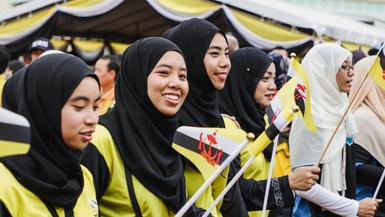
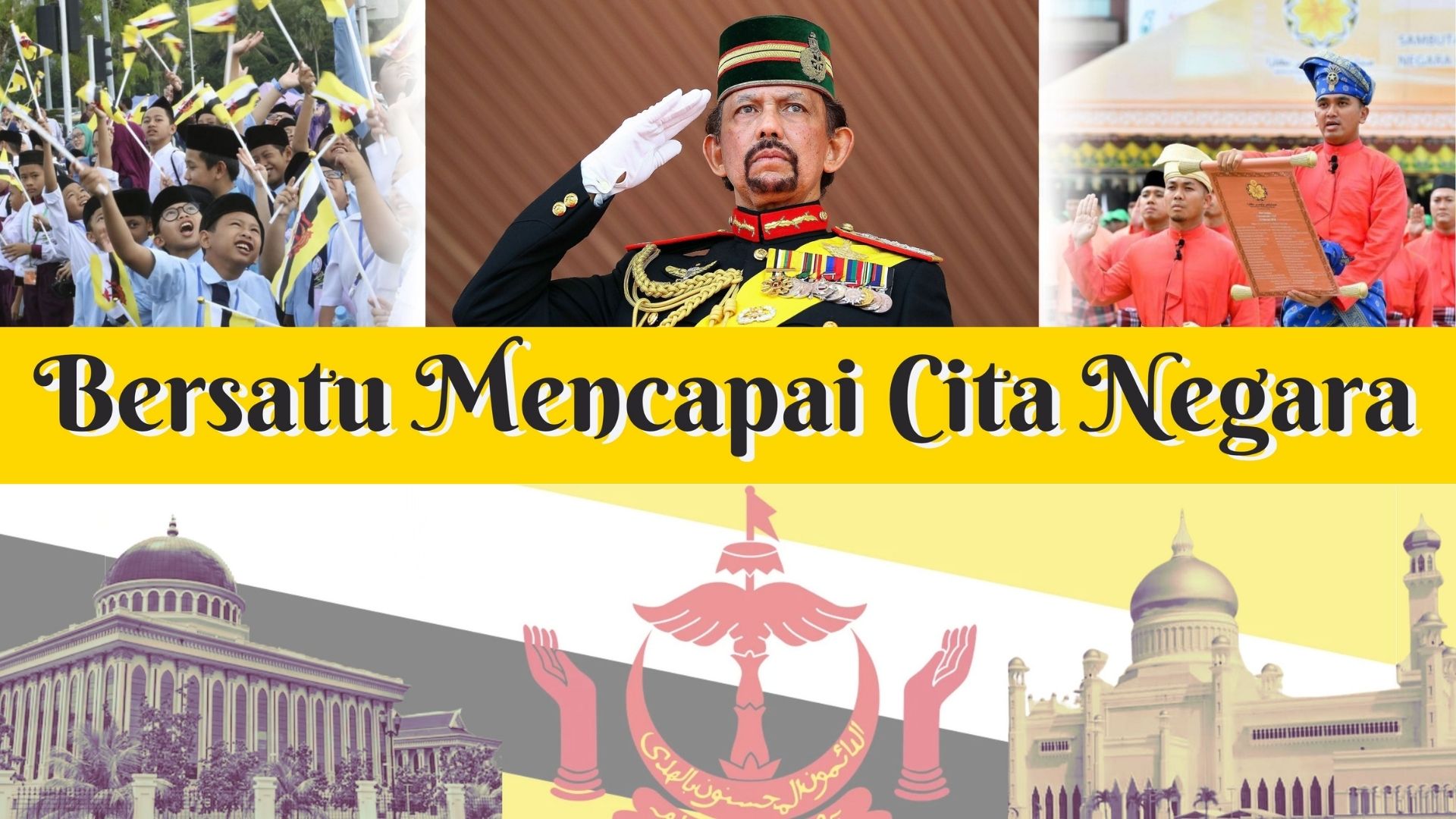
    As some of us may know, the theme for this year’s National Day is ‘Bersatu Mencapai Cita Negara’, which roughly translates to united in achieving our nation’s aspiration. A rather fitting theme for not only our country as we look towards Wawasan 2035 in the coming years, but also for this platform.

    When I touched upon earlier in my greeting to readers both old and new, it is a nod to those readers who have read all our stories in the past. It has been a long journey for myself and fellow founder, Waleed PD Mahdini, and without the support and encouragement of our readership in the past, the professional network and acquaintances we have built up over the years, we would not even begin to consider this substantial undertaking.

    However, I digress… it was during His Majesty Sultan Haji Hassanal Bolkiah Muizzaddin Waddaulah, the Sultan and Yang Di-Pertuan of Brunei Darussalam’s 78th royal birthday celebrations that we had decided to venture back into this arena, with a new platform.

    In His Majesty the Sultan and Yang Di-Pertuan’s titah to mark the occasion, His Majesty highlighted that 2035 was nearing, and that we, as a nation, need to pull together in order to reach the targets that His Majesty laid out years ago.

    It was during that moment where His Majesty asked us, the rakyat, to question ourselves what can we do for the nation, and for one another, that spurred us both on to put together The New Brunei Digest.

    You see, for my own part, I have been in this industry for over 22 years, and my colleague longer still. Between us is almost five decades of working in communications, first and foremost on the frontlines and in the newsroom. Our bylines include that of Radio Television Brunei, where most of the Bruneians working today will have seen my colleague on their screens; and the Borneo Bulletin; and then came the inception of The Brunei Times, where we spent most of our years working together, as well as several other notable enterprises along our journey.

    In the corporate world also, ranging from Corporate Affairs in various organisations, we have been in the Oil and Gas sector, Banking and Finance, and as Media and Communications consultants in one way or another for past members of the State Legislative Council, and a number of smaller medium enterprise companies. At one point we even ran and delivered a car magazine, the first of its kind in Brunei Darussalam, with foreign contributors filling in where necessary as newly released cars would only be arriving on our shores much later on.

    With all that in the proverbial bank, it was a clear sign for us that it is now or never. Albeit with a new approach, better focus, still the hallmarks of the kind of writing and language that drew readers to our stories all those years ago, this time around we hope that we can bring more likeminded individuals to participate on a broader scale.

    As we firm up our platform, our forté will be Opinion and Analysis, Talking points involving Business and our Economy, with video content to come later down the road. Our wish is to deliver content and material that is relevant to our sovereign and the decision makers, and more importantly to break it all down for the rakyat and residents alike. As it is only with your support will our endeavour not only endure, but insya’Allah more importantly, thrive.

    So, please feel free to write in to The Driven Company, our publisher’s email address at driven.BN@gmail.com should you like to schedule an interview or discussion to collaborate. As we begin to move forward with our plans to grow this platform, we are open to explore all opportunities to engage with collaborators and contributors alike.

    Lastly, best wishes also to all observing the holy month of Ramadhan and to the members of our community currently enjoying the festive celebrations of the Lunar New Year. May this special time of the year unite us as we celebrate 42 years of nationhood.

  • Youths urged to develop greater sense of responsibility

    Youths urged to develop greater sense of responsibility

    THE theme “My Country, Brunei Darussalam” certainly carries a very aptly patriotic message to the citizens and residents of the country, which is angled towards a particular emphasis to the country’s future generations of leaders – its youth.

    Speaking to the Bulletin yesterday, the Deputy Minister of Defence, Dato Paduka Hj Mustappa bin Hj Sirat, highlighted: “The theme is very relevant in that His Majesty the Sultan and Yang Di-Pertuan of Brunei Darussalam, in his National Day titah, listed out his vision for the country’s progress and development to ensure improvements and continuity of the country’s peace, stability and prosperity, of which the responsibility should be shouldered by each and every one of us. The message was strongly conveyed to the younger generation to pick up this responsibility by nurturing a sense of duty to the country and our people and play their roles as the future leaders of our country, under the leadership of the monarch.”

    Speaking more towards the younger generations, Dato Hj Mustappa urged them “to heed His Majesty’s call to look after our country by being fully responsible in utilising all the privileges that we, as citizens of Brunei Darussalam are lucky to have, such as the subsidies that the government provides to the people that should not be wasted”.

    However, he noted that the government cannot go about it alone.

    “To ensure all this, we need to intensify our economy, through diversification, but we are still relying on oil and gas,” he said. “This is where the younger generations have a greater role to play, in fact, a bigger role in diversifying our economy.”

    He went on to say that “we’ve achieved another remarkable year by being united under the leadership of His Majesty, and we’re busy actively implementing government policies to ensure that the citizens continue to enjoy the prosperity and welfare of the country”.

    Dato Hj Mustappa acknowledged the countless numbers of younger citizens that work and strive everyday to improve upon the country’s continued peace, progress and prosperity. But he also stressed the importance of feeling a “sense of pride and sense of belonging to a country that remains ‘peaceful, prosperous and developed’”.

    “This is our country. It’s the only country we have and so we have a responsibility to look after it,” said the deputy minister.

    “If not us, who else is going to be responsible for looking after it and taking care of it.”

    Meanwhile, the Acting Deputy Commissioner of the Royal Brunei Police Force, Bahrin bin Mohd Noor took the opportunity to highlight the theme of this year’s National Day Celebrations, “My Country, Brunei Darussalam”, as being “very apt”.

    He also urged all the citizens and residents of Brunei Darussalam, particularly the younger generations, to protect the country, to always remain loyal to the monarch and uphold and nurture the principles of the Malay, Muslim, Monarchy (Melayu Islam Beraja, MIB) national philosophy and, above all else, “to maintain a sense of belonging to each other and our country”.

    Focusing further on the issue of law and order, especially in light of the recent report of increasing crime in some parts of the country, the Acting Deputy Commissioner said: “In this day and age, we are currently seeing many deteriorating social issues, particularly the experiences of crimes. I urge and hope that the youth continue to remain aware of avoiding and refraining from any criminal involvement.”

  • Education key to making future better world

    Education key to making future better world

    One of the 11 fellows of the Southeast Asian Press Alliance, Aquiles Zonio, who hails from Mindanao, Philippines, is in the country to learn more about the local situation regarding freedom of the press. Having invested 25 years in the media profession, Zonio, a correspondent for the Mindanao Bureau of the Philippine Daily Enquirer met up with the Bulletin to share his findings and ask a few questions of his own.

    “The main purpose of my visit here is to do a story on the real press freedom situation in Brunei. Based on my own experience, I can say that the Bruneian media is enjoying more freedom than what we are experiencing in the Philippines,” noted the Filipino scribe who received a fellowship grant from the press organisation that promotes and protects press freedom in the region.

    Elaborating on this profound comparison, bearing in mind that the Philippines often regards itself as the champion of press freedom in the region, Zonio explained: “There can be no real press freedom if journalists exist in a state of fear, poverty and corruption, which is prevalent, not only in the Philippines, but also in several other Asean member countries. I spoke to several colleagues in Brunei and they told me that they were not harassed or intimidated by the authorities for writing any sort of sensitive stories. ‘We are free to write any sort of story we want without fear of such reprisals from the authorities,’ they acknowledged.”

    Zonio, who is perhaps best known for being one of the three journalists to have survived the bloody Maguindanao massacre in 2009, where 58 innocent civilians were brutally gunned down in cold-blood by the Ampatuan clan, of which 32 were journalists, pointed out “journalism is not just a mere profession, it is a volition and it entails lots of sacrifices”.

    He went on to admit that as a journalist, “the personal experiences are not high paying but, you will find contentment and self-fulfillment and that is one thing that money cannot buy. There is no price tag for it”. Having covered the political affairs of the Philippines and the civil war in the Mindanao region, Zonio has amassed a wealth of experience. Asking him why he continues with this potentially fatal profession, he quipped: “The journalists in the Philippines, not all, do not really receiving high salaries, especially provincial journalists like me and unlike you journalists here in Brunei who receives handsome salaries. We, Filipino journalists, are just handsome but not in terms of the salaries.”

    Even before the Maguindanao massacre, his conviction and determination to get the truth out of covering high-profile corruption cases, injustice, illegal gambling, illegal mining, to which he received several death threats and libel cases for his noble efforts, ever since 2004: “I have to carry a gun when walking out in public to protect myself and I always keep a gun under my pillow when I sleep because the state cannot protect us and I don’t trust our law enforcement agencies. But being here in Brunei, it is the first time that I have experienced sleeping at night without having to worry about locking my door. I cannot do that in the Philippines or several other Asean countries.”

    Putting his career into a more philosophical perspective, he explained that by exposing the truth, “in the Philippines, you are putting one foot in harm’s way and this has happened to me, of receiving death threats since 2004. But I am lucky that I am still alive. I hope that I can live out the rest of my natural life and to die naturally, and not by ‘accident’ because I believe that God has a plan for every human being”.

    In his personal view, “freedom cannot be absolute because it comes with responsibilities. Our main objective as journalists is to serve the people, in other words, what we do is a public service. We are the fourth estate. When the other three branches of government go down, it is us as the fourth estate that has to give our voice to the visions of injustice or criminality. The media everywhere should always help the government attain the common good by publishing fair, accurate and balanced information. If the media cannot do that, then it poses a big question mark to our existence and worth”.

    Asking him the latest update in the quest for justice following the Maguindanao massacre, Zonio explained that he was optimistic that justice would eventually be reached, “maybe not today or soon, but maybe in 20 or 30 years time”. Surprised with his answer, he further spelt out: “We need to be patient. We need to make sacrifices. It is not easy to get the justice that you deserve in a country where the judicial system has double standards that is based for the rich, but we have to fight back through the legal process. But it may take three to five generations before we will see any real change. So why are we doing this? Not for our own sakes, but for the benefit of our children and their future.”

    Discussing some other aspects of his travels and experiences, he surmised that there is indeed much prejudice and misunderstanding around the world. “But there are a lot of commonalities. And the only thing that can change all that is education.”

  • Providing jobs necessary duty

    Providing jobs necessary duty

    “HAVING a job is not only about earning a living but equally important it is about honour and it is about self-respect and self-esteem,” said Pehin Datu Singamanteri Colonel (Rtd) Dato Seri Setia (Dr) Awg Hj Mohd Yasmin bin Hj Umar, Minister of Energy at the Prime Minister’s Office, as he laid emphasis on the focus and goal of the Oil & Gas Job Fair 2011 yesterday.

    Inaugurating the country’s first-ever five-day job fair, which is being held at the BRIDEX Exhibition Hall and specifically geared for the oil and gas industry, the Energy Minister at the Prime Minister’s Office set the scene for what the event was all about by emphasising that Brunei’s peace and prosperity were blessings from Allah the Almighty from which “we cannot be complacent or take it for granted” and that these blessings were also “the result of the hard work, wisdom and leadership of His Majesty the Sultan and Yang Di-Pertuan of Brunei Darussalam”.

    Pehin Dato (Dr) Hj Yasmin went on to underline His Majesty’s recent birthday titah whereby the monarch spoke of the need for “planning of human resource development (to) be more composed” as “the world is facing an extraordinary challenging future”.

    Zeroing in on the monarch’s point, the minister reminded everyone involved in the oil and gas industry’s public-private partnership “to grow our economy and to provide employment opportunities to the young generation”, where in this day and age, “having a job is one of the ingredients to make a person a complete being”.

    Pehin Dato (Dr) Hj Yasmin called on the industry to change their recruiting mindset and to take responsibility “to ensure we will all continue to enjoy the peace and share the prosperity”, which “should not be regarded just as a by-product of your business activities but rather it is your duty”.

    As spelt out in the country’s recently-published Energy White Paper, the energy sector is aiming for a target of 50,000 employment opportunities by 2035, of which 5,000 have been allocated for professional Bruneians, 35,000 skilled or semi-skilled workers and the remaining 10,000 specifically filled by guest workers, whereby the main growth areas for these employment avenues, other than in the upstream industry, would be provided in the downstream industry, as well as the oil and gas service sector.

    “Today we already have around 15,000 employment opportunities in the oil and gas service sector but, unfortunately, only 40 per cent are Bruneians,” the minister pointed out. He further hammered home the point that other than creating more job opportunities, “equally important, we must create good quality jobs that pay reasonable salary and offers career development opportunities”.

    Pehin Dato (Dr) Hj Yasmin then listed out the key initiatives that the Energy Department at the Prime Minister’s Office would implement in further ensuring the success of this ambitiously noble project.

    An overarching Energy Industry Competency Framework to align the training needs with the industry’s requirement is currently being prepared, in collaboration with the Ministry of Education, as well as the Department of Economic Planning and Development, to ensure that training providers have the capacity to generate competent Bruneians for the jobs offered by the industry.

    What the minister had in mind were not only those with the technical knowledge and skill to meet the industry’s standard but also “those who have the right attitude and personal and leadership skills”.

    The second capacity-building initiative, following the consent of His Majesty, is the formation of the Brunei National Energy Research Institute (BNERI) that is hoped to provide an avenue for local scientists, engineers and business leaders “to develop our energy industry to a new level and be able to compete within the region”. It also serves to provide a platform for research work with the industry that could be “patented within the country and with this, commercialisation of its associated products and processes” that would further open up another avenue career path for Bruneians.

    A new Local Business Development framework will also be introduced early next year that will regulate the creation of a more conducive environment for local companies by motivating them to employ more local talent as a means for them to be “more genuinely involved in the oil and gas sector”.

    The fourth initiative is the facilitation of more key investments in the industry to spur on more local business opportunities as a way to generate more employment opportunities.

    Although the minister admitted that many of these new initiatives would “take a bit of time for full implementation”, Pehin Dato (Dr) Hj Yasmin voiced out his hope for the more than 80 per cent of school-leavers without any tertiary education each year “would want to work if you give them the(se) opportunities”, who could then be trained by local companies through the smart and careful utilisation of the government’s Human Resource Development Funds.

    The minister further highlighted the 10,000 employment opportunities currently available that are supported “by our guest workers” and the commitment of business owners and management team “to ensure the continued prosperity of Brunei Darussalam”.

    Pehin Dato (Dr) Hj Yasmin then reasoned that “all the components are here and there should be no reason why we cannot act together and be able to work together to increase jobs for Bruneians”.

  • Brunei – Perfect place for family tourism

    Brunei – Perfect place for family tourism

    BRUNEI Darussalam, on the whole received pleasant and gentle praises by many of the international media that ranged from China to the Middle East, covering the week-long Asean Tourism Forum (ATF), but the issue of visa on arrival was also acknowledged to be a sticking point in the country’s bid to improve its inbound tourist volume.

    Motaz Othman, an area manager for the Islamic Tourism Magazine, who hails from Jordan but is based in London, pointed out “There is a big image for Brunei in the Islamic world because everybody knows that Brunei is committed to its Islamic culture”.

    Having attended many previous ATF meetings in Europe and Asia, “I consider Brunei a perfect sample of Islamic tourism for European, African, and American tourists because Brunei offers clean, responsible tourism and it is all family-related. You have it all here. Unlike other tourist destinations, even those of Muslim countries, there is no big problem with drugs, gambling, alcohol or prostitution. So you have a very good sample for the world. I believe this is a perfect situation.”

    However, despite the many positive benefits that Brunei offers as a unique tourist destination from an Islamic point of view, he narrated a story to prove his point of what he considered to be the main stumbling block to furthering Brunei’s tourism goals.

    “A friend of mine, who is a tour operator, was invited to this ATF as a hosted buyer, and as it was a prestigious destination, his wife wanted to fly out and accompany him to Brunei. But when they applied for a visa at the Brunei Embassy in Amman, she was refused a visa, with officials citing that she had to be ‘invited’. How can this be? Is it so complicated to facilitate visas for tourists?”

    He went on to say that the Middle East market is a big bonus not only for Brunei, but also for Asean tourism. “It’s perfect. We have similar food and cultures with the Asean countries.”

    Motaz used the comparison of Malaysia, explaining why it continues to be so successful in attracting millions of tourists from the Middle East.

    “It is unfair to compare Brunei to Malaysia because it is a much bigger country and it also offers many other alternatives. Here in Brunei, I believe that the authorities are looking for some class tourism and not just mass tourism. You are targeting rich people, with families, who want to enjoy a safe, peaceful destination. Malaysia attracts the eyes of Arabs and people from the Middle East because they have big promotions and huge alternatives. For instance, out of an Islamic family, the women prefer shopping, the children like to be engaged in a lot of activities and the men can go for other alternatives. Brunei has very limited alternatives for this class of people. Even your Royal Brunei Airlines only flies to Dubai and Jeddah. Yes, a lot is being done, but you are not yet a tourist destination.”

    He went on to surmise that it was “because of a prestige issue that you are targeting Europeans”. Brunei has focused itself onto the eco-tourism niche. “Many Europeans are fed up of going to bars, clubs and that kind of entertainment when they visit foreign countries, but there is a growing interest in enjoying nature nowadays. And Brunei is doing well with eco-tourism. It is not opening up the country for everyone and thus it is able to keep its country clean along with its culture and heritage.”

  • Bring back Muslim culture

    Bring back Muslim culture

    DURING the opening of the Sixth Knowledge Convention on Tuesday, His Majesty the Sultan and Yang Di-Pertuan of Brunei Darussalam consented to view the centerpiece of this year’s exhibits, namely the Exhibition Gallery set up by the Balai Kenangan of Al-Marhum Sultan Haji Omar ‘Ali Saifuddien Sa’adul Khairi Waddien.

    The Balai Kenangan, which comes under the Office of His Majesty the Sultan and Yang Di-Pertuan of Brunei Darussalam had painstakingly recreated an original concept to showcase this year that captures the symbiosis between the latest in information technology and the ancient teachings of Islam.

    “The crux of this whole concept is to bring us back the ancient time of Islam in Andalusia, Spain,” explained Hj Johari Hj Achee, Chairman of the Exhibition Gallery, “when Islam had a foothold in Spain for about four centuries.” Taking the Bulletin through the design and concept of the Exhibition Gallery, Hj Johari pointed out, “If you look at the mosques and gardens there, you will find water features to be the main elements, and we have interpreted this in the main design of the exhibition.” Indeed, the whole gallery was designed to resemble such a garden, with green carpets to resemble the fauna and a decorated carpet with the typical Muslim-Andalusian motifs for visitors to walk on, trailing a path around the exhibits. There are five water fountains that surround a waterfall, which is engraved with the ‘Iqra’ – the first verse in the al-Quran.

    As one walks into the gallery, the first thing one notices and most prominent attraction is the golden dome, which was inspired by the iconic golden dome of the Sultan Omar ‘Ali Saifuddien Mosque in the capital. “The dome is supported by six pillars, which symbolises the six foundations of Islamic faith,” said Hj Johari. Furthermore, built-in directly into the foundations of each of the six pillars are glass cabinet, each containing antique and priceless al-Qurans from His Majesty’s and Al-Marhum’s personal collection which are 65 in total, “to represent the 65th birthday anniversary of His Majesty”. Under the arch of the magnificently recreated dome of the SOAS Mosque are fine engravings and etchings of the 99 names of Allah the Almighty.

    To further illustrate the immense planning and thought that has gone into this exhibit is the fact that each of these 65 holy books have been especially opened to particular pages that highlight certain verses that depict 65 branches of knowledge “from an ocean of knowledge in the al-Quran to signify education, administration, agriculture, health, medicine, international relations, defence, trade, development, astronomy and so on”.

    Another interesting feature of the centrepiece is the ‘pabarahan’, which is an open incense burner that was also specially designed by a Bruneian and painted in gold laid with green marble where the monarch consented to officiate the gallery by dropping dark brown slivers of local and imported gaharu, or frankincense, into the ‘pabarahan’.

    As soon as the first wisps of vapour arose from the burner and the sweet aromas of the gaharu filled the gallery, a zikir group of 82 specially-selected people performed the ‘Al-Asmaa’ Al-Husnaa’ zikir. The chairman pointed out that the main intention of all this was to also invoke the five senses of the human body – sight, hearing, smell, touch and taste.

    “In this atmosphere and nuance of Islamic values and culture, His Majesty was surrounded by these 82 people, who ranged from a six-year-old to an 80-year-old man. But the most unique quality of them all was the fact that they were selected out of 350 people, people who are near to the al-Quran,” said Hj Johari. Fifteen comprised of national Qari and Qariah champions from 1962 until the present day; 13 local ‘Hafiz’, 20 students from the Sultan Haji Hassanal Bolkiah Tahfiz Al-Quran Institute and 20 pupils from the Al-Falaah Religious School. The ‘Al-Asmaa’ Al-Husnaa’ zikir that they recited was also specially composed and rearranged by a Bruneian from the Tahfiz Institute to present to the monarch. In addition to the many firsts presented during the opening, following the zikir recital, His Majesty consented to sprinkle ‘bunga rampai’ onto the group “which is the first time that I can remember His Majesty doing this”.

    With all five senses completely awakened during Tuesday’s opening, from the sounds of the 82 people that included the voices of women and children to the smell and taste of the burning incense to the sights of the displays and exhibits that one could touch, “it was completely mesmerising and some even had goosebumps just taking this all in”, noted Hj Johari.

    “We wanted to make a whole new concept this year and do away with what has become the usual norm these days of officiating an event by touching the plasma ball. In the olden days, burning the gaharu was tradition during major events. So we are hoping to revive this unique Brunei and Islamic culture. The sprinkling of the ‘bunga rampai’ has also these days all too often been misconceptualised because it should only be sprinkled on people, and certainly not on cars, boats or trucks,” explained Hj Johari.

    The former senior newsman also noted that this new focus was hoped to help support the efforts by the Forestry Department and the country’s economic diversification of making ‘gaharu’ wood a viable local commercial product.

    Another first during the opening was the launch of a special DVD containing the newly-arranged ‘Al-Asmaa’ Al-Husnaa’ zikir, Raatib Al-Attaas and the special prayer to protect the monarch and the country, which are handed out to visitors until the exhibition ends on July 31.

  • Achieving SDG as ASEAN community

    Achieving SDG as ASEAN community

    HIS Royal Highness Prince Mohamed Bolkiah, Minister of Foreign Affairs and Trade, yesterday commended the United Nation’s Millennium Development Goals that have brought about “new confidence in the future” and which has “taught us a lot about ourselves”.

    HRH delivered a statement during the High-Level Plenary Meeting of the UN’s 65th annual General Assembly on the MDGs at the UN Headquarters in New York in which HRH outlined the Sultanate’s progress towards achieving the goals and stressed the need for small, developing nations to achieve deeper levels of regional and international cooperation in order to reach the 2015 target date.

    “We have learned how the Millennium Development Goals can bring our people together, our governments, our business people, our professionals and our families and communities. So far, the goals have done this very successfully. We are starting to feel new confidence in the future and I think we are less frightened by its many challenges,” remarked HRH about its overall goal.

    HRH went on to point out that as a result “our government has strengthened policy and legislation. Our public and private sectors are working together in health and education and all ministries have set long-term programmes of development”.

    Adding all these to the country’s comprehensive housing programmes and its commitment to the rule of law, “we can see that work towards the goals has done a great deal to strengthen social welfare”.

    But the pursuit of the MDGs has also taught the people and government of Brunei Darussalam another important lesson, HRH said- one that “has taught us a lot about ourselves”.

    Acknowledging the fact that Brunei is a small, developing nation and that “we cannot do everything on our own”, HRH highlighted the importance of the Sultanate’s membership in the Asean regional organisation. “It has a great role to play and I think this is because it also has a development target,” which HRH noted is presenting challenges to all of its 10-members to truly become an “Asean Community”.

    In fact, the establishment of Asean’s three pillars for a single community shares the same immediate target date as the eight goals of the UN MDGs, which is 2015, HRH noted.

    “Our method is to establish what we describe as ‘connectivity’ and I am sure that nothing will give us stronger ‘connection’ than achieving the Millennium Goals together as partners,” HRH went on to emphasise, adding: “After all, the goals are at the heart of any real community and the lesson here is an inspiring one. It shows they can be both a national and regional guide.”

    But HRH also noted the difficulties in what he termed as “a lesson that we are still trying to learn” – that concerning the natural environment in general and, specifically, bio-diversity – whereby “we are finding it difficult to reach the targets”.

    Despite the fact that the Sultanate is signatory to key international agreements on the environment, “we have a very real problem”, noted HRH, which he summed up quite simply: “We don’t know enough.

    “Statistics often contradict each other. Basic facts are frequently disputed. Even when we are satisfied with the information we get, we cannot implement recommendations. We can do the planning and pass the legislation. We can even provide much of the physical infrastructure but there is very little else we can do if we don’t have enough highly skilled people,” HRH listed out to the assembled audience of world leaders and statesmen.

    “This is always going to be a big problem because of our low population and our small domestic market,” HRH added, pointing to the fact that “unless this situation changes, some of the goals will be very hard to achieve”.

    But then HRH underscored, in his opinion, the true benefit of the MDGs. Noting, “success cannot depend entirely on each individual country”, HRH called for “deep levels of cooperation, especially sharing ideas and expertise”, which HRH highlighted “as the biggest single lesson we have learned in the last 10 years” and reaffirmed that Brunei Darussalam “will do whatever we can to strengthen these efforts”.

    Adopted by world leaders in 2000 and set to be achieved by 2015, the MDGs are both global and local, which are customised by each country to suit their specific development needs. They provide a framework for the entire international community to work together towards a common end – by simply ensuring that human development reaches everyone, everywhere.

    The UN’s Development Programme believes: “If these goals are achieved, world poverty will be cut by half, tens of millions of lives will be saved, and billions more people will have the opportunity to benefit from the global economy.”

    The eight goals of the UN Millennium Development Goals are eradicating extreme poverty and hunger; achieving universal primary education; promoting gender equality and empowering women; reducing child mortality; improving maternal health; combating HIV/AIDS, malaria and other diseases; ensuring environmental sustainability and developing a global partnership for development.

  • Brunei may be small but we have a voice in APEC

    Brunei may be small but we have a voice in APEC

    “APEC is not the answer to everything,” said Dato Paduka Timothy Ong, Acting Chairman of the Brunei Economic Development Board, “but it is a rare club that includes the three biggest economies of the world, which gives prestige and value and that in itself is the beauty and the real value that comes with the membership itself.”

    Speaking to the Borneo Bulletin in an exclusive interview on the eve of the much-anticipated Asia Pacific Economic Cooperation (Apec) CEO Summit, which is witnessing the biggest attendance so far ever since its inception some 13 years ago, Dato Timothy explained the advantages that Brunei Darussalam’s membership of the 21-member organisation brings.

    “Despite being the smallest member in Apec, which is reflected because of the size of our economy, trade flows and physical size of it, but in per capita terms, we are significant, in fact close to those of Apec’s developed countries. The beauty is that in Apec, we participate as equals and we are considered as a very useful member of the grouping because we are an active and positive member.

    “This is the official recognition that our officials get, which is one of its strengths. Although we are a small country, we get a voice in a group that accounts for half of the trade in the world’s economy.”

    As one of Brunei’s prominent economist, Dato Timothy further explained, “Apec is all about conducting trade policies. It’s about learning from each other. But we cannot dictate what Apec can do. It cannot change conditions in each member country directly. What we do is we sit down, we look at the common problems, we compare notes and this produces a pressure – a certain kind of peer group pressure – to change because if you want to be the slowest to change or develop, that’s fine too. The reports that the ministers present are not secret and this exercises transparency, which can be quite powerful. This is what Apec’s approach is like.”

    The BEDB Acting Chairman however clarified: “Apec cannot legislate each economy. Each economy joins without surrendering any of its sovereignty. We join because of common challenges, such as environmental concerns, where unless we have a framework with which to talk to each other in a healthy and constructive way about our common problems, where more of our problems in this globalised world are interconnected.”

    As if to further emphasise his point, Dato Timothy used Brunei’s hosting of Apec in 2000 as a good example: “This immediately established our credentials as it showed that other countries were comfortable to come over. These major economies would not have done so if they weren’t. And that’s why Singapore treats it so big.”

    Asked what benefits that local SMEs can really attain from its membership, Dato Timothy replied: “There is a lot that we can learn from Apec. But, having said that, there is a lot that we have to do for ourselves. Apec cannot do miracles. For instance, some of the ideas that we learnt from Apec can be seen through the BEDB creating facilities at the iCentre to help ICT start-ups with overall venture capital start-ups to invest in, attracting foreign direct investments with the methanol plant to create spin-offs for local businesses, similar to those made by BLNG or Shell. Similarly, the Ministry of Industry and Primary Resources also offers schemes for SMEs where preferences are given to locals.”

    Throughout the 20 years of its growing establishment, the 21-nation organisation has also received its fair share of criticisms of being described as another “talking shop”.

    As a moderator for the second session of the Apec CEO Leaders Summit, entitled ‘Looking at the global economy: Is the crisis really over?’, Brunei’s BEBD Acting Chairman said: “I disagree that Apec is just a talking shop, but I happen to agree that we have to talk, that to solve problems we need to talk. And for 21-member economies to talk, it will take some time in order to solve our common problems. These suggestions are healthy. It shows the efforts that we care for our region and conducting things between ourselves.”

    Dato Timothy added, “Since 1989, for better or for worse, every time we meet, we grumble, we complain, but still we meet. Still the Presidents of the US and China come to town and they wouldn’t do it if it wasn’t important.”

    When asked what he expected to be discussed during the second session of the Apec CEO summit, the BEDB Acting Chairman said: “We’ll be asking what’s next. Is it a recovery? Is it just a bubble? The stock market is up, property markets have recovered, but unemployment is still high. To me this shows that something is still wrong. So we need to sit and talk. We need to make sense of it and plan for the short, medium and long-term.

    “Frankly, not one of us knows the answers. What the global financial crisis proved to us was that we know much less than what we actually thought we did. Even people like Allen Greenspan. We all have a limited knowledge as human beings.

    “But this summit will hopefully provide the views of thousands of delegates and business leaders to provide us with a better picture of what we are doing.”

    One of the highlights of the Apec meetings is the 20th anniversary celebration, and the Bulletin asked Dato Timothy what his hopes, dreams and ambitions were for the next 20 years for Apec.

    “What we set out to do in Bogor for developed countries by 2010 and developing countries by 2020 is falling behind. For me, it would have to be if we could renew our commitment towards these goals. Success in life is focusing on a few things. If you try to do too many things, you can’t. I see Apec as playing a supporting role for one vision of promoting trade liberalisation and we’re making real progress within the next 10 years. Twenty years would be too long. What we should do is accelerate our goals instead in which trade and investment can flow freely.”

    But he went on to poignantly emphasise the Pacific Rim’s other role. “In a world that is so divided on religious, cultural, economic and political grounds, Apec’s relevancy is its economic focus and sustainability where every member country is indeed separated by its religious, cultural, economic and political persuasion, so Apec is something that we need. We shall continue to keep making it better. We all have faults. But an organisation that keeps these countries together is basically very important as we can learn from our problems and share in the solutions with each other and find a common stance.”